‘You can’t fight crazy with crazy’: Burien’s camping ban worked, and the councilmember behind it is done fighting
Sep 14, 2026, 10:47 AM | Updated: Sep 16, 2026, 11:44 am

Reported crime in Burien fell more than 20% in 2025 while the city’s camping ban and stepped-up policing were in place, and several other King County cities are now pursuing similar restrictions.
But Burien City Councilmember Kevin Schilling, the city’s former mayor, said the political wins haven’t followed the policy wins, because anything perceived as conservative in the Pacific Northwest gets buried under the shadow of President Donald Trump.
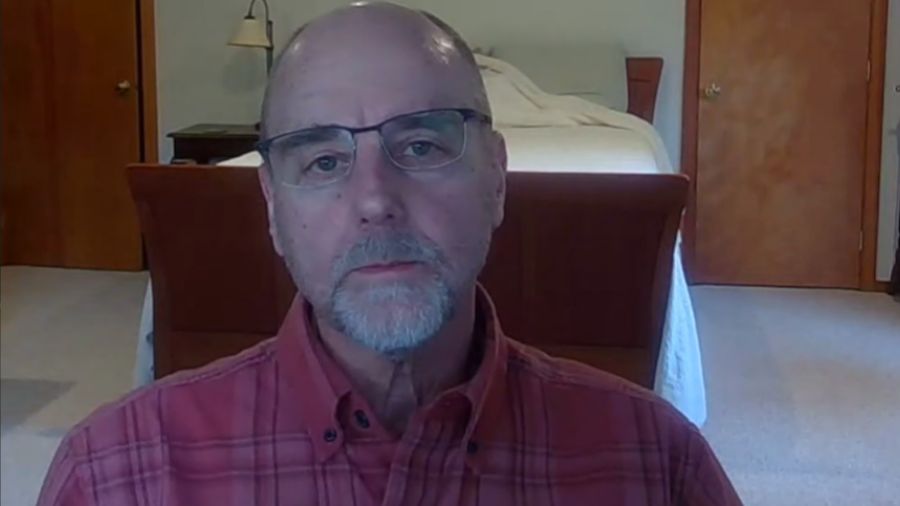
Schilling joined “The John Curley Show” on KIRO Newsradio to discuss the ban’s results, the spread of camping restrictions across the region, and why he’s stepping away from elected office.
“Over the course of the years of 2024 and 2025, when I was mayor, and we had the camping ban in place and some more forward-thinking policing activities to get folks off the street, and crime went down,” Schilling said. “The state association of police chiefs had their report come out that showed that Burien’s crime rates have dropped from 2024 to 2025.”
The Washington Association of Sheriffs and Police Chiefs’ 2025 annual report showed Burien’s reported offenses fell from 3,860 in 2024 to 3,065 in 2025, a drop of 20.6%. Robbery declined 42.7%, burglary fell 48.6%, and motor vehicle theft dropped 38%.
Schilling pointed to Tukwila, which passed its own camping ban in July, and said Renton is close behind. The Renton City Council is scheduled to vote on a similar ordinance Monday evening, and Federal Way has already adopted a comparable measure.
“Quite frankly, this is not compassion. It’s also not a housing issue. This is a drug and mental health illness issue,” Schilling said.
Schilling says word of mouth drew encampments to Burien before the ban
KIRO host John Curley noted that people displaced by enforcement in surrounding cities have moved into Seattle, citing a conversation with a We Heart Seattle leader who said they were arriving from Burien, Everett and Marysville.
Schilling said the same pattern played out in Burien before the ban took hold. He said service providers reported that people came to the city because they heard help or tolerance was available.
“That’s why we had a lot of folks come to the city of Burien during our big spike in tent encampments, was because people were saying, ‘I heard I could get some whatever here. I heard I can get some help here,'” Schilling said.
RELATED STORIES


Schilling says moderates cannot win when any issue gets tied to Trump
Despite the results, Schilling said he is routinely outvoted on the council, often 6-1, in a political environment where his positions are treated as partisan rather than practical.
“I’m not a part of anyone’s club. I’m kind of the lone guy right now,” Schilling said. “It’s a weird time to be kind of the lone man, not on the dais, but also in the Pacific Northwest. And to be shouting into the wind that, like, why can’t we just do normal things?”
Schilling said once a policy gets connected to Trump or conservatism, it becomes impossible to advance.
“You get to a point though, where something gets connected to Trump, or something gets connected to something else conservative, you can’t win it,” Schilling said.
He pointed to a recent open letter from Seattle Chamber of Commerce leaders as a sign the political wind may be shifting, but said a single statement will not be enough.
“This is not a thing we can just do right now,” Schilling said. “This is a thing where we have to engage people all the time so that they don’t choose to vote for craziness anymore, that they decide to vote for things that are, frankly, just normal.”
Schilling said he will not run for reelection, saying he needs to step back.
“You can’t fight crazy with crazy,” Schilling said. “I think the total antidote to craziness is normalcy.”
Watch the full discussion in the video above.
Listen to “The John Curley Show” weekdays from 3 p.m. to 7 p.m. on KIRO Newsradio 97.3 FM.
Follow @https://twitter.com/jcurleyshow

-
 Tune in to KIRO Newsradio weekdays at 3pm for The John Curley Show.