Joe Kent breaks silence on Iran War resignation: ‘We’ve painted ourselves into a corner’
May 6, 2026, 5:00 PM | Updated: May 7, 2026, 5:33 am

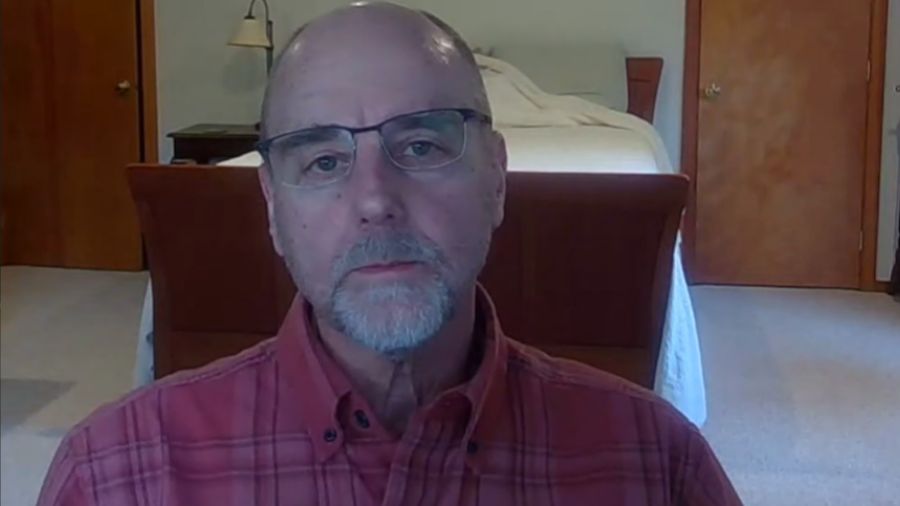
Nearly two months after Joe Kent resigned as director of the National Counterterrorism Center, claiming Iran posed “no imminent threat to our nation” weeks after the conflict in Iran started, he joined “The John Curley Show” to share his side of what led to this decision.
Kent stands by decision, does not support war in Iran
“I’m glad to be able to speak freely,” Kent said. “I’m concerned with the direction of the war, for sure, and just the direction things are going right now. I think we’ve kind of painted ourselves into a corner, and I don’t know if Trump’s going to be able to find a way that he can get himself out of it.”
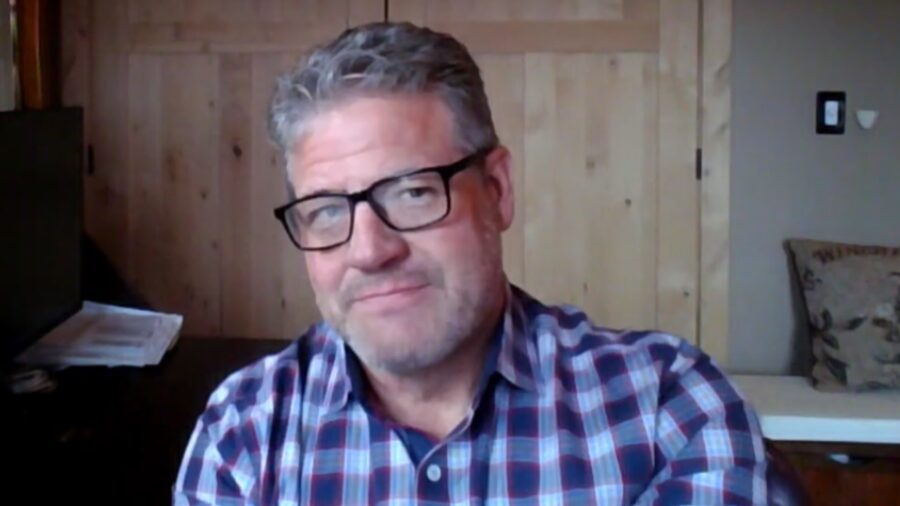
Curley then compared the ongoing conflict in Iran to the Iraq War, which has reshaped the Middle East for the past two decades.
“The thing about history repeating itself all the time, we could easily look at Iraq, right?” Curley asked. “Paul Bremer goes in there in 2003. Gets rid of the army and then says to the Ba’ath Party, ‘Oh, just go away.’ And then what happens? Al Qaeda and then ISIS. I mean, is that not what’s waiting for all of us in Iran?”
“I mean, something much worse. That’s why I get nervous when Trump or Lindsey Graham talks like, ‘We’ll just send the opposition guns.’ I mean, this never plays out the way it’s supposed to,” Kent replied. “I mean, every bad actor in the Middle East, at one point in time, we armed, and then we had to go back and take care of it. The problem is you just magnify everything x10 because Iran is just so big. It’s just so geo-strategically essential that the problems aren’t Iraq- or Afghanistan-size, it’s x10. It affects the whole world.”
Kent was confirmed as the director of the National Counterterrorism Center in July 2025 after the U.S. Senate approved his appointment in a 52-44 vote largely along party lines. He previously sought the Congressional seat in Washington’s 3rd District, losing to Democrat Marie Gluesenkamp Perez in 2022 and 2024.
Before his Congressional runs, Kent served in the military, seeing 11 deployments as a Green Beret, followed by work at the CIA.
According to Kent, President Donald Trump was “dead set” on agreeing to a deal with Iran up until the “12-Day War” — when Israel launched Operation Rising Lion and struck Iranian nuclear and military facilities.
“The [Iranian] president and the Iranians basically agreed on no nuclear weapons. So all the trade space in the debate was really about levels of enrichment and how the enrichment would be monitored,” Kent said. “Would the Iranians be able to rein in their proxies? They were demonstrating that they were able to do so because the proxies hadn’t attacked us since January, when Trump came back into office. So a lot of it was giving the president options.
“The issue that we had really was dealing with the Israelis because the Israelis wanted to attack Iran,” Kent continued. “They weren’t shy about it. They wanted us all in on doing a regime change. They were trying to sell that. So a big, I’d say, course of action we were trying to develop for the president was how do we prevent the Israelis from attacking Iran.”
RELATED STORIES


US allies in the Middle East
“Senator [Rand] Paul was saying, ‘America first. Let Israel fight Israel’s battles,'” Curley cited. “This is the question that comes up all the time, which is why, Joe? Why are we fighting with Israel? Is it that important that we have an ally in the Middle East?”
“I mean, we have lots of allies in the Middle East, or we did before this conflict,” Kent answered. “Israel was a strong ally in terms of counterterrorism, but I would argue that a lot of the fights that Israel got us into in the region were counterproductive to the stability of the region, and were counterproductive to our interests. We have led ourselves to be deceived that our interests are the Israeli’s interest.”
Kent went as far as to claim that Israel’s influence on the U.S. is a “concerted whole-of-government approach,” including having a “sophisticated lobbying wing” in Washington, D.C., having surrogates in the media, and funding several think tanks.
“We tend to think very short-sighted because, look, the Middle East is complicated. I served most of my career in the Middle East. It’s hard for us people from America to crack the code on the Middle East,” Kent shared. “And the Israelis are … usually there, you know. Right at the critical time to say, ‘Hey, we can tell you guys what’s really going on. You don’t need to worry about it. Just take care of this, this, that, and the other thing, and everything’s going to be just fine.’ So I think we’ve got a lot of work to do to kind of get ourselves out of that mentality.”
Watch the full 37-minute discussion between Joe Kent and KIRO host John Curley in the video above.
Listen to John Curley weekday afternoons from 3 – 7 p.m. on KIRO Newsradio, 97.3 FM. Subscribe to the podcast here.
Follow @https://twitter.com/jcurleyshow


-
 Tune in to KIRO Newsradio weekdays at 3pm for The John Curley Show.