‘It’s incredibly out of touch’: Senator rejects expanding WA’s millionaires’ tax to $250K earners
Oct 2, 2026, 6:15 PM

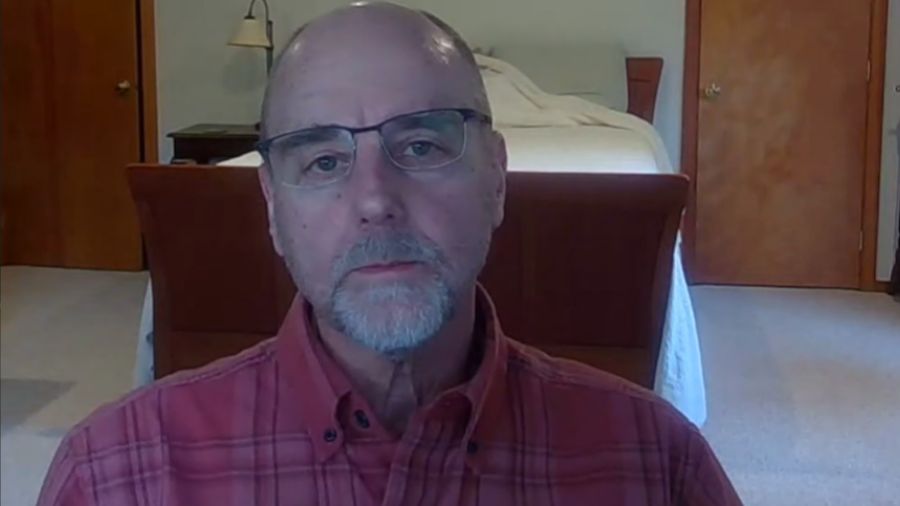
Washington Sen. Jesse Salomon defended his support for the millionaires’ tax but pushed back against his Democratic opponent’s willingness to extend it to households earning $250,000.
“So what my opponent said, $250,000, it’s incredibly out of touch because there’s no way, should we pass something crazy like that, that it wouldn’t go back to the people for a vote and they would vote it down,” Salomon said on “The John Curley Show” on KIRO Newsradio.
Salomon is defending his 32nd District seat against state Rep. Cindy Ryu. During a debate hosted by KUOW, Ryu expressed support for expanding the tax to household net incomes as low as $250,000, with a lower rate for households earning less than $1 million. Both lawmakers voted for the existing 9.9% tax on earnings above $1 million, according to KUOW.
KIRO host John Curley pressed Salomon on a concern shared by opponents of the tax: If Washington starts taxing millionaires’ income, what stops lawmakers from eventually reaching people who earn less?
Salomon argued that lowering the threshold lacks the necessary Senate support and that voters would reject such an expansion.
“I mean, it is democracy, and so we know that it’s way less popular the further it goes down the line,” he said.
Sen. Jesse Salomon wanted more tax relief
Salomon first corrected Curley’s description of his role in the legislation. He was a sponsor, he explained, but not the prime sponsor.
He had supported changing Washington’s tax system with the expectation that the new tax would be paired with more relief elsewhere. The final legislation, he argued, leaned too heavily toward raising revenue.
“And so, in the end, when it came through, it was more revenue than tax cuts, and so that was not what I was hoping for,” Salomon said.
Still, he defended his vote. He described the decision as a choice between raising taxes on high earners, cutting services, or asking lower- and middle-income residents to pay more as federal funding declined.
“I didn’t want to double tax them. So then the third option is the millionaires’ tax. So you don’t always get great options as a legislator. I thought that was the best option,” Salomon said.
Curley remained skeptical, questioning whether state government would leave the threshold alone if wealthy residents moved away and revenue fell short.
More taxes could mean less revenue
Asked whether Washington has reached a point where it should stop raising taxes, Salomon warned that further increases could hurt the businesses and economic activity the state relies on.
“We are cutting into the economic drivers that bring us revenue. So you wouldn’t necessarily get more revenue over time if you raise taxes. You might have economic slowdown and less revenue generation,” he said.
Salomon called for stronger oversight of state spending, pointing to his work on the Legislature’s audit committee. He would like the committee to have more authority to end programs that aren’t delivering results, rather than having to send those decisions back through the legislative process.
“I’d love to change that because we do need a more effective mechanism to cut down on certain programs that aren’t generating the results that we expect of them,” Salomon said.
Salomon acknowledged hearing frustration from business owners, including some who have told him they plan to leave. But he stopped short of saying Washington had already pushed taxes too far.
“I don’t think that we’ve passed the threshold. I think we’ll be fine. I just think we need to now in the future focus a little bit on just calming down,” Salomon said.
Salomon also cautioned against blaming every economic problem on taxes. Artificial intelligence’s effects on technology jobs, borrowing costs, and tariffs all complicate the picture, he argued.
Public safety starts with enforcing laws
On public safety, Salomon believes state funding can help Seattle, but the city first needs to commit to enforcing its laws.
He criticized the decision not to enforce prostitution loitering restrictions, arguing that it sends the wrong message to traffickers operating along Aurora Avenue.
“And like I said in the debate, it’s not a victimless crime. Like a lot of these women really are coerced in pretty nasty ways, even to the point of murder,” Salomon said.
He called for more vice detectives to investigate traffickers, with the goal of building cases against those exploiting people rather than jailing the people being exploited.
Salomon pointed to a $100 million state allocation for police and public safety that he supported, arguing Seattle could use help addressing its staffing needs.
Curley questioned how many cities had been able to use the money, citing concerns about restrictions on the funding. Salomon acknowledged those restrictions but disputed the suggestion that only a couple of cities had benefited. By his recollection, roughly two-thirds of the funding had been allocated.
“No, it’s more,” he said. “I saw a grid. I want to say it’s 27. That’s what pops in my head.”
RELATED STORIES


Rent caps and housing investment
Curley also pressed Salomon on his vote for rent limits, questioning whether rent control works.
Salomon described joining Republicans and other Democrats to amend the proposal because he feared a tighter cap would undermine efforts to encourage housing construction.
“I was very concerned about the impact on driving away investment after we’ve done so much good work on supply side deregulation,” Salomon said.
He explained that the Senate and House traded changes before reaching a compromise. Although the final version wasn’t what he had initially sought, he supported it out of concern about housing costs.
“I was just trying to get that right number,” Salomon said.
When Curley again challenged the premise of rent control, Salomon drew a distinction between supporting the final compromise and initiating the policy.
“Look, I didn’t propose the bill,” Salomon said.
Watch the full discussion in the video above.
Listen to “The John Curley Show” weekdays from 3 p.m. to 7 p.m. on KIRO Newsradio 97.3 FM.
Follow @https://twitter.com/jcurleyshow

-
 Tune in to KIRO Newsradio weekdays at 3pm for The John Curley Show.