‘What actually happened?’ WA Policy Center investigates Seattle diversion program, says numbers don’t match up
Aug 12, 2026, 12:50 PM | Updated: 4:47 pm

The Washington Policy Center is challenging the data behind Seattle’s LEAD diversion program, saying the numbers used to justify its expansion don’t hold up.
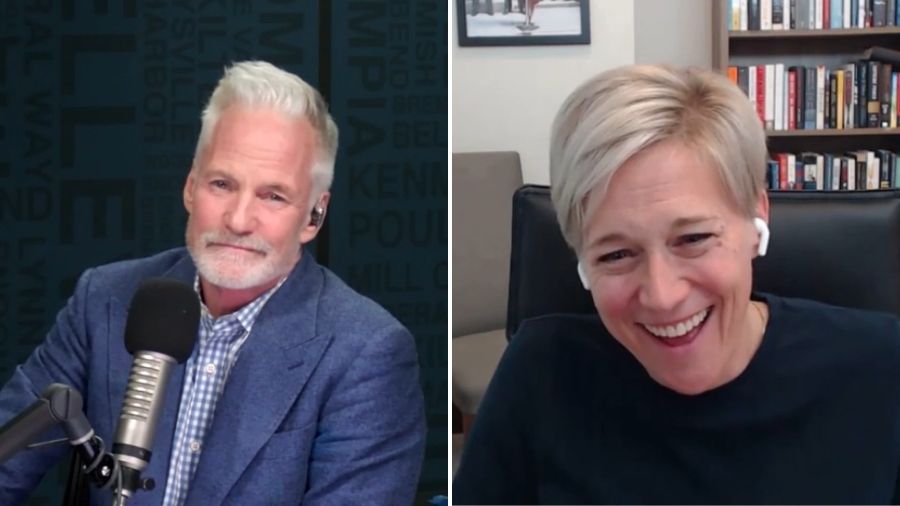
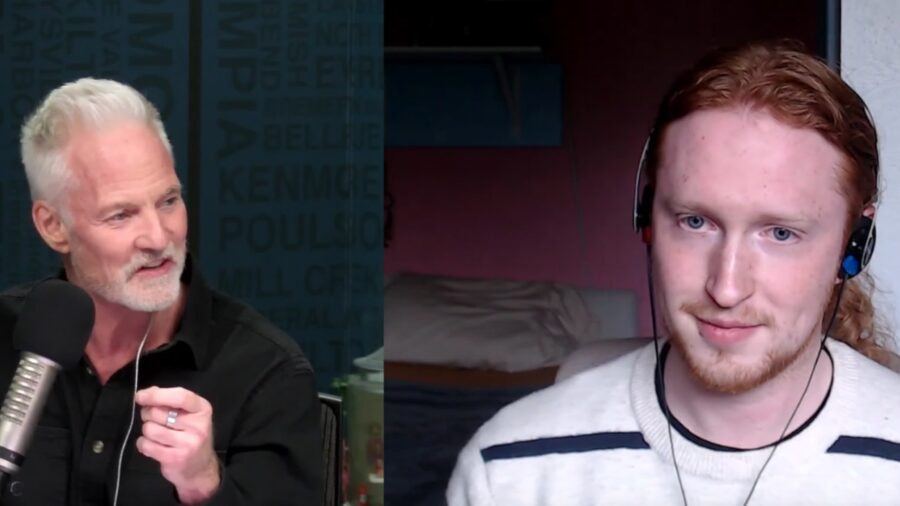
Eric Zimmerman, the Washington Policy Center’s Director of Public Safety Solutions, told “The John Curley Show” on KIRO Newsradio that the program’s claims of success are “not factual and in most cases vastly exaggerated.”
“Folks saying, ‘Hey, LEAD is good for jobs. There was a 46% increase in the odds of being on the employment spectrum,’ as they’ve described it,” Zimmerman said. “Let’s just say that’s code for jobs. OK, but if you look at the raw numbers, what actually happened?
“Let’s say 163 or 164 people didn’t have jobs when they came into LEAD, and how many additional people in that group gained jobs?” he continued. “The answer is three, and so I don’t think that you can connect that number to 46% anything, other than to say if someone used the number 46% to describe the increase in jobs, they were doing so in a misleading way.”
LEAD, known as Law Enforcement Assisted Diversion and Let Everyone Advance with Dignity, is a diversion program where police direct people facing potential drug charges into services instead of jail. The program was created in Seattle in 2011 and has since expanded statewide, with a $9 million biennial budget funded by state general funds and opioid abatement settlement money, according to the Washington State Health Care Authority. The Seattle City Council recently allocated $5 million to the program and approved an expansion.
Zimmerman said the program’s flagship claim of a 58% reduction in arrests raised immediate red flags.
“From the first slide that I saw, in terms of 58% reduced arrests, I knew that there was a problem because in social science, it’s just not the kind of result that we see for programs like this,” Zimmerman said. “It was too aggressive, too ambitious of a claim to make.”
He said those same disputed claims have been used for 11 years as LEAD expanded nationwide.
“All of the expansion that it did was presented and framed through these claims that were not factual and, in most cases, vastly exaggerated what had been demonstrated in LEAD’s original study,” Zimmerman said. “And these claims are still used in 2026. They were put in Seattle City Council’s packet for approving LEAD’s recent expansion.”
‘Big black hole questions’: Zimmerman says Seattle has never held LEAD accountable
KIRO host John Curley said the program has been “running on its own gas and proclamations of success” and questioned why it hasn’t been properly audited in years.
Zimmerman said the bigger issue is that after 11 years, the Seattle City Council still doesn’t require LEAD to report basic outcomes.
“How many people died? How many people were lost to follow-up? How many people have jobs now?” Zimmerman said. “These are just big black hole questions that we don’t have answers to, and I could assume that that means the answer is bad, or else we would have answers already.”
Zimmerman said he spent two weeks warning city council members the report was coming and received almost no response.
“Not one official response,” Zimmerman said. “Actually, I take that back because I’m a big fan of Joy Hollingsworth, the council president, and she appreciatively acknowledged that the information had been received, and she was going to take a look at it.”
Zimmerman raises concerns diversion program could be contributing to overdose deaths
Zimmerman said one of the greatest harms of the program may be that it leaves people struggling with addiction without meaningful intervention.
“If someone is left to their own devices when they’re addicted to deadly substances, chances are they’re going to die from that addiction,” Zimmerman said. “Does LEAD provide enough of an interruption to save their life? I worry that it doesn’t because we have not yet heard anything about that from the LEAD organizations, demonstrating that they’re saving people’s lives.”
He pointed to a story from We Heart Seattle founder Andrea Suarez, who said she had convinced an 18-year-old girl to go to treatment. But then a LEAD representative arrived, had the girl sign a piece of paper, and the girl went back to the streets and resumed using drugs that night.
“That is the problem with the model: how do we assure that what we’re doing is in someone’s best interest?” Zimmerman said. “Or are we just doing them to the trajectory they’ve already been on, heading towards an early death?”
RELATED STORIES



‘There is no reliable evidence’: Zimmerman says officers need to know what they’re sending people into
Zimmerman said police officers also need to understand what they’re sending people into.
“An officer on the street in Seattle needs to understand that if they’re going to decide to send someone into LEAD diversion, there is no reliable evidence that that’s the best thing for them,” Zimmerman said. “And in fact, we have reason to question if that’s going to increase the likelihood that they’re going to die of a drug overdose.”
Curley said programs like LEAD become nearly impossible to end once they start, comparing it to the Head Start program, which faced similar scrutiny over outcomes.
“Once it gets going, the intent is great, but the outcome on the other side, it’s failing,” Curley said. “Take away the numbers. That person that’s gone through the system and it didn’t do anything for them, do they end up in worse shape somehow by the choices and the decisions and the actions that they’re taking? But it’s so hard to kill these programs.”
Watch the full discussion in the video above.
Listen to John Curley weekday afternoons from 3 – 7 p.m. on KIRO Newsradio, 97.3 FM. Subscribe to the podcast here.
Follow @https://twitter.com/jcurleyshow

-
 Tune in to KIRO Newsradio weekdays at 3pm for The John Curley Show.