‘Seattle is a sanctuary drug tourism city’: We Heart Seattle founder reacts to county homeless agency’s reset
Jul 4, 2026, 5:00 AM

Earlier this week, King County Executive Girmay Zahilay and Seattle Mayor Katie Wilson announced a plan to “reset and stabilize” the King County Regional Homelessness Authority (KCRHA).
The plan prioritizes maintaining services for people experiencing homelessness and launches actions to improve oversight and protect public funding, according to a news release.
This plan came after an independent forensic evaluation identified significant concerns regarding KCRHA’s financial management, governance structure, and internal controls — including $13 million in mismanaged taxpayer funds and a growing $45 million deficit.
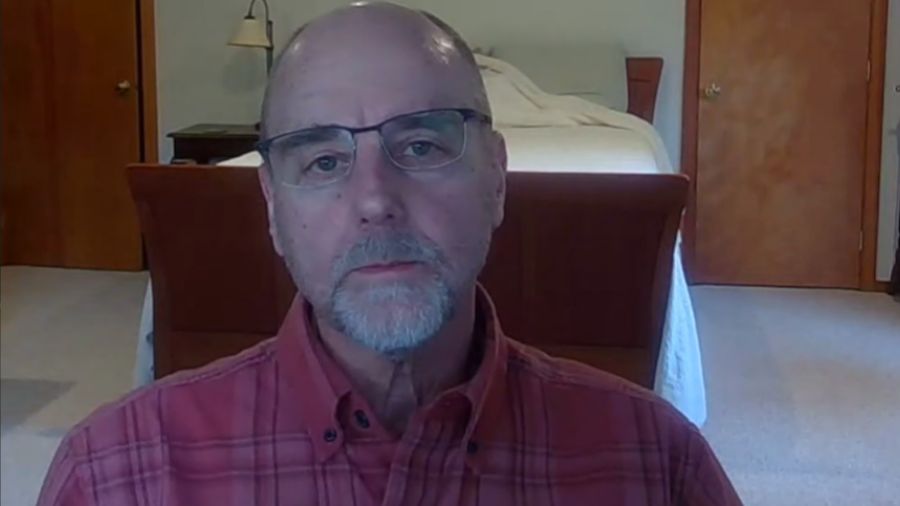
“I think it is a very smart and strategic move, but my question to them is, will they pivot according to what the data says, which is Washington’s an outlier. Housing First is not working for drug addicts and mentally ill people, and stop doubling down on failed models,” Andrea Suarez, the founder of We Heart Seattle, said on “The John Curley Show.” “So I am glad that they’re bringing money into local control. I’m concerned that they’re not going to pivot into a better working models.”
When detailing the reset plan, Zahilay stated that KCRHA had undergone significant leadership turnover and multiple audits before the independent forensic evaluation identified serious concerns related to the agency’s financial management.
“But they still are doing Housing First, right?” KIRO host John Curley asked. “They’re doing the dog house at first, which is the little shacks that they put people in, so it’s easier for the drug dealers to supply them with drugs, and for people to women to turn tricks in order to pay for those drugs in a safe environment that’s not on the street.”
“Yes, it is, meaning drugs are allowed, there’s no requirement to enroll in these wraparound services,” Suarez said. “At the end of the day, we do need more transitional and emergency housing, and to stop putting all of the eggs into the permanent supportive housing basket, which is what we’ve been doing over the last 10 years. So, while we still dislike the low barrier drug-allowed tiny shacks, they are better than giving people apartments, and that is the compromise.”
Homelessness up 9% in King County since 2024
KCRHA’s latest Point-In-Time count estimated that more than 18,000 people are experiencing homelessness on any given night. Approximately 64% are living unsheltered in places like cars, parks, or on the street.
That’s an increase of roughly 9% since 2024, though the growth rate has slowed. The count was conducted between Jan. 26 and Feb. 6, according to KCRHA.
“We’re still up, and we’re an outlier in the nation,” Suarez said. “For overdoses, we are No. 4 in the country. So, until we stop calling it a homeless crisis and start calling it a drug addiction crisis, numbers don’t improve. What’s happening is we are an inflow sanctuary drug tourism city.”
Suarez described Seattle as a “sanctuary drug tourism city” due to having barrier-free access to drugs with no felony charges for possession.
“Drug tourism, we’re drug tour,” Surez added. “People come here to do drugs, cheap drugs, and there’s no consequence for dealing or using in public. In fact, you can use them in a park and in your tent. So the numbers keep going up because we have an inflow crisis. That has exploded our homeless crisis in Seattle.”
“Are the police now arresting?” Curley asked.
“Yes, they are, but the problem’s so big, you don’t see a dent,” Suarez answered. “I’m physically seeing people getting arrested and taken out of parks. So you got two people, it takes cops eight hours in the field to book them or wait at Harborview for them to get their medical clearance, and then what? Well, the judge says we don’t have a defense attorney to support you, and because we’re short-staffed and their caseloads are too big, back on the street you go until we make possession of fentanyl a felony again. I don’t see the end to this.”
Watch the full discussion in the video above.
Listen to John Curley weekday afternoons from 3 – 7 p.m. on KIRO Newsradio, 97.3 FM. Subscribe to the podcast here.
Follow @https://twitter.com/jcurleyshow

-
 Tune in to KIRO Newsradio weekdays at 3pm for The John Curley Show.