Jake: Can Seattle learn from its affordable housing mistake?
Sep 17, 2026, 11:46 AM | Updated: 11:50 am
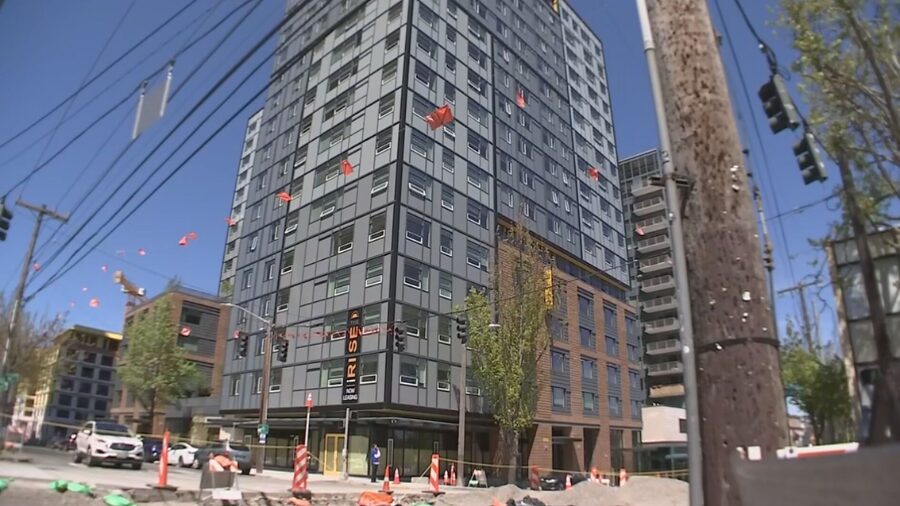
Affordable housing apartments in First Hill. (Photo courtesy of KIRO 7)
(Photo courtesy of KIRO 7)
Here’s a rule that never fails: when government makes something too expensive to produce, you get less of it. Seattle has been running this experiment for a decade with “affordable housing,” and the results are in. Good intentions, bad math.
If you want to build a new apartment project in Seattle, the city gives you two choices. Set aside a percentage of your units as income-restricted affordable housing, or write a check — the Mandatory Housing Affordability (MHA) fee — as part of your permitting process.
Let’s do the math. Say you’re building 100,000 square feet of new apartments. Depending on the zone, that MHA fee could run you $15 a square foot. That’s $1.5 million, before you’ve poured a single foundation. In some zones, the fee climbs as high as $50 a square foot. On a 100,000-square-foot project, that’s a $5 million toll just to get in the door.
So what happens? Developers get hesitant. Fewer projects break ground downtown. Fewer units hit the market. And when supply shrinks while demand doesn’t, prices go up. That’s supply and demand, chapter one.
Rolling back the affordable housing fee
Now here’s where it gets interesting. Seattle City Council member Dionne Foster has introduced a bill to lure developers back downtown by cutting 80% of the MHA fee for two years, for projects already in the pipeline with the city, provided they hit foundation inspection before the grace period runs out. Brand new developers jumping in get up to a 60% break.
Since MHA launched in 2017, new unit applications in the city have been on a steady downward trend. And now, after nearly a decade of data, the city’s answer to a program that isn’t producing enough housing is … to roll it back? If MHA is working, why do you need to temporarily bribe developers back into the market? And if it’s not working, why not just say so and scrap it instead of tinkering around the edges?
RELATED STORIES

What Bellevue and Buenos Aires figured out
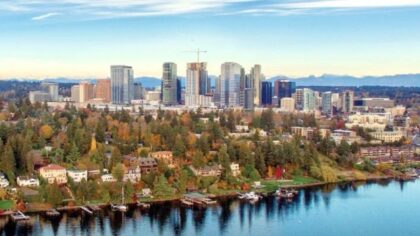
Here’s a better idea, and it’s sitting 25 minutes east of downtown. Instead of penalizing developers for building, Bellevue incentivizes them. Build affordable units, and Bellevue offers you an 8-, 12-, or even 20-year property tax exemption. No fee. No fine. Just a reason to say yes.
Want to see what happens when a government actually gets out of the way? Go read up on Argentina. In December 2023, Javier Milei repealed the country’s COVID-era rent control law, the one that had capped rent increases and locked landlords into rigid, multi-year leases. Within months, rental listings in Buenos Aires more than doubled. Landlords who had pulled their units off the market because the regulations made renting them out too risky came back.
It’s the same lesson, just with the deregulation dial turned all the way up: the only way to get cheaper housing is to make more of it.
I’ll be watching Seattle’s new approach with real interest. Here’s hoping it works, developers flood back downtown, and the city finally learns the lesson Bellevue and Buenos Aires already have.
Build, baby, build.
Listen to “The Jake and Spike Show” weekdays from noon to 3 p.m. on KIRO Newsradio 97.3 FM. Subscribe to the podcast here.