‘They’re barely making it’: Gee questions if working Americans have hit a breaking point
Sep 5, 2026, 5:00 AM
U.S. corporate profits hit a record $4.8 trillion in the second quarter of this year, accounting for 18% of national income, the highest share since immediately after World War II. At the same time, compensation paid to employees through wages and benefits fell to 60% of national income, the smallest share since the 1950s.
KIRO host Gee Scott broke down the numbers on “The Gee and Ursula Show” on KIRO Newsradio, opening the segment with a direct question to working Americans: Are you furious right now?
“Have you guys noticed how we just throw out billions of dollars?” Gee said. “Like earlier today, we talked about how Apple is now worth $4 trillion. We throw around the word ‘billions’ like it’s nothing, and yet the federal minimum wage is still $7.25. There is a company in the United States, Apple, worth $4 trillion, and the federal minimum wage is $7.25.”
Workers are falling further behind
Gee said inflation is now outpacing wage growth, meaning workers are earning 0.2% less this year compared to last year in real terms. He noted that 10% of Americans own 90% of the stock market, meaning the benefits of record corporate earnings flow almost entirely to the wealthy.
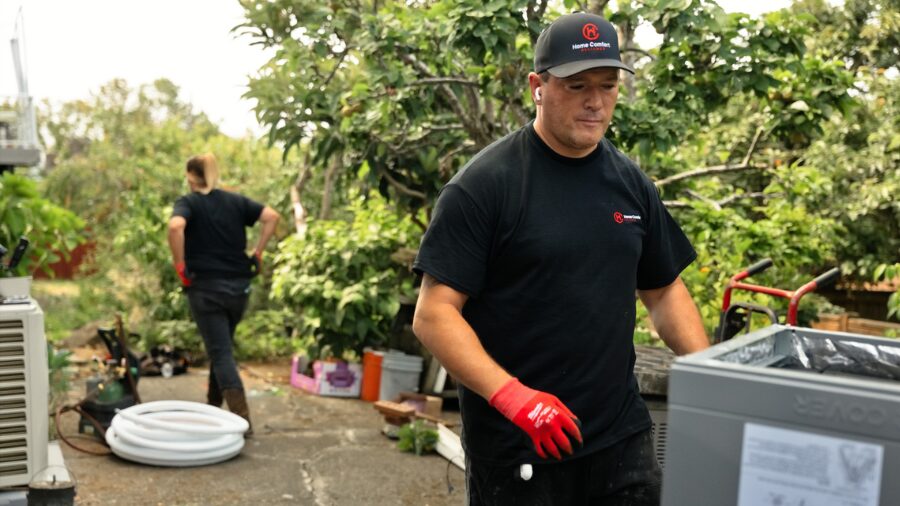
“Rich Americans make their money off investments. Lower-income Americans make their money from wages,” Gee said. “Sometimes people take the conversation centered around billionaires as if it’s personal against them. It’s not. It’s personal against the system that allows them to continue to have crazy gains year after year. Meanwhile, the common worker right now out here, the working class, they’re barely making it.”
Angela asks how long the dam can hold
KIRO fill-in host Angela Poe Russell said the numbers match what she sees in her own life, a booming 401(k) alongside visible struggle in her community.
“My husband said the other day, ‘Have you seen our 401(k)?'” Angela said. “And making so much money, and then I am able to see in my community and then read about how horribly this is going for so many people, and actually asked him, ‘How long can this go on before the dam breaks, where the stock market is so detached from Main Street?'”
More than a million children have lost food stamps
The conversation shifted to the human cost of federal policy changes.
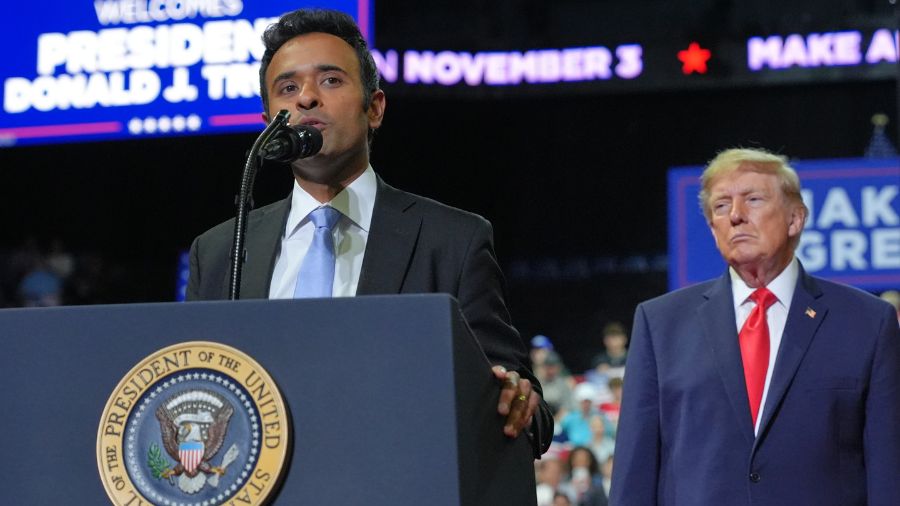
More than a million fewer American children are receiving food stamps since President Trump signed the Big Beautiful Bill last summer, which expanded work requirements to more parents, eliminated benefits for some legal immigrants and pressured states to tighten eligibility checks. Nationally, about 5 million people have lost access to SNAP benefits.
Angela believes the cuts hit the wrong target.
“Is that the hill I want to die on in my search for government waste?” Angela said. “When you punish parents, you’re often punishing the children. When I go to heaven, which I hope I go, I would rather be accused of giving too much than of saying I was responsible for this many children not being able to have access to food.”
Angela noted that the states with the largest reductions in food assistance, including Louisiana, Georgia, Florida, and North Carolina, with declines exceeding 43%, are also among the most heavily churched in the country.
“This is the Bible Belt,” Angela said. “You are supposedly the Bible Belt, where according to your faith, many of you are busting church wide open several days a week and thumping your Bible. And I would say a huge theme is taking care of the poor. I just find it interesting that the most churched states are cutting more people off.”
RELATED STORIES



Angela’s response to the fraud argument
Gee played devil’s advocate, raising the common complaint about food stamp recipients seen buying luxury items.
“Does it bother you when corporations get access to federal assistance or state assistance via tax breaks or bailouts?” Angela responded. “Those same people will say, ‘Well, they’re going to produce jobs.’ Yes, that’s true. And guess what? When kids don’t go hungry, they’re able to learn. And what happens when they’re able to learn? They’re actually productive members of society and not committing crime.
“I would argue that feeding people actually reduces crime, and there is public benefit because it enables them to learn,” she added. “As soon as you get into extreme poverty where people can’t eat, you create societal problems that affect everybody.”
Watch the full discussion in the video above.
Listen to Gee and Ursula on “The Gee and Ursula Show” weekday mornings from 9 am to 12 pm on KIRO Newsradio.