Duecy: I thought I was just getting older. It sucked. Then an MRI revealed a pituitary tumor
Aug 7, 2026, 8:57 AM | Updated: 8:58 am
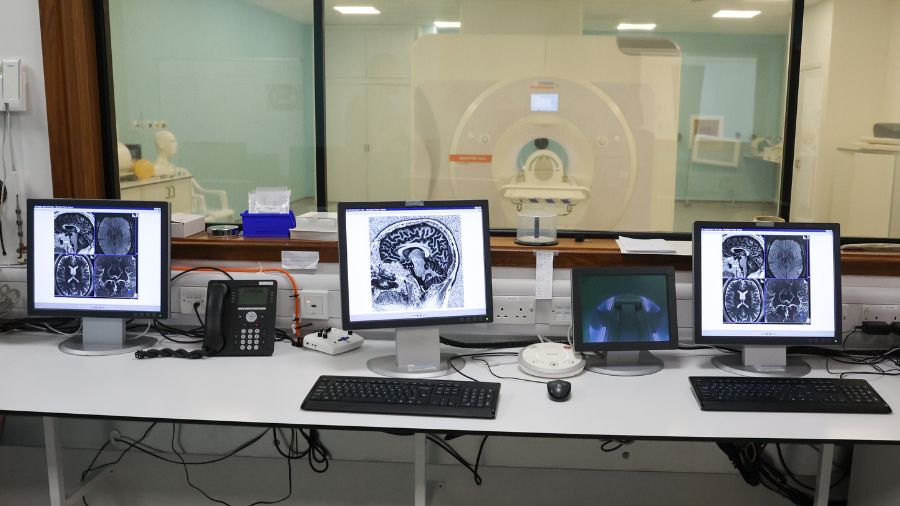
A photo of a T1-weighted MRI scan room. (Photo: Robert Perry, Getty Images)
(Photo: Robert Perry, Getty Images)
I make a living telling other people’s stories. This one is different.
In May, after a series of doctor visits, blood tests, and an MRI, I heard words I never expected to hear: “You have a benign tumor near your brain, and we need to start treating it.”
Two MRIs confirmed the diagnosis. The tumor was pressing on my pituitary gland and sitting near critical structures, including my optic nerves and carotid artery. Suddenly, I was faced with a decision I never imagined making. Either manage this condition with medication that could last years or undergo brain surgery and hope specialists could remove the tumor completely.
My choice became clear: get it out.
I’m sharing this story because somewhere, someday, someone else may hear the same words I heard and feel the same fear and uncertainty I felt. If that’s you, I hope parts of my journey can provide information, perspective, and maybe even some comfort.
You are not alone. And there is a path forward.
Part 1: Diagnosis
For months, I tried to convince myself nothing serious was wrong. I thought maybe I was just getting older. Maybe I didn’t have the same energy. Maybe my body just wasn’t responding the way it used to.
But something felt different.
I could still work out, but the results wouldn’t last. I would build muscle, then watch it disappear. Even during a seven-day trek through Italy’s Dolomite mountains, I felt my muscles tightening and cramping in ways that reminded me of physical therapy after a knee surgery years earlier. When I got home, it felt like my strength and the energy I once had, disappeared. No other symptoms; something was just wrong.
I asked my doctor for blood tests, expecting answers. Instead, those tests raised questions, leading to an MRI and eventually a diagnosis: A pituitary macro adenoma, a benign tumor growing on my pituitary gland.
The word “tumor” changes everything. The fear is immediate. But as I learned more, the fear started to turn into understanding. This wasn’t me simply getting older.
I thought I was losing myself, then I learned there was a reason, and now I’m fighting to get myself back.
Part 2: What the heck is a pituitary macro adenoma?
Let’s break down the name.
The pituitary gland is often called the body’s “master gland” because it helps control many of the hormones that influence things like growth, metabolism, stress, reproduction, and other essential functions.
An adenoma is simply a benign tumor that develops from gland tissue. The word “macro” refers to the size. A tumor larger than one centimeter is considered a macroadenoma. Anything smaller than one centimeter is considered a microadenoma.
Put it all together, and I have a larger-sized, benign tumor growing from a pea-sized gland at the base of my brain.
According to the National Institutes of Health, about one in 1,000 people have a diagnosed, symptomatic pituitary adenoma. But the actual number is much higher because many people have these tumors and never know it. Studies suggest as many as one in six people may have a small pituitary tumor that never causes symptoms.
The challenge is that location matters. Even a benign tumor can cause problems if it grows large enough. It can affect vision by pressing on nearby structures, interfere with normal pituitary function, and disrupt the body’s delicate hormone balance.
The pituitary gland controls systems throughout the body — from the thyroid and adrenal glands to the reproductive system, growth hormones, water balance, and breast milk production in women.
If our bodies were a television, the pituitary gland is the remote control. So, my TV still works, but the remote isn’t sending the right signals.
My goal is to fix the remote.
To do that, some people need long-term hormone therapy to manage the effects of these tumors. In my case, surgery offers the possibility of removing the problem at its source. The tumor has to go.
Part 3: Symptoms
Different types of tumors affect different functions and different symptoms which can include issues with energy and metabolism, stress response, growth, fertility, stress response, blood pressure, blood sugar, inflammation, estrogen and progesterone production in women, ovulation (which is a common symptom for women), sperm production, sexual function, muscle mass, bone strength, fat metabolism, growth in children, tissue repair in adults, and others.
Yes, it’s a long list, and I hope it might help someone reading this to at least rule out any one of them.
For me, besides low energy, a lack of muscle growth, and I couldn’t lose weight unless I starved myself, I also suffered a little depression, I think, because my tumor reduces my natural dopamine levels too.
I’ve also experienced mood swings and irritability.
I found myself having little to no patience with my teenage daughter for doing teenager things, my wife, and my pets (don’t worry, we all have very close relationships). Perhaps I’ve been a little too aggressive navigating traffic and stupid drivers, and after work I’d find myself wanting to just plop on the sofa and do nothing else. It was a chore motivating myself to ski, hike, fish, work out, and hang with friends.
No other symptoms, except one more.
In the last months, I developed severe anxiety after the death of my father, my mother’s recent Alzheimer’s Disease diagnosis, and, of course, the damn tumor in my head. I’ve since learned my tumor can help cause anxiety too. Awesome.
Part 4: Options
Treatment for pituitary adenomas isn’t one-size-fits-all. Some tumors respond remarkably well to medication, while others require surgery because no effective drug exists. The right approach depends on the type of tumor, whether it’s producing hormones, the size, where it’s located, and how it’s affecting the patient.
For me, years and perhaps a lifetime of drug therapy with potential side effects like nausea, dizziness, headaches, fatigue, or low blood pressure proved less than appealing. Also, doctors couldn’t promise me that drugs would make my tumor go away for good.
Surgery offered the possibility of eliminating the tumor and reducing or ending the need for medication, but it also carried the risks that come with operating near the base of the brain.
After discussing the options with my medical team, my wife and my daughter, I decided surgery was the path that made the most sense for me. Now, just wait until you read how they perform that surgery. It’ll blow your mind — no pun intended.
Part 5: Surgery
The name of the surgical procedure is an Endoscopic endonasal transsphenoidal resection.
Endoscopic — surgeons use a small camera (endoscope) to see the surgical area.
Endonasal — the approach is through the nose.
Transsphenoidal — the surgeon passes through the sphenoid sinus, an air-filled cavity located behind the nose and below the brain.
Resection — removal of the tumor.
More than a century ago, surgeons had to reach these tumors by opening the skull and working around the brain. In the early 1900s, doctors developed a different approach of going through the nose and under the lip, removing bone along the path.
Today, surgeons go through the nose, even just one nostril, passing through the sinus cavity behind it, and reaching the pituitary gland from below. Using a tiny camera and specialized instruments, they remove the tumor while preserving the normal pituitary gland and nearby structures.
No scars. No visible signs that surgeons had been working in one of the most delicate areas of my body. Modern medicine is remarkable, and the skill, precision, and expertise required to perform these operations is truly extraordinary.
Part 6: Fear
If you asked me a month ago, I would have told you I was scared.
Not necessarily scared of the surgery itself. That part, oddly enough, doesn’t worry me as much. The procedure can take up to four hours, and the ENT surgeon and neurosurgeon performing it have completed more than 600 of these specific operations. I’m putting my trust in experts who do this all the time.
I also recognize that many people are facing diagnoses and challenges far more difficult than mine. That doesn’t diminish the seriousness of what I’m going through or the emotions that come with it. It simply gives me perspective. My heart goes out to everyone navigating their own health battles, and to the families standing beside them.
What scared me was everything after surgery.
The recovery. The headaches. The nasal packing. Breathing through my mouth. Not being able to cough for a month. No straws. No bending over. Trying not to sneeze. Basically, doing everything possible not to create pressure where surgeons just worked.
A month ago, that sounded overwhelming.
Today, I feel completely different.
Bring it on.
I’ve learned the best way around a problem is through it. And the more I learn about what happens after surgery, the more hopeful I become.
Part 7: Recovery
I’ll let you know what recovery is like. It can involve soreness, swelling, headaches, blood tests every hour on the hour to test hormones, mouth breathing, sleeping upright, nasal packing, and chunks of that absorbable packing dissolving down your throat and your nose.
Also, no nose blowing for weeks, no coughing, no straws, no bending your head down (tying shoes and brushing teeth will be interesting), and sneeze with your mouth open because you might literally blow your brains out.
Also, some folks lose their sense of smell for a month. Cool.
Stay tuned for all the yummy details.
RELATED STORIES



Part 8: Waking up?
One thing that has stuck with me is hearing from patients who say they felt different after surgery — like a fog lifted. Not because the operation creates some instant burst of energy, but because removing the tumor can allow the body’s hormone system to begin finding its balance again. Some people describe feeling clearer mentally, more energetic, and emotionally lighter.
And that makes me wonder: how long has this tumor been changing me?
Pituitary macroadenomas don’t develop overnight. They grow slowly. Which means there is a chance I have been gradually losing pieces of myself over years without even realizing it.
I was still me. But maybe I wasn’t the same version of me.
And now, for the first time in a long time, I might get the chance to meet the old me again.
Over the coming weeks, I’ll document everything — from preparing for surgery, to the operation itself, to recovery and what life looks like afterward.
I invite you to come along for the journey.
Follow Luke Duecy on X. Read more of his stories here. Submit news tips here.