Ross: Being stuck in traffic can feel dehumanizing (Version 1)
Jul 25, 2023, 8:00 AM | Updated: 8:46 am

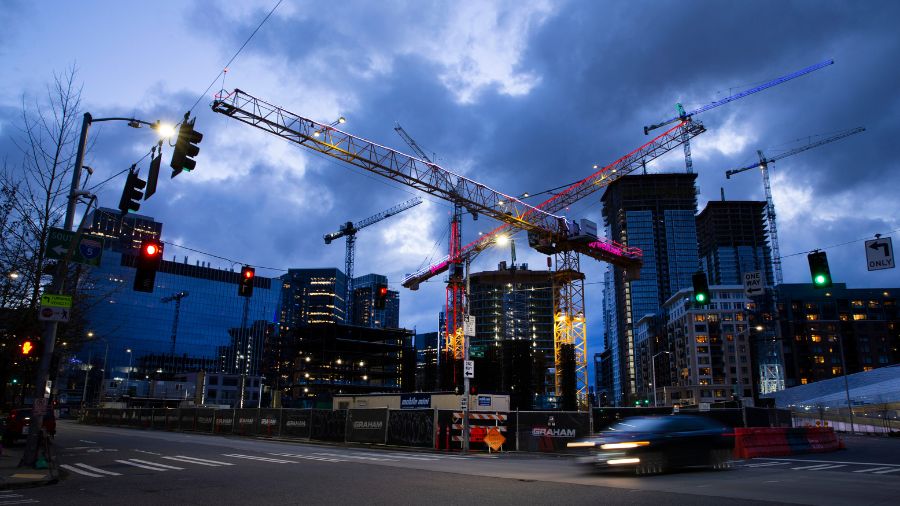
Seattle traffic. (Photo by George Rose/Getty Images)
(Photo by George Rose/Getty Images)
On Thursday I presented a commentary. But I actually have two versions of that commentary.
I wrote my version first, then I took the opening line, fed it to Chat GPT and told it to write the next 500 words (as if it was me.)
Below is one of the two commentaries. Which one did I write?
Dave’s Commentary:
Wednesday’s commute nightmare again had me thinking, why? How did we become so dependent on freeways? And why do we just accept being stuck in traffic all the time?
As the alarm blared at 6 a.m., signaling the beginning of another grueling day, I groaned inwardly, dreading the inevitable battle that awaited me on the freeways. Like clockwork, rush hour would descend upon the city, plunging us into a labyrinth of concrete and asphalt, clogged with vehicles, impatience, and frustration. As I sat in my car, inching forward at a snail’s pace, I couldn’t help but ponder the roots of our deep-seated dependence on these asphalt arteries and question why we seemingly accepted this predicament without demanding change.
More from Dave Ross: Could a massive solar flare wipe out our energy grid?
The evolution of our dependence on freeways can be traced back to the post-World War II era, when the American Dream was built upon the ideals of suburban living, car ownership, and personal freedom. The automobile, once a luxury reserved for the wealthy, became a symbol of progress and prosperity. The government invested heavily in building an extensive network of highways, fueling the rapid expansion of suburbs and connecting them to urban centers. In the beginning, these freeways were a marvel of engineering, promising faster and more efficient transportation. However, what was once a solution to alleviate traffic congestion has now become the very cause of our commute nightmares.
One of the fundamental issues is the phenomenon of induced demand, often referred to as “the build it and they will come” syndrome. When new freeways are constructed or existing ones expanded, they tend to attract more drivers, leading to an endless cycle of congestion. As cities grew, so did the number of cars on the roads, resulting in a never-ending need to build more highways. Despite this reality, we continue to accept the construction of more freeways as a potential remedy, only to find ourselves stuck in traffic once again a few years later.
Our acceptance of this situation can also be attributed to the absence of viable alternatives. Public transportation systems in many cities have failed to keep up with the rapid pace of urbanization, leaving us with no other practical option but to rely on our cars. In the United States, where car culture reigns supreme, the lack of efficient and accessible public transit has only further solidified our dependence on freeways.
Additionally, the powerful automotive and construction industries have perpetuated the status quo, using their influence to maintain the focus on expanding road networks rather than exploring sustainable transportation solutions. Political leaders often prioritize short-term gains over long-term investments in public transit and alternative transportation, perpetuating our reliance on freeways.
But why should we continue to accept this nightmarish routine? The toll of excessive freeway dependence on our environment, mental health, and overall quality of life is immense. Traffic congestion leads to increased air pollution, contributing to climate change and respiratory problems. It also takes a toll on our mental well-being, causing stress, anxiety, and frustration, which can spill over into other aspects of our lives.
Breaking free from our dependency on freeways requires a multi-faceted approach. Investment in public transportation, including buses, trains, and bike lanes, is crucial to providing alternatives to driving. Forward-thinking urban planning that prioritizes mixed-use developments and reduces the need for long commutes is another step towards a more sustainable future.
Rethinking our work culture and embracing flexible remote work options can also ease the burden on our road networks. By reducing the number of daily commuters, we can mitigate traffic congestion and create a more balanced and harmonious urban environment.
Change may not come overnight, but we must challenge the status quo and demand better solutions. Advocating for improved public transportation, pushing for greener infrastructure, and voting for leaders who prioritize sustainable urban planning are all steps we can take to break free from the shackles of freeway dependence.
In conclusion, yesterday’s commute nightmare served as a poignant reminder of the consequences of our excessive reliance on freeways. Understanding the historical context of their construction and the factors that sustain this dependence is essential to envisioning a future with better transportation alternatives. It is time to challenge the norm, demand change, and work towards a more sustainable and efficient urban landscape that frees us from the clutches of traffic jams and commuting nightmares. Only then can we truly reclaim our cities and our lives.
Which is which? Read version 2
Listen to Seattle’s Morning News with Dave Ross and Colleen O’Brien weekday mornings from 5 – 9 a.m. on KIRO Newsradio, 97.3 FM. Subscribe to the podcast here.
-
 Tune in to KIRO Newsradio weekdays at 5am for Dave Ross on Seattle's Morning News.