‘We’re chasing our tail’: KIRO hosts warn Seattle’s 911 response times reveal a problem no new chief can fix alone
Sep 26, 2026, 5:00 AM
If you call 911 in Seattle for a life-or-death emergency, police will arrive in about 11 to 12 minutes on average. If your car is broken into or your home is burglarized, you could wait nearly three hours if an officer comes at all.
Seattle Police Department (SPD) data shows response times have worsened steadily over the past decade. Priority 1 calls: active shootings, stabbings, and life-threatening emergencies averaged 9.3 minutes in 2016 and now average 11.6 minutes.
Priority 2 calls, which include urgent crimes in progress, have jumped from 32 minutes to 80 minutes. And routine, non-emergency calls have ballooned from just over an hour to two hours and 45 minutes.
By comparison, Tacoma handles similar lower-priority calls in about 25 minutes, and Everett responds to its highest-priority calls in two to four minutes. Everett is also deploying first-responder drones that can get eyes on an emergency in as little as 90 seconds.
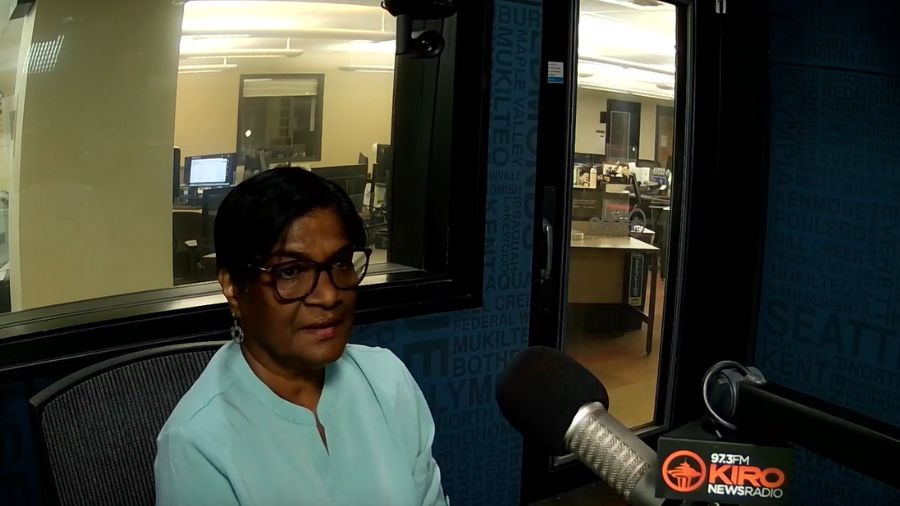
KIRO fill-in host Angela Poe Russell said on “The Gee and Ursula Show” on KIRO Newsradio that the numbers confirm what she’s been feeling.
“I feel like we’re chasing our tail,” Angela said. “I’m trying to understand why this is so hard. I can look at other examples of places where we don’t make it this difficult.”
Angela said the problem is personal. Her husband was driving home from golfing when a bullet went through his car, hit the radio, and landed in the passenger-side compartment.
“We didn’t get a police response till the next day,” Angela said. “Because they’re like, ‘OK, you’re fine, right? Talk to us tomorrow.'”
She said that experience makes it hard to feel optimistic about the search for a new police chief.
“Maybe people are saying, ‘Oh, we’re getting a new police chief.’ OK, we’ve done this how many times with the police chief?” Angela said.
KIRO host Ursula Reutin agreed the response time gap is real, and the staffing shortage behind it is, too.
“I also live in the city of Seattle, and I don’t feel like I see them enough,” Ursula said. “The reality is we’re still hundreds of officers short of the goal.”
RELATED STORIES



Angela questions whether the mayor’s public safety director has the right focus
A transcript from an Alki Community Council meeting caught Angela’s attention, specifically how the mayor’s public safety director, Alison Holcomb, responded to residents. Two things stood out.
“When people asked about cameras, she said cameras can help bring people to justice, but they’re not going to prevent a crime,” Angela said. “Okay, no duh on the surface, except I think there is a thing: if people think they’re going to get caught, that matters.”
Angela said the more concerning comment came when Holcomb responded to heat about response times.
“She goes, ‘I get it. You just want to send people to jail. I want to prevent people from going to jail,'” Angela said. “And I’m just like, is that your job? As a public safety director, is that your job?”
Ursula noted Holcomb’s background with the American Civil Liberties Union and as a defense attorney, which she said may explain the reluctance on cameras and a prevention-first approach.
“The concerns about privacy are real concerns,” Ursula said. “But so is trying to prevent and solve crimes.”
Angela said her definition of public safety is simpler.
“My interpretation when I hear public safety is I want you to manage the crimes that are happening,” she said. “Prevention is part of it, but it can’t be your sole focus, because you have to get the person that’s causing the problem now.”
KIRO producer Andrew Lanier asked both hosts whether the situation has always felt this way.
“When I lived in Seattle 10, 15 years ago, I had the same problem,” Andrew said. “Car was broken into, burglary in progress, and it takes hours or nothing at all. Has it always seemed this way, where anything short of a stabbing isn’t going to get a response?”
Ursula said she’s felt the difference that comes with not having full staffing but wants SPD to explain the numbers directly.
“I know that that is a goal, to have the beat officer, the whole officer-friendly thing again where you get to know your community,” Ursula said. “But they’re too stretched.”
The city has launched a national search for a permanent police chief, with public listening sessions beginning this week and a hire expected early next year.
Watch the full discussion in the video above.
Listen to Gee and Ursula on “The Gee and Ursula Show” weekday mornings from 9 am to 12 pm on KIRO Newsradio.