Here’s how to grow your own food with less water, even in a drought
Apr 30, 2026, 6:01 AM
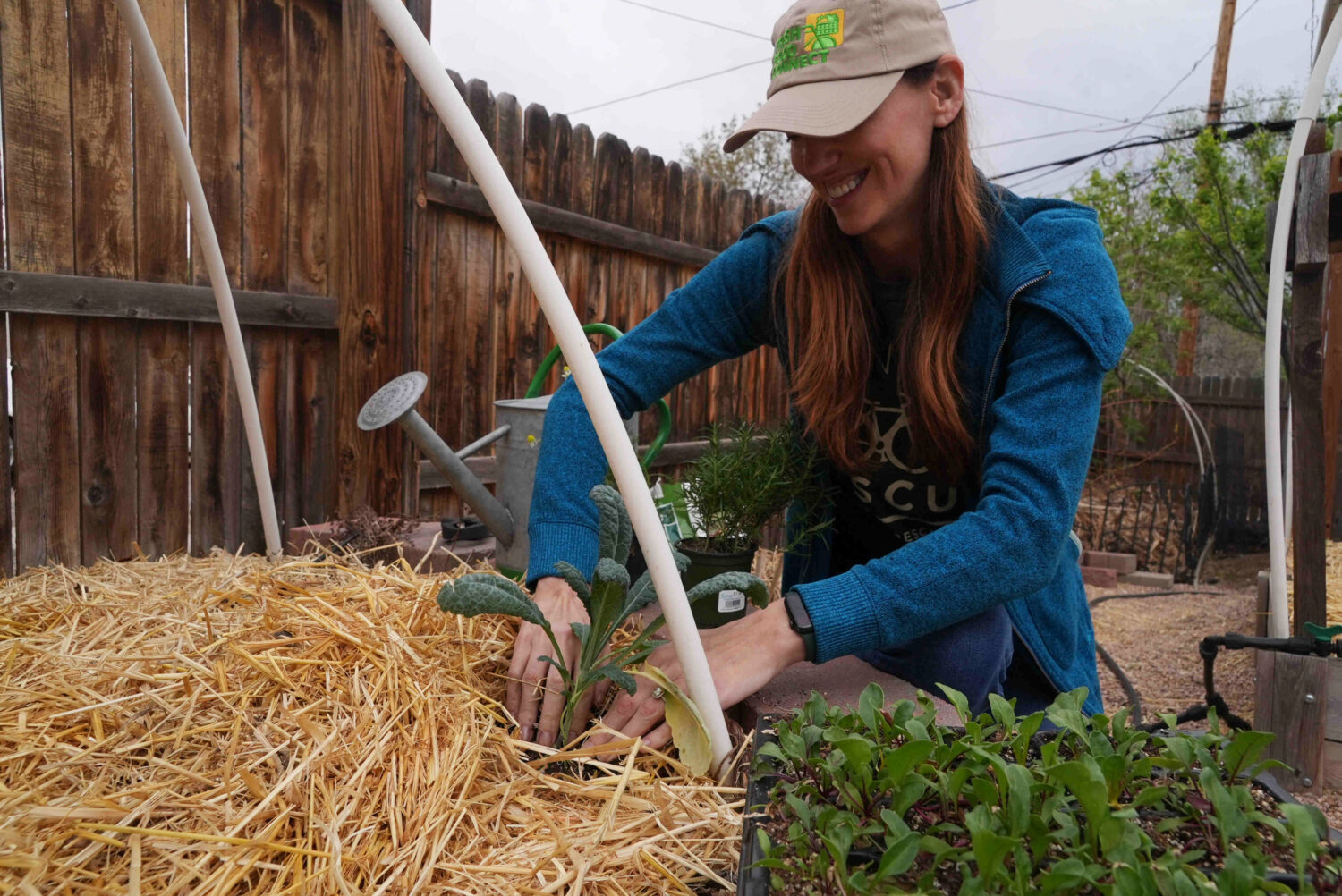
Heather Grady plants a kale seedling in her yard Thursday, April 9, 2026, in Denver. (AP photo/Brittany Peterson)
Credit: ASSOCIATED PRESS
(AP photo/Brittany Peterson)

DENVER (AP) — A few raindrops fell as Heather Grady gingerly transplanted beet seedlings into the earth, but the sky refused to release enough moisture to ease her worries about a dry winter that’s left reservoirs low.
With most of Colorado in drought, Grady and her husband Terrance began discussing how they could conserve more water in their backyard vegetable garden.
“We feel personally responsible, even though it’s not a problem we created,” said Grady, who has committed to cutting back on water and shares her gardening journey on the Homesteading in Denver Instagram account.
A winter of record-low snowfall in much of the U.S. West means less snowmelt to feed the rivers and lakes that supply the region’s water. It has sent a clear message to communities, agricultural producers and businesses — everyone must live with less.
Cities are implementing outdoor watering restrictions. Denver Water announced drought restrictions on March 25 — the earliest in their history. Salt Lake City has urged residents to voluntarily cut back and mandates that government offices do. Cities such as Los Angeles, Las Vegas and Albuquerque already have year-round seasonal watering rules.
Watering a food garden is still typically allowed under these restrictions within a few parameters.
Even where restrictions don’t apply, growing your own produce can be done in a water-wise way, even in a thirsty desert. Here are tips from experts on how to get started.
Greg Peterson, creator of The Urban Farm educational website, advises people to take stock of what water sources are available, including less-obvious ones. Beyond the tap, you can harvest rain in a barrel, collect water from rinsing veggies or letting a shower warm, Peterson said. His favorite example is capturing condensation from air conditioners, typically by placing a bucket under outdoor drainpipes.
His co-educator, Don Titmus, collects greywater several ways for the desert food garden and pollinator oasis he’s created at his home in Mesa, Arizona. In the summer, Titmus said he showers outside and allows the water to run off to the surrounding plants. Titmus also washes dishes in basins with non-toxic soaps so he can use the water in his garden.
When it does rain, capturing it to use later is far better than paying for tap water, said Jamiah Hargins, founder and executive director of the nonprofit Crop Swap LA, which grows food on unused land around Los Angeles. The benefits extend beyond saving money on water bills.
“Rainwater has more oxygen than (tap water)” Hargins said. “It actually makes the roots happier and the plants grow much better.”
Selecting plant varieties that thrive with what nature provides in your area is one of the easiest ways to save on water. Consider hybrids bred to use less water or heirlooms native to your region, said Noelle Johnson in her book, “The Water-Smart Garden.”
Healthy soil has five components: dirt, the air within, organic matter, water and biological life. Healthy soil needs less fertilizer and less water than unhealthy soil, Peterson said.
A soil test can show if you’re deficient in any key nutrients, said Josie Hart, Associate Director of Sustainable Agriculture at Denver Botanic Gardens Chatfield Farms. Gardeners can typically send soil samples for testing at a local public university or private lab.
To prep soil for the first time, break up hard dirt with a tiller or shovel and layer in compost or leaves to create a fluffy texture. In future years, just add compost on top and let the worms move nutrients around, Titmus said.
Sun and wind are the primary factors that dry out a garden. Planting near a fence, tree or shed can help shield them, Hart said.
Shade cloths also reduce evaporation for plants that get stressed in hot, sunny climates by filtering about half the sunlight. These plastic or burlap cloths can be strung on hooks nailed into a structure, or draped over hoops or posts just above the plants.
Johnson, the author who gardens in Arizona, recommends intensive vegetable planting, a practice that minimizes wasted space compared to traditional row planting. The intensive method puts plants closer together in a staggered pattern. Leaves of maturing plants provide shade and reduce evaporation.
Planting directly in the earth also helps because raised beds are more exposed to the elements, Johnson said.
People planting in arid climates may want to consider creating a waffle bed that uses small rows of raised soil in a grid pattern around the plants, Hart said. The ancient technique used by Indigenous farmers helps direct rainfall to their roots.
“Creating a waffle bed is going to capture any moisture you have going and it will keep it there,” Hart said.
Finally, mulch is essential for protecting soil by keeping water in and weeds out, everyone agreed. But be careful with wood mulch, which can poach nutrients from your veggies.
Use an irrigation setup that slowly puts water directly into the soil, experts agree. You can use soaker lines, a drip system or drip tape. Anything that sprays will lose water to the air.
Can options be overwhelming? Sure. But there’s a ton of online resources to help, including a free drip tape workshop through urbanfarm.org. Local nurseries and water utilities also offer free or low-cost workshops.
Using one of these systems, water deeply and less often to teach roots to grow deep where moisture is stored, Hart said. Gardeners in hot, dry climates may think frequent watering helps plants, but it keeps roots shallow. Hart recommends watering on a drip system for at least an hour during the summer, but then going three days without watering in between.
In Denver, the watering pattern is one thing Heather and Terrance Grady plan to switch up this year. They’re going to try deep watering three days a week instead of short daily spurts.
“It’s a huge change,” Grady said. ___
The Associated Press receives support from the Walton Family Foundation for coverage of water and environmental policy. The AP is solely responsible for all content. For all of AP’s environmental coverage, visit https://apnews.com/hub/climate-and-environment