Is college worth the cost? Universities work to show the return on investment of a degree
Oct 15, 2025, 9:08 PM
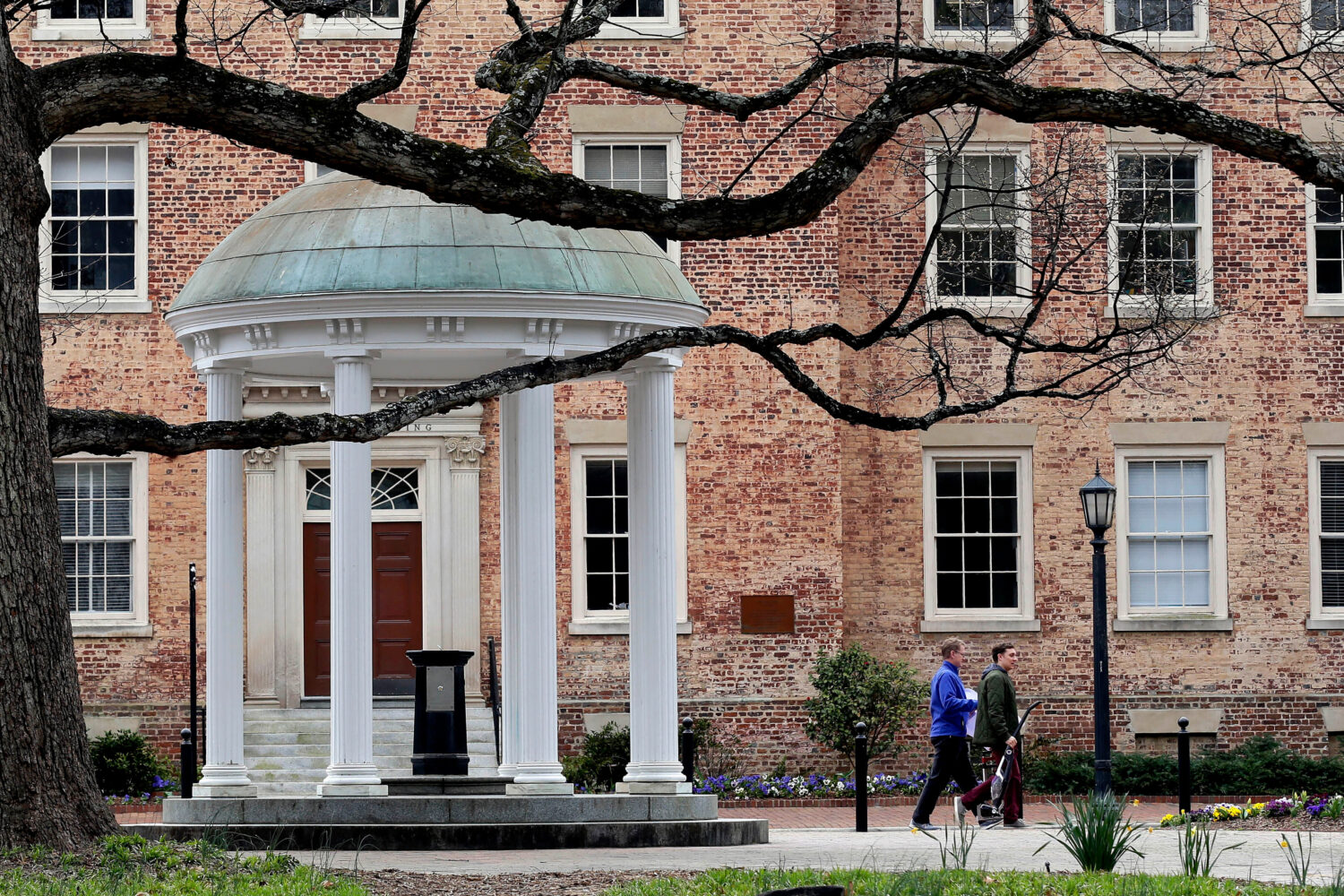
FILE - People walk through University of North Carolina campus March 18, 2020, in Chapel Hill, N.C. (AP Photo/Gerry Broome, File)
Credit: ASSOCIATED PRESS
(AP Photo/Gerry Broome, File)

WASHINGTON (AP) — For a generation of young Americans, choosing where to go to college — or whether to go at all — has become a complex calculation of costs and benefits that often revolves around a single question: Is the degree worth its price?
Public confidence in higher education has plummeted in recent years amid high tuition prices, skyrocketing student loans and a dismal job market — plus ideological concerns from conservatives. Now, colleges are scrambling to prove their value to students.
Borrowed from the business world, the term “return on investment” has been plastered on college advertisements across the U.S. A battery of new rankings grade campuses on the financial benefits they deliver. States such as Colorado have started publishing yearly reports on the monetary payoff of college, and Texas now factors it into calculations for how much taxpayer money goes to community colleges.
“Students are becoming more aware of the times when college doesn’t pay off,” said Preston Cooper, who has studied college ROI at the American Enterprise Institute, a conservative think tank. “It’s front of mind for universities today in a way that it was not necessarily 15, 20 years ago.”
A wide body of research indicates a bachelor’s degree still pays off, at least on average and in the long run. Yet there’s growing recognition that not all degrees lead to a good salary, and even some that seem like a good bet are becoming riskier as graduates face one of the toughest job markets in years.
A new analysis released Thursday by the Strada Education Foundation finds 70% of recent public university graduates can expect a positive return within 10 years — meaning their earnings over a decade will exceed that of a typical high school graduate by an amount greater than the cost of their degree. Yet it varies by state, from 53% in North Dakota to 82% in Washington, D.C. States where college is more affordable have fared better, the report says.
It’s a critical issue for families who wonder how college tuition prices could ever pay off, said Emilia Mattucci, a high school counselor at East Allegheny schools, near Pittsburgh. More than two-thirds of her school’s students come from low-income families, and many aren’t willing to take on the level of debt that past generations accepted.
Instead, more are heading to technical schools or the trades and passing on four-year universities, she said.
“A lot of families are just saying they can’t afford it, or they don’t want to go into debt for years and years and years,” she said.
Education Secretary Linda McMahon has been among those questioning the need for a four-year degree. Speaking at the Reagan Institute think tank in September, McMahon praised programs that prepare students for careers right out of high school.
“I’m not saying kids shouldn’t go to college,” she said. “I’m just saying all kids don’t have to go in order to be successful.”
American higher education has been grappling with both sides of the ROI equation — tuition costs and graduate earnings. It’s becoming even more important as colleges compete for decreasing numbers of college-age students as a result of falling birth rates.
Tuition rates have stayed flat on many campuses in recent years to address affordability concerns, and many private colleges have lowered their sticker prices in an effort to better reflect the cost most students actually pay after factoring in financial aid.
The other part of the equation — making sure graduates land good jobs — is more complicated.
A group of college presidents recently met at Gallup’s Washington headquarters to study public polling on higher education. One of the chief reasons for flagging confidence is a perception that colleges aren’t giving graduates the skills employers need, said Kevin Guskiewicz, president of Michigan State University, one of the leaders at the meeting.
“We’re trying to get out in front of that,” he said.
The issue has been a priority for Guskiewicz since he arrived on campus last year. He gathered a council of Michigan business leaders to identify skills that graduates will need for jobs, from agriculture to banking. The goal is to mold degree programs to the job market’s needs and to get students internships and work experience that can lead to a job.
Bridging the gap to the job market has been a persistent struggle for U.S. colleges, said Matt Sigelman, president of the Burning Glass Institute, a think tank that studies the workforce. Last year the institute, partnering with Strada researchers, found 52% of recent college graduates were in jobs that didn’t require a degree. Even higher-demand fields, such as education and nursing, had large numbers of graduates in that situation.
“No programs are immune, and no schools are immune,” Sigelman said.
The federal government has been trying to fix the problem for decades, going back to President Barack Obama’s administration. A federal rule first established in 2011 aimed to cut federal money to college programs that leave graduates with low earnings, though it primarily targeted for-profit colleges.
A Republican reconciliation bill passed this year takes a wider view, requiring most colleges to hit earnings standards to be eligible for federal funding. The goal is to make sure college graduates end up earning more than those without a degree.
Others see transparency as a key solution.
For decades, students had little way to know whether graduates of specific degree programs were landing good jobs after college. That started to change with the College Scorecard in 2015, a federal website that shares broad earnings outcomes for college programs. More recently, bipartisan legislation in Congress has sought to give the public even more detailed data.
Lawmakers in North Carolina ordered a 2023 study on the financial return for degrees across the state’s public universities. It found that 93% produced a positive return, meaning graduates were expected to earn more over their lives than someone without a similar degree.
The data is available to the public, showing, for example, that undergraduate degrees in applied math and business tend to have high returns at the University of North Carolina at Chapel Hill, while graduate degrees in psychology and foreign languages often don’t.
Colleges are belatedly realizing how important that kind of data is to students and their families, said Lee Roberts, chancellor of UNC-Chapel Hill, in an interview.
“In uncertain times, students are even more focused — I would say rightly so — on what their job prospects are going to be,” he added. “So I think colleges and universities really owe students and their families this data.”
___
The Associated Press’ education coverage receives financial support from multiple private foundations. AP is solely responsible for all content. Find AP’s standards for working with philanthropies, a list of supporters and funded coverage areas at AP.org.