Retirees and Pre-retirees, it’s not too late to de-risk your portfolio
Apr 20, 2026, 10:32 AM
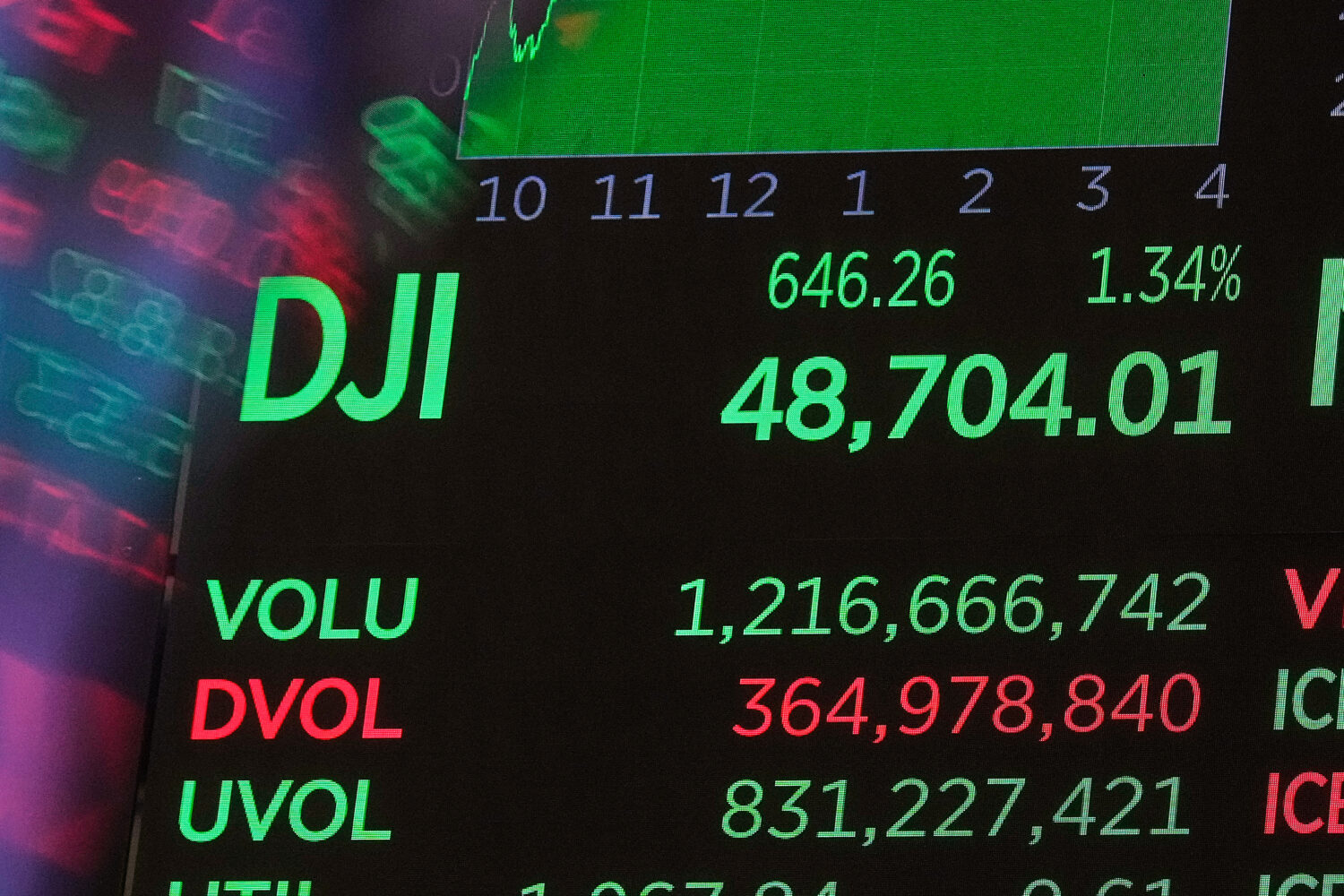
A board above the trading floor of the New York Stock Exchange displays the closing number for the Dow Jones industrial average, Thursday, Dec. 11, 2025. (AP Photo/Richard Drew)
Credit: ASSOCIATED PRESS
(AP Photo/Richard Drew)

For investors hurtling toward retirement, sitting tight with stocks has been the path of least resistance in recent years. Stocks, especially U.S. names, have soundly outperformed bonds.
However, recent events should serve as a wake-up call to take some risk off the table and give bonds a closer look. Stocks have recently encountered some volatility but they’re still near all-time highs. That provides pre-retirees and retirees with an opportune time to scale back equity exposure and plow the proceeds into safer assets like cash and high-quality bonds.
The key benefit that bonds confer to a retirement-decumulation portfolio is their lower volatility. Even though bond returns are apt to be lower than stocks’, bond returns are much more reliable.
In retirement portfolios, holding a component of lower-risk assets mitigates “ sequence risk ” — the prospect of encountering big portfolio losses early in retirement. Because equity-heavy portfolios have the potential for bigger losses than balanced or more bond-heavy ones, that leaves them more vulnerable to sequence risk.
In addition to bonds’ lower volatility, today’s higher yields point to better return prospects from bonds over the next decade than was the case a few years ago. That’s because bonds’ starting yields and subsequent returns are closely correlated. The yield on 10-year Treasury bonds sat at about 50 basis points in the summer of 2020, but today, it’s about 4.3%. Not only does that improve bonds’ forward-looking return prospects, but higher yields also give bondholders more protection against price declines than they had when yields were ultralow. (Even if a bond or bond fund’s price declines, the investor still receives their yield.)
There’s a time-period-specific reason to consider bonds, too. With worries about a slowing economy looming over the market, high-quality bonds will tend to be particularly well situated. Bond returns have been reliably positive in recessionary environments.
Finally, for retirees who worry that they’re too late to de-risk because market volatility is already underway, they shouldn’t sweat the timing too much. Stocks’ extended run leaves many portfolios equity-heavy today. A portfolio that was 60% stocks/40% bonds five years ago would be nearly 80% equity today, without any additional purchases of stocks.
First, what not to do: jettison stocks and go all-in on safety. Yes, uncertainty reigns over both the economy and markets. But the best way to confront uncertain times is with humility and a portfolio that’s diversified enough to perform reasonably well in a variety of scenarios. While recessions and sequence risk are a particularly big problem for portfolios that are too stock-heavy, inflation is the chief threat for portfolios that are too timid and bond-heavy. That’s because the return potential of an all-bond portfolio is relatively constrained, so inflation will tend to gobble up a bigger percentage of returns than is the case with balanced or more equity-heavy portfolios. The Bucket portfolios that I write about include stocks for the good times, bonds for recessionary periods and flights to safety when stocks fall, and cash for when both stocks and bonds struggle, as they did in 2022.
How much you drop into each of those three buckets depends on your spending rate and your proximity to spending. In my standard three-bucket setup, I earmark one to two years’ worth of withdrawals for cash and another five to eight years’ worth of portfolio withdrawals in bonds. Spending from those two buckets could tide you through an extended equity-market downturn. You don’t want to start building out the cash position until you’re a few years from retirement, as the opportunity cost is too great.
If your portfolio’s current allocations are dramatically out of whack with your targets and you are already retired or expect to retire within the next few years, it’s wise to de-risk as swiftly as practical. If retirement is further into the future and/or your current allocations are only modestly away from your targets, you could take a more gradual approach to enlarging your safety portfolio, dollar-cost averaging from stocks to bonds and/or steering new contributions to safer assets.
Finally, de-risking has the potential to trigger a tax bill. You won’t owe any taxes if you focus your rebalancing activities on tax-sheltered accounts. But if you need to rebalance your taxable portfolio, it’s best to use new contributions to address the imbalance and/or get some tax advice on the implications of selling appreciated equity holdings.
_______
This article was provided to The Associated Press by Morningstar. For more retirement content, go to https://www.morningstar.com/retirement.
Christine Benz is director of personal finance and retirement planning for Morningstar and co-host of The Long View podcast.
Related Links
How to Handle Market Volatility at Every Life Stage
https://www.morningstar.com/portfolios/how-handle-market-volatility-every-life-stage
Alternatives in 401(k)s Are a Solution in Search of a Problem
https://www.morningstar.com/retirement/alternatives-401ks-are-solution-search-problem
5 Things to Do Today If You Want to Retire in 2030
https://www.morningstar.com/retirement/5-things-do-today-if-you-want-retire-2030