US coffee prices spike due to tariffs and poor weather
Oct 24, 2025, 1:32 PM
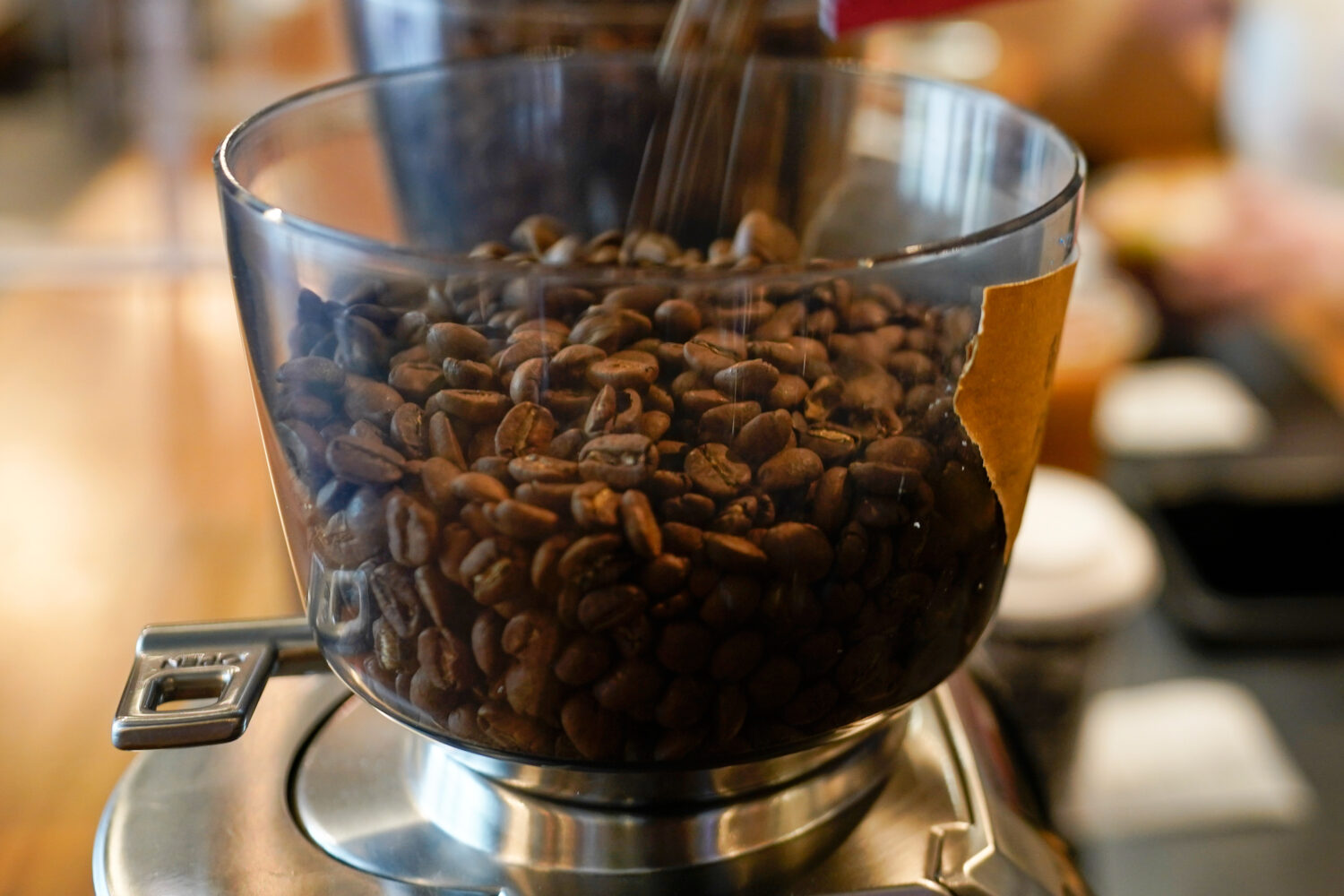
FILE - Coffee beans are poured into a grinder at a cafe in College Park, Md., on Wednesday, Sept. 1, 2021. (AP Photo/Julio Cortez, File)
Credit: ASSOCIATED PRESS
(AP Photo/Julio Cortez, File)

It’s getting more expensive for Americans to get their caffeine fix.
The average U.S. price of a pound of ground coffee hit $9.14 in September, a 3% increase from the August average of $8.87 and 41% higher than in September 2024, according to U.S. government figures. Coffee prices have been increasing sharply since the start of this year.
Consumer prices for food purchased for home use and away from home were 3% in September compared to the same month a year earlier, the U.S. Labor Department reported Friday. The consumer price index, which measures a broader sample of all coffee products, including instant coffee, showed U.S. coffee prices up 19% from September 2024 and flat compared to August.
Nikki Bravo, the co-owner of Momentum Coffee in Chicago, raised prices by about 15% last week for lattes, cappuccinos and other drinks at her four locations.
Bravo said she is paying 15% more for coffee beans compared to a year ago and has started roasting more beans in-house to save money. She gets most of her beans from Africa.
Other items also have gotten more expensive, such as cups and sleeves, she said. In addition, the minimum wage in Chicago rose July 1 to $16.60 an hour.
“At some point we just had to pass it along, we couldn’t continue to eat it,” Bravo said.
Stubbornly high inflation has also left consumers uncertain and less willing to splash out on a takeout coffee, she added. According to Toast, a restaurant management system, the average price of a regular coffee at U.S. restaurants in September was $3.54 compared to $3.45 a year earlier.
Here’s why java is feeling such a jolt and how some are trying to alleviate it:
Outside of Hawaii and Puerto Rico, there are few places in the U.S. that can grow coffee. So 99% of America’s coffee is imported, according to the National Coffee Association, a trade group.
Brazil is the top source for U.S. coffee, supplying 30% of the market. The Trump administration imposed a 40% tariff on Brazilian products in July on top of a 10% tariff imposed earlier. Brazilian producers have begun withholding shipments to the U.S. as they negotiate with American roasters over who will absorb the added cost, reducing supply in the U.S., according to investment bank UBS.
Colombia, which supplies 20% of the U.S. coffee market, is subject to a 10% tariff, but President Donald Trump recently threatened higher tariffs and an end to U.S. aid to Colombia. Vietnam, which supplies 8% of the U.S. coffee market, has been subject to a 20% tariff since the summer.
In September, Trump announced that “unavailable natural resources” could be exempt from tariffs for countries that have reached trade agreements with the U.S. But so far, coffee hasn’t won any exemptions.
Heat, drought and other poor weather conditions have hurt coffee production globally in recent years, causing prices to surge. World coffee prices rose nearly 40% in 2024, according to the Food and Agriculture Organization of the United Nations.
Earlier this month, coffee prices rose after the National Oceanic and Atmospheric Administration declared that La Nina conditions had formed. That raised concerns about the possibility of drought in Brazil.
The risk to coffee production from climate change has some researchers trying to develop more climate-resistant varieties of coffee.
In September, a bipartisan group of U.S. House members introduced a bill that would repeal all tariffs on coffee.
“We only produce 1% of the coffee that Americans consume. It’s one of the best examples of Trump’s blanket tariffs making no economic sense,” U.S. Rep. Ro Khanna, a California Democrat, said. Khanna co-sponsored the bill with U.S. Rep. Don Bacon, a Nebraska Republican.
Bacon said Friday that he became interested in the issue when he saw how much coffee cost at the grocery store. He said he’s also not a fan of tariffs and thinks Congress — not the president — has the power to levy them.
Bacon said he thinks the Trump administration now realizes that putting tariffs on products that the U.S. can’t grow is bad for consumers, and he’s hopeful the bill will pass.
“I hope the president and Congress see the positive benefit of removing this tariff on everyday Americans,” he said.
___
Durbin reported from Detroit. Rugaber reported from Washington