Plans for Cedar River asphalt plant dropped amid controversy
Jul 17, 2025, 2:29 PM

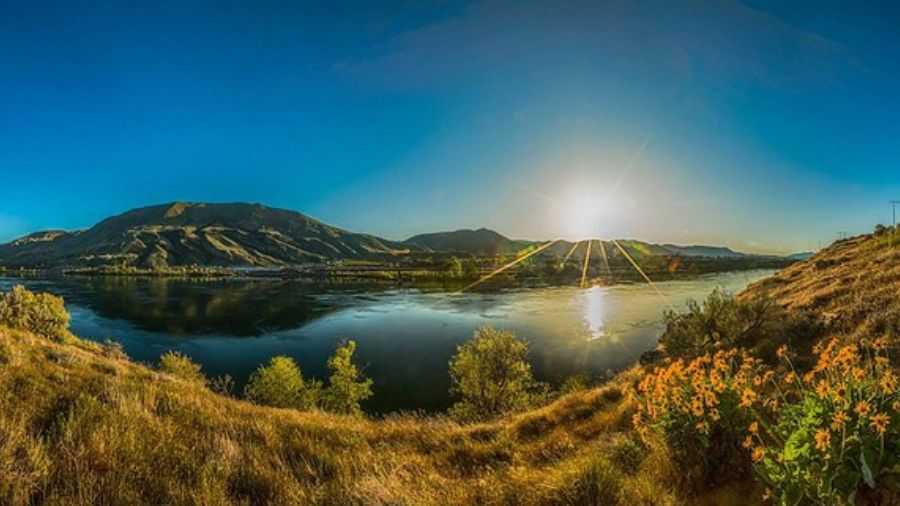
The Cedar River is pictured in King County. An asphalt plant planned next to the river has been scrapped. (Photo courtesy of King County)
(Photo courtesy of King County)

A controversial asphalt plant proposed along the Cedar River has been scrapped.
This ends an eight-year battle between Lakeside Industries and the community group “Save the Cedar River.”
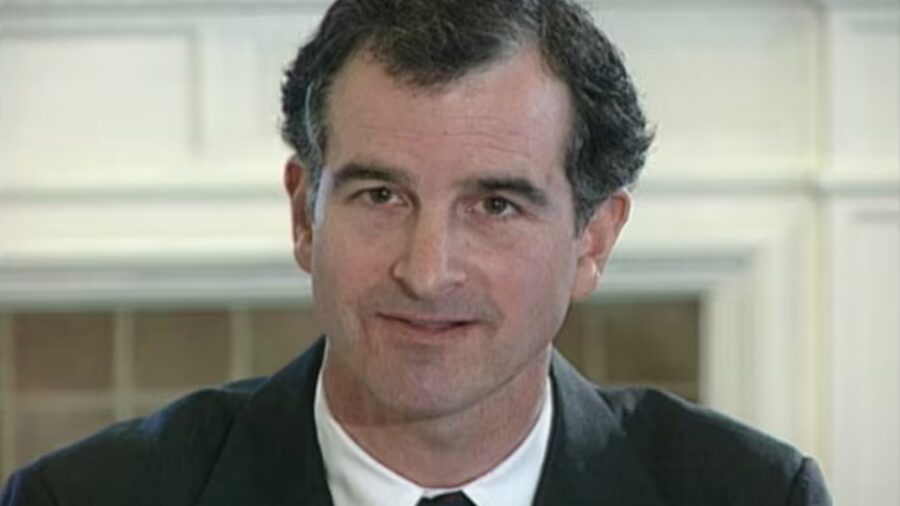
Instead, King County Council Vice Chair Reagan Dunn, the representative of District 9 where the construction was set to take place, brought the two sides together. He has announced that Lakeside Industries will build warehouse space with the support of the community group, eliminating the presence of crude oil, burners, rock crushers, and any associated noise from the sensitive wetlands area.
“Slowly, we work towards a compromise,” Dunn said.
Lakeside Industries CEO Mike Lee said his company sees this as a “win-win for the community and Lakeside.”
The battle to save the Cedar River
In 2022, Save the Cedar River promised to make a formal appeal against the construction of the asphalt plant.
Formed originally in 2018, Save the Cedar River received support from the City of Renton, elected officials, businesses, including the clothing company Patagonia, and more than 10,000 signatures throughout their fight. Patagonia pledged $20,000 to the organization $20,000 for legal fees.
“We pressured and pressured King County Council, and it fell on deaf ears,” Save the Cedar River co-chairman Bob Baker said in 2022. “Dunn did go and get a moratorium to stop the plant for six months, but no one else on the council would back him for a final moratorium.”
Dunn previously called plans to build an asphalt plant near the Cedar River a “troubling decision” when the Department of Local Services Permitting Division approved the plans.
“I have long maintained that allowing an asphalt plan in a rural area, along SR-169 and just feet away from the Cedar River, is shockingly poor land use policy,” Dunn wrote to division director Jim Chan. “One that not only goes against King County’s central value of environmental preservation, but our state and county’s growth management policy that aims to preserve rural character.”
“In my opinion, a shady business transaction took place,” Baker said. “Jamie Durkan approached Council member Reichbauer as a lobbyist, and soon after, Reichbauer went to the council and said, I would like to convert this property into industrial land.”
Jamie Durkan is the brother of former Seattle Mayor Jenny Durkan.
All but one council member agreed to the new proposal, the one exception being former King County Executive Dow Constantine, now CEO of Sound Transit.
“Executive Constantine has opposed this project every step of the way, going back to 2008 when then-Councilmember Constantine was the sole vote against the Comprehensive Plan amendment which allowed industrial development on this parcel,” former King County Communications Director Chase Gallagher wrote on Constantine’s behalf. “The County Council voted for the rezoning and did not extend its own moratorium in 2017. Constantine doesn’t have the ability to pick and choose which of the lawfully passed ordinances the departments implement.”
Property sold to Lakeside Industries in 2008
The property was sold to Lakeside Industries for $9.5 million in 2016, after being initially valued at $1.3 million in 2008.
The establishment of an asphalt plant that close to a water source was devastating news for Renton residents. Covington residents cited reasons for not building a plant in their town that included noxious odors, bad air, pollution, and smog, nausea-inducing odor, coughing fits and asthma, difficulty breathing for toddlers and infants, and consistently bad emissions, according to the Puget Sound Clean Air Agency.
Covington currently has a ban on asphalt plants, and Lakeside Industries is in the process of moving its plant out of the city.
According to Lakeside president Michael Lee, they chose this site because “it’s got all the right kind of characteristics of a good site for an asphalt plant.”
Lee stated that neighborhoods and residents will not be very close to the plant, but the blueprints of the project revealed it will be less than 500 feet from residential areas.
RELATED STORIES


Asphalt plant presented potential dangers
Beyond the residential complaints and the fear that property values could drop by approximately 56% according to Blue Ridge Environmental Defense League, other potential dangers lurk, according to Baker.
“1.3 million people rely on this river for drinking water,” Baker said. “This water could and will be polluted with particulates from the plant.”
Salmon and trout would be in danger of surviving near the plant due to increased toxins in the water and the increase of lights during evening and night hours.
“Emerging research suggests artificial nighttime lighting alters the behavior of these juvenile migrants in ways that make them more susceptible to predation and increases the length of time their predators actively feed,” an environmental report from the Salmon Habitat Conservation read. “Reductions in predation rates and improved survival of juveniles are critical for boosting our odds of recovering self-sustaining Chinook populations.”
“This will kill off generations and generations of fish,” Baker said.
Additional concerns were that the asphalt plant could catch fire and that its production could cause a landslide. This was confirmed by Hugh Brown, Ph.D., the former president of the Indiana Land Protection Alliance.
“Although the project site is relatively flat, geologic studies done in the area show that the steep canyon walls above the site are mantled with unstable soils,” Brown wrote in a report. “These soils have a high potential to move and could reach the developed portion of the site as a result of an earthquake or erosional processes resulting from a period of high rainfall, which lowers soil strength. There is ample evidence that the site has significant risks that need to be addressed.”
King County decided not to file for an Environmental Impact Statement (EIS), stating the issues being brought to the council are not up to the parameters for an EIS. An EIS is not required for construction projects this size, leaving it up to the discretion of the county.
“We have every intention of stopping this project,” Baker said. “We will take this to the very end. If it takes another five years, it takes another five years.”
Contributing: Jillian Raftery and Scott Carty, KIRO Newsradio; Julia Dallas, MyNorthwest
Follow Frank Sumrall on X. Send news tips here.