Is JBLM any different than any other Army base?
Mar 28, 2012, 5:32 AM | Updated: 8:54 am

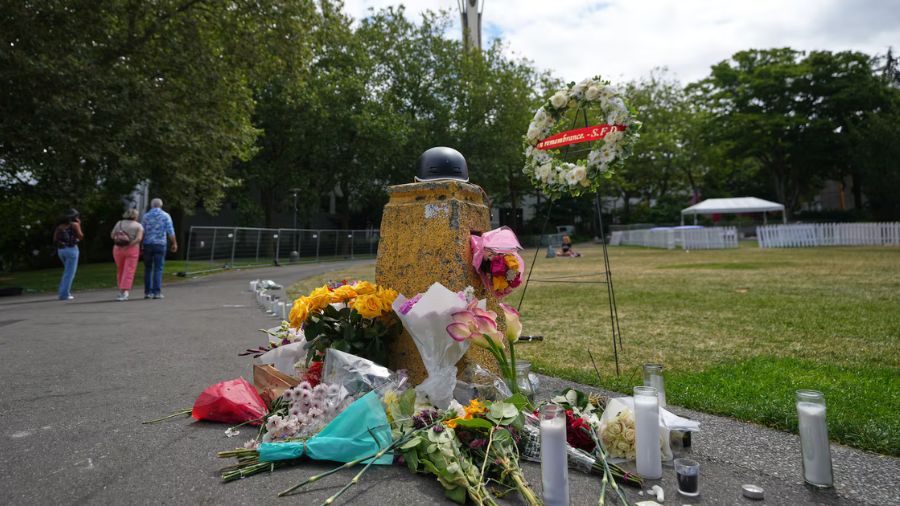
Joint Base Lewis-McChord has been called the most troubled base in the Army. (AP Photo)
(AP Photo)
You might assume every Army base is the same. Each with a
little infantry, a little armor, a medical corps, and some
artillery.
But that’s not how it works. To streamline training and
readiness, specific groups live and work together at
certain bases. There are only a handful of Army bases
that cater to those soldiers you would consider the hard-
charging, front-line, firefight-ready troops. One of them
is Joint Base Lewis-McChord. Others are Fort Bragg, Fort
Hood, Fort Benning, Fort Campbell, and Fort Drum.
At JBLM you will find the Infantry, the Rangers, the
Special
Forces, and the Strykers; the soldiers who train to kill.
All of these bases have seen their share of violent
crime in the last ten years of war; murders, attempted
murders, domestic violence, and suicides. Lewis-McChord
is not the exception.
Retired Army Colonel and CBS military analyst
Jeff McCausland told MyNorthwest.com a million Army
troops have been deployed and more than 100,000 of them
have served multiple tours. He said they’re all beat.
“This is a very tired force,” McCausland said. “I think
the average American, who’s dealing with enormous problems
at home, whether it’s economics or whatever, doesn’t
realize that we are now in the longest war in our history.
This is longer than World War II and World War I combined,
as far as the United States is concerned. It’s longer
than Vietnam. It’s longer than the Revolutionary War.”
And all deployments are not the same. A soldier who has
served multiple tours with a sustainment or logistics unit
can have different stresses than a front-line infantry
soldier or a Ranger who’s facing potential firefights each
day.
Being stationed on those front-line patrols, Colonel
McCausland said, can really play tricks on soldiers
because the expectation of intense firefights and death is
always hanging over their heads. “Combat is, quite
honestly, long periods of mind-numbing boredom
interspersed with short periods of very, very intense
activity,” he said. “It’s the combination of that
boredom,
but expectation of violence that I think gets inside some
people’s heads after a while.”
That’s why some military experts say bases with these
soldiers, like Lewis-McChord, should expect to see off-
base problems.
What does set Lewis-McChord apart from other similar
bases are the cases of the civilian “Kill Team” where
soldiers were convicted of killing civilians in a combat
zone and now, Robert Bales, who is accused of killing 17
civilians in Afghanistan this month.
If there is a problem that’s causing JBLM soldiers to go-
off in combat, McCausland said it has to be found and
fixed. “We need to look very carefully at what’s going on
at Fort Lewis, in terms of the processes and procedures,
to ensure that if there’re lessons to be learned, let’s
learn them,” he said. “We need to examine the command
climate, and frankly if there are things wrong in the
command climate that has caused these things to occur, we
need to hold those leaders every bit as accountable as we
do those individual soldiers who have been involved in
some of these terrible incidents.”
A JBLM spokesman told MyNorthwest.com it is looking at
every possible explanation for why its soldiers have been
involved or suspected of being involved in these cases of
killing civilians, but he said it isn’t likely that
there’s a “culture” at the base that’s breeding this. He
said there is so much turnover in personnel at the base
that no one stays there long enough for something like
that to develop, though Staff Sergeant Bales had been at
the base for many years.
The spokesman said JBLM has experienced tremendous growth
over the last decade, nearly doubling its size, and it’s
not having any issues that other Army bases aren’t having,
too.