Kalshi ordered to cease most betting operations in WA
Aug 13, 2026, 12:45 PM | Updated: 12:48 pm
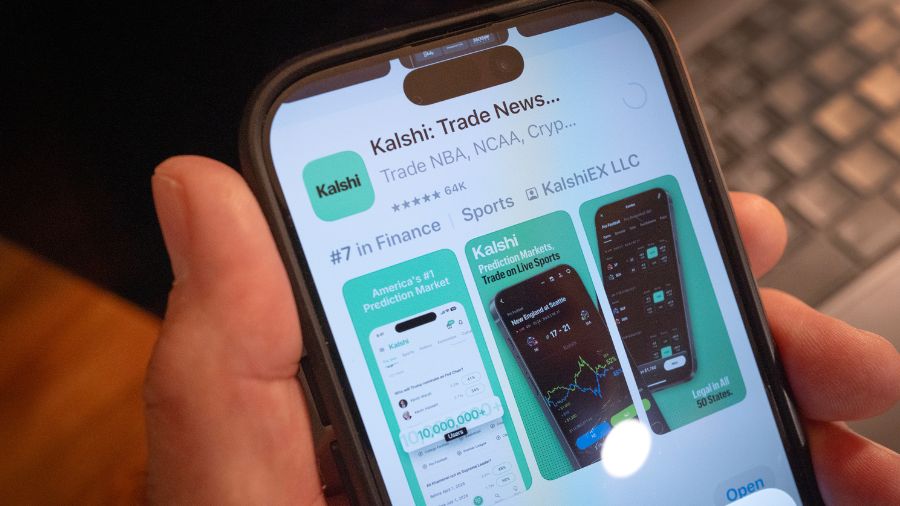
An app for Kalshi, an online prediction market site, is shown. (Photo: Scott Olson, Getty Images)
(Photo: Scott Olson, Getty Images)
A King County Superior Court judge issued a final order requiring Kalshi to cease many of its Washington operations after finding that Kalshi violated the Washington Gambling Act and the Consumer Protection Act by running an illegal gambling operation in Washington.
The order requires Kalshi to stop offering, accepting, and facilitating any bets on sports, elections, politics, entertainment, culture, tech and science, or mentions in Washington, the Washington State Office of the Attorney General announced.
Kalshi has to implement an IP address and residency-based geofence by Aug. 19 and a multi-source geofencing solution by Sept. 2. The requirement does not include all wagers offered on Kalshi, though it includes a substantial portion of their business. The AG’s office noted that Kalshi has been increasingly prioritizing sports wagers in recent years.
“Kalshi has gotten rich promoting wagers on sports, elections, natural disasters, events related to the Iran War, and more. Under this order, Kalshi is banned from offering wagers on most of those topics in Washington,” Attorney General Nick Brown stated. “As this case moves forward, we will continue to enforce Washington law and hold Kalshi accountable for misleading consumers.”
Order follows injunction finding Kalshi was likely violating state law
The order aligns with a court-granted preliminary injunction in July, where a judge found that Kalshi was likely violating the law and that “substantial injury to Washington consumers” was likely to occur without an injunction to stop Kalshi’s practices. Kalshi requested that the Washington Court of Appeals stay this injunction, though the court denied the request.
The AG’s office noted that under Washington law, gambling is recognized as “staking or risking something of value upon the outcome of a contest of chance or a future contingent event,” something Kalshi’s activities fall under that definition.
Every Kalshi bet includes risking money, relying in part on chance, with a promised payout for winners. Kalshi’s website and applications show users a variety of events that they can wager money on and the odds for each event, dictating how much the bettor will be paid if the event occurs, similar to the functions of sportsbooks and other gambling operations.
Kalshi has also been banned from advertising to Washington consumers over the wagers covered by the injunction, such as sports and elections. The court ruled, “Kalshi’s provision, marketing, and advertising of illegal gambling activities constitute unfair and/or deceptive acts or practices.”
RELATED STORIES



Kalshi ad showed a user texting about betting on the NFL from Washington
Kalshi previously advertised that they allow consumers to “bet on anything” by simply calling their service trading on a “prediction market” instead of “gambling.” In a specific Kalshi advertisement, a person texted another stating that they “found a way to bet on the NFL even though we live in Washington.” That advertisement showed Kalshi’s awareness that it was attempting to skirt state law.
The AG’s office argued that this is a deceptive practice because Kalshi implied that its service is legal when it is not.
The court also banned Kalshi from offering bets on “mentions,” which is when a user wagers money on a public figure saying particular words. In addition to violating Washington’s gambling laws, “mention” bets carry the potential for cheating by people close to the source.
“From the beginning, when Washington became a state in 1889, its constitution prohibited gambling on state lands, and the state continues to carefully regulate gambling activities to protect and safeguard the public to this day,” the AG’s office stated. “In 2006, the Legislature amended the 1973 Gambling Act to make it clear that internet gambling is prohibited under Washington law. The AG’s office will continue to enforce that law.”
Follow @http://twitter.com/Mynorthwest