King County hoping to close heat disparity gap in low-income areas
Jul 25, 2022, 1:01 PM

(Photo by: Christin Marit/Oneworld Picture/Universal Images Group via Getty Images)
(Photo by: Christin Marit/Oneworld Picture/Universal Images Group via Getty Images)
Western Washington is preparing for a heat wave but it’s going to hit some harder than others.
Earlier this year, King County announced it is developing a heat strategy plan to better handle extreme heat waves.
But data shows certain neighborhoods — particularly lower income areas — tend to get much hotter.
Those behind the heat strategy say they’re hoping to close that heat disparity gap.
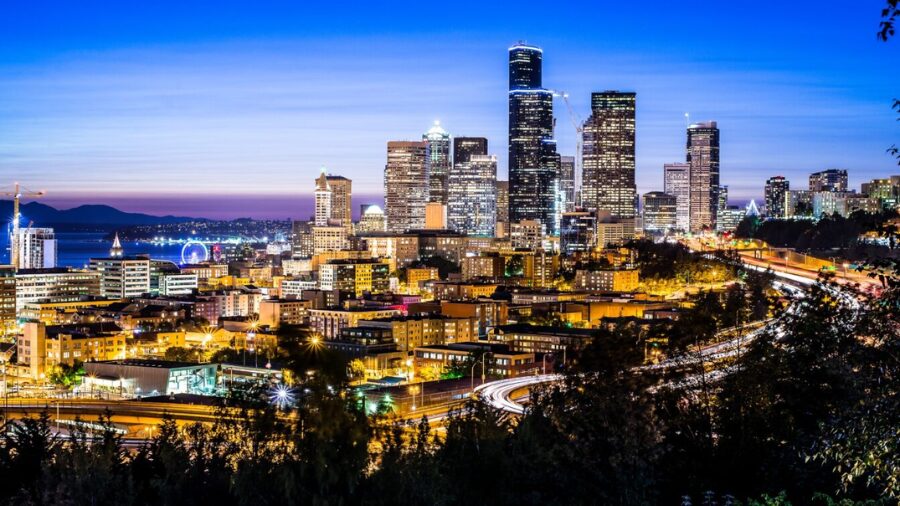
The hottest areas are in south King County. Public health officials say areas like Renton, south Seattle, Kent and Auburn face more intense heat with fewer options to escape it because those areas tend to have a lot more concrete and fewer green spaces and tree canopies.
In the Seattle-metro area, about 56% of homes still don’t have air conditioning, according to the U.S. Census Bureau.
Lara Whitely Binder is King County’s climate preparedness manager.
“We definitely see in south King County we have higher temps, and areas where we see a significant overlap with low-income, health disparities,” said Binder.
A heat map of temperatures in King County on a July day in 2020 showed a 20-degree difference between some neighborhoods.
Public Health—Seattle & King County acknowledges the heat disparity.
“People in lower socioeconomic communities and (people of color) are frequently living in areas where the heat is more intense and there’s nowhere to go to escape it,” said Dr. Jeff Duchin, health officer for Public Health—Seattle & King County.
During last year’s record-breaking heat wave, temperatures reached 118 degrees in the hottest areas.
The extreme heat killed 91 people in Washington, according to the state health department.
Erica Asinas is with the University of Washington’s Climate Impacts Group.
Her focus is how social and political systems play a role in communities adapting to climate change.
For example, a history of segregation means today, more people of color live in certain neighborhoods.
“Climate change doesn’t fall on a blank landscape. It always falls in a context. And in this country, that context is this crazy racial wealth gap where we’re seeing prevalent inequities shaped over time,” said Asinas.
Part of King County’s extreme heat strategy plan includes efforts to close the heat gap.
“That process is going to include a number of options, particularly with engaging with front-line community,” said Binder.
King County has created a climate equity community task force with more than a dozen people from different backgrounds.
Michelle Montgomery with the University of Washington’s Tacoma branch says including diverse voices can lead to dramatically different ideas on the table, as well as solutions.
“If there was low income housing that had greener infrastructure, would you really need air conditioning all the time?” said Montgomery.
Part of King County’s plan already includes creating more green spaces.
“What is diversity, what is inclusion and what does that mean? So, for somebody that lives in Magnolia or Queen Anne, extreme heat to them might be, ‘I need a pool.’ Or ‘I need to get a better boat with air conditioning.’ Right? So, there’s different conversations about how you deal with heat,” said Montgomery.
Officials with the 3 million Trees Project say tree planting will have an “emphasis on tree canopy in communities where there is the greatest need.”
Asinas points out that even adding green spaces needs careful thought.
“The main concern is you’re adding a public amenity, something that people want, which can increase real estate values in a particular neighborhood and increase housing costs, and increase displacement risks,” she said.
King County officials said they are keeping such issues in mind.
“That the displacement that can happen when we make improvements in neighborhoods is a big concern for King County,” said Binder.
King County hopes to have its extreme heat mitigation plan ready about a year from now.