‘Your heart sinks, your stomach sinks’: Seattle doctor mourns colleagues killed in Israeli airstrike
Nov 17, 2026, 5:58 AM
(Photo courtesy of KIRO 7)
(Photo courtesy of KIRO 7)
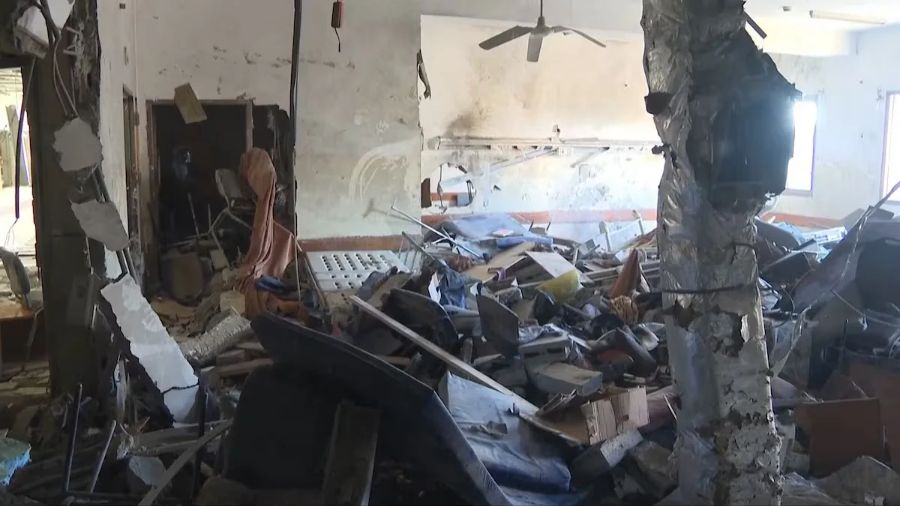
Months before an Israeli airstrike tore through the surgical wing of Nasser Medical Complex in Gaza, Seattle physician Dr. Tanya Shah says she worked alongside its healthcare workers and treated patients inside one of the territory’s few remaining major hospitals.
Now, Shah is watching the destruction from thousands of miles away.
“I was sleeping in that same floor that got bombed,” Dr. Shah, who volunteered at Nasser Medical Complex in January, said.
After the bombing, former colleagues reached out to her.
“My first actual response was that I started crying,” Dr. Shah said. “And it was just like your heart sinks, your stomach sinks.”
The Israeli military admitted to carrying out the Nov. 12 strike on the hospital in Khan Younis. Gaza health officials said six people were killed and dozens wounded.
One of those killed, according to Gaza health officials, was surgeon Dr. Rizk Abu Shaira.
“I would see him in ICU rounds,” Dr. Shah said. “But I would occasionally help in the operating room, as well. So, I worked with him in a couple cases.”
She described Dr. Abu Shaira as an “incredibly kind” man.
Dr. Abu Shaira was recently featured in a newly released film called “American Doctor,” documenting local and international healthcare workers at Nasser Medical Complex.
Dr. Shah provided videos to KIRO 7 showing the aftermath, including one of a deceased man on a gurney whom she identified as Dr. Abu Shaira.
“It hits really hard to not only watch a civilian, a surgeon, but also someone that I’ve intimately worked with and respect greatly,” Dr. Shah said.
Doctors Without Borders condemned the attack, issuing this statement:
“Doctors Without Borders/Médecins Sans Frontières (MSF) is appalled and outraged by the Israeli airstrike on Nasser Hospital in Khan Younis, Gaza, last night, which killed six people, including a child and a surgeon, and injured 52 others. Attacks on hospitals not only harm those directly affected but also deprive people in the community of critical medical services.”
The Israeli military said the strike on Nasser Hospital targeted a Hamas commander and other militants, but the commander it identified was not among the dead, according to the Associated Press.
While Dr. Shah was not at Nasser Hospital in this most recent strike, she says, during her more than 30 days volunteering at Nasser Medical Complex in January, she and her colleagues did not leave the hospital.
“Never once did I see soldiers in the hospital, never once did I feel like there was an ongoing mission somewhere in the hospitals,” Dr. Shah said.
Remnants reportedly recovered at Nasser Medical Complex have been identified as belonging to a GBU-39/B Small Diameter Bomb, a weapon manufactured by Boeing.
Boeing is one of Washington state’s biggest employers and builds commercial airplanes in the Puget Sound region. The GBU-39 belongs to the company’s defense business, and government contracting records have placed production of the weapon in St. Louis, Missouri, rather than at Boeing’s Washington commercial-aircraft factories.
KIRO 7 reached out to Boeing regarding the reported GBU-39 debris, including questions about its manufacture and whether the company could trace the munition. Boeing had not responded, as of publication.
Dr. Shah believes Americans, including people living in Washington, should be paying attention to a humanitarian crisis still unfolding thousands of miles away.
“People in Puget Sound should know where their taxpayer money is going, and they should know how the United States is involved,” Dr. Shah said.
Dr. Shah said the images from Nasser Medical Complex have left her struggling with survivor’s guilt, but rather than remain silent; she said she wants the people she treated and worked beside in Gaza to remain visible to people back home.
“With this recent election, now it’s about holding our politicians accountable as well, to start having momentum and start pressuring for change,” Dr. Shah said. “It all starts with having a conversation.”