City of Seattle agrees to pay $515,000 settlement over man killed by police in 2018
Oct 14, 2021, 6:59 AM
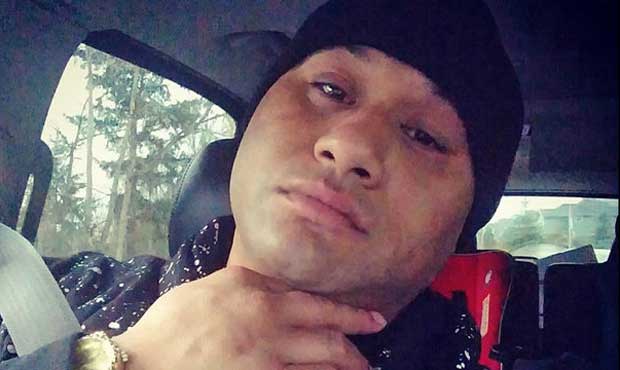
36-year-old Iosia Faletogo was shot and killed by police in 2018. (KIRO 7 )
(KIRO 7 )
The City of Seattle will be paying out a $515,000 settlement over the 2018 fatal police shooting of 36-year-old Iosia Faletogo.
Family skeptical of initial reports after fatal officer-involved shooting in Seattle
According to a report from the Seattle Times, the agreement was reached in U.S. District Court on Wednesday. The money will largely go to Faletogo’s two young children, in the form of annual payments spanning four years starting in July of 2033.
Faletogo was shot and killed on Dec. 31, 2018, when he was stopped by Seattle police officers while driving along Aurora Avenue North near North 96th Street, when officers noticed a Department of Licensing flag that indicated he was driving under a suspended license. They also observed him making an improper lane change.
Body cam footage released by SPD shows Faletogo running out of his car shortly after being stopped, with three officers in pursuit. He was eventually brought to the ground in the grass off the side of the street.
The footage is blurry at points, but provides multiple angles, appearing to show a gun dropped on the grass near Faletogo as he was taken to the ground.
“You’re going to get shot! You’re going to get [expletive] shot!” one officer loudly repeated. Calls for a TASER are also heard in the background.
The humanity behind the numbers in slew of tragic shootings across Seattle
At one point during the ensuing scuffle, Faletogo can be heard saying, “Nope, not reaching.” Moments later an officer fired a shot into his head.
A subsequent investigation from the Office of Police Accountability ruled that officers involved in the shooting had acted with “reasonable” force, stating that Faletogo “took no actions and made no statements — except that uttered in the instant before he was shot — that indicated any intention on his part to surrender.” The report further noted that the OPA believed Faletogo’s “movements were consistent with trying to grab and potentially use the handgun.”
In their lawsuit, Faletogo’s family alleged that his vehicle initially caught the attention of police officers because “Iosia was a Pacific Islander man riding in a car with a black woman in a predominantly white neighborhood in North Seattle.”
Follow @http://twitter.com/Mynorthwest