Tacoma mayor defends bathrooms, water for homeless
May 24, 2017, 5:37 AM

Tacoma officials added portable toilets and a water line to the Tacoma Tideflats area. (KIRO 7)
(KIRO 7)
On first glance, sanitary services may seem like a mere convenience for campers, but it’s actually part of Tacoma’s tough love approach to homelessness.
RELATED: City clears out its own ‘Jungle’ homeless encampment
“To the surprise of no one, the folks who got cleared out (of the Jungle in April) simply just set up camp elsewhere,” Tacoma Mayor Marilyn Strickland told KIRO Radio’s Dave Ross. “I was looking at that and saying, ‘We cannot keep doing the same thing over and over and expecting a different result.’”
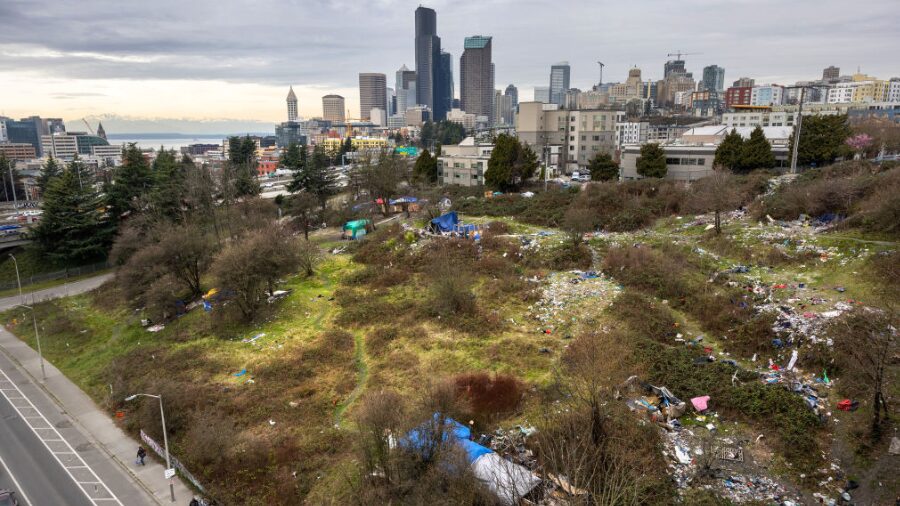
Tacoma now provides bathrooms and running water at a homeless encampment known as “The Compound.” Garbage service is also provided. The services will be available for up to six weeks while the city brings in assistance aimed at getting low- and high-barrier homeless into housing. After that, the encampment will be cleared out.
“These pop-up stations with sanitation services are temporary in nature to help folks get on their feet, getting access to services,” Strickland said. “But we have every intention of cleaning out the encampments after the six-week period is up and transitioning folks who want help into temporary shelter and possibly long-term housing.”
“We are mitigating the human suffering that is going on, because you have a lot of people living in garbage and filth, to be blunt,” she said. “But we also realize we have to have a law-enforcement component because, in some cases, there are people preying on people who are homeless — they are selling them illegal drugs, and some of the folks who are homeless are using illegal drugs.”
Other folks are working people unable to afford housing costs in the area, Strickland said. Some are women with children fleeing domestic violence. There are a lot of reasons, and Strickland said Tacoma is finding out that there is no single approach to all who are experiencing homelessness.
“The folks who are suffering from homelessness have got to take some responsibility of ownership, of trying to improve their situation,” Strickland said. “As an elected official, sometimes people say to me, ‘What are you going to do for me?’ My reply is, ‘What are you trying to do for yourself, and how can we make that happen?'”
Follow @http://twitter.com/Mynorthwest