WA Dept. of Health: Tick travel tips to remember this summer
May 20, 2024, 4:07 PM | Updated: May 26, 2024, 12:17 pm
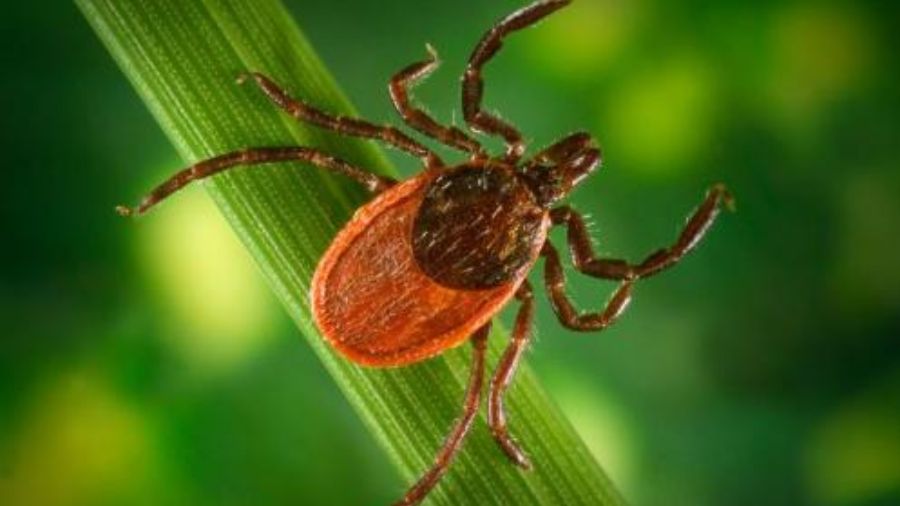
Female western black-legged tick. (Photo courtesy of the Washington State Department of Health)
(Photo courtesy of the Washington State Department of Health)

Editors note: MyNorthwest was informed via the Department of Health (DOH) that outdated information was used from the DOH website. The section on tick species has been updated to include more relevant information.
Washingtonians love a good hike, especially during the summer. While enjoying nature has vast benefits, it can also lead to bug bites. One parasite to be extra prepared for is ticks.
Ticks, according to the Associated Press, are small, eight-legged bloodsucking parasites — arachnids, not insects — that feed on animals and sometimes people. Some ticks are infected with germs that can cause illness, and they spread those germs when they bite.
There is no widely accepted estimate of how many ticks there are from one year to the next, but there is a scientific consensus that they are an increasingly common health hazard in large portions of the United States.
According to the Washington State Department of Health (DOH), ticks are most active during the spring and summer. The arachnids can be dangerous because they harbor a number of diseases, those found in Washington are: anaplasmosis, babesiosis, Lyme disease, Rocky Mountain spotted fever, tick-borne relapsing fever, tick paralysis, tularemia and ehrlichiosis.
The DOH states the best defense against ticks is prevention.
Preventing ticks
Many ticks live in grassy, brushy or wooded areas, so avoid those when possible. When hiking, walk in the center of the trails. Another tip is to wear appropriate clothing. Light-colored, tightly woven long pants and a long-sleeve shirt are recommended, along with tucking pant legs into socks or boots, and shirts into pants.
Tick repellent is also recommended. The Environmental Protection Agency provides a search tool to find the best repellent for each person’s needs. However, the invasive insects can also hitch a ride on backpacks or pets, along with clothing. People should carefully examine themselves and their gear before heading home. After arriving home, shower as soon as possible. The DOH says this is the best chance of preventing Lyme disease or other tick-borne diseases.
When looking for ticks, inspect areas in and around the hair, head, neck, ears, under arms, inside the belly button, around the waist, between the legs and behind the knees. The DOH states that ticks can be very small before the feed and may look like a freckle or a speck of dirt.
Then, continue to check for ticks for a few days after potential exposure.
If a person does find a tick, the DOH says to remove it as quickly as possible with fine-tipped tweezers. Grasp the tick as close to the skin surface as possible, and pull upward with a steady, even pressure. Don’t twist or jerk the tick, as it may break off and remain in the skin. The department says if that happens, try to remove the rest with clean tweezers. If that’s not possible, leave it alone and let the skin heal.
After removal, wash hands with soap and water. If a rash, fever or flu-like symptoms develop, see a healthcare provider.
Tick species in Washington
There are four types of ticks in Washington. According to the DOH, the western black-legged tick carries Lyme disease and is most common in Western Washington along the eastern slopes of the Cascade Mountains. The western dog tick and the Rocky Mountain wood tick carry spotted fever and tularemia and are most commonly found in Eastern Washington. Soft ticks carry tick-borne relapsing fever.
The DOH also asks for people to submit their ticks so it can identify which tick species are encountered by the public. To start the submission process, go here.
For more tick resources, visit the DOH’s website.
Contributing: Mike Stobbe, The Associated Press
Julia Dallas is a content editor at MyNorthwest. You can read her stories here. Follow Julia on X here and email her here.