Warning: Your new baby might cause serious marital stress
Aug 12, 2015, 9:49 AM | Updated: 12:44 pm
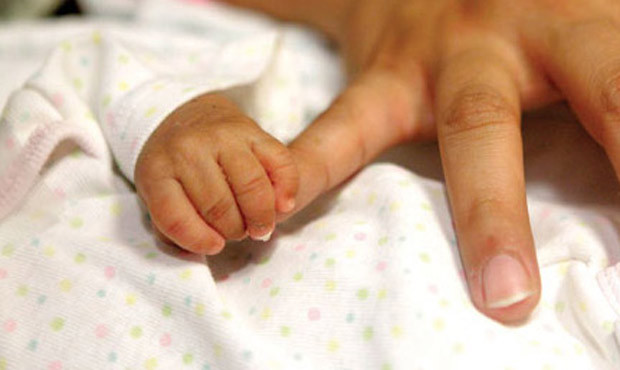
A new study reveals that happiness takes a nosedive after parents have their first baby. (AP)
(AP)

Having a baby? Don’t expect your little bundle of joy to bring, you know … joy. You’d probably be better off bracing yourself for some of the toughest emotional times in your life.
A new study reveals that happiness takes a nosedive after parents have their first baby.
The researchers took data from the Socio-Economic Panel, the longest data set of its kind: annual interviews with people in Germany spanning more than two decades.
For this particular analysis, researchers looked at a sample of about 2,000 new moms and dads in Germany and the conversations with them between 1984 and 2010.
The study finds that the transition to parenthood is tough and the ones who were unhappy are the ones who opt not to have a second child. Further, this might help explain why fertility rates in developed countries are going down.
So why does happiness plummet when that tiny, new, mind-blowingly beautiful and strange creature comes into the home? The study doesn’t get into that.
But here in Seattle, The Gottman Institute has done all kinds of research on couples and marriage and one famous one on brand new babies.
John Medina of the University of Washington Medical School writes about it in his book, Brain Rules For Baby.
This week, he reflected back on the mythology about marriage and newborn babies.
“You can see it in some movies,” Medina said. “When you bring home a baby, everything is beautiful and the couple falls in love with each other and it’s going to be bliss for the rest of your life.”
This myth is still percolated into our culture, Medina said. New parents feel guilty about telling friends or family members how tough those first few months are, but research shows it’s the norm.
“If you have a baby, 60 percent see marital satisfaction actually plummet,” Medina said. “It goes down so almost 2/3 of couples have some marital satisfaction issue when they have their first child.”
Why? The research is sketchy but Medina points to two “bad guys.”
First, sleep deprivation. The lack of sleep is pervasive in ways couples have never experienced before. That can come with grumpiness, which parents may take out on each other.
The second: we no longer raise children in a community. Medina believes that, from an evolutionary point of view, we were meant to.
“Way back when, you often would have your uncles and aunts and your families in one place,” he said. “But now, with a mobile society long-since scattered, the grandparents can be in a different place and this poor couple may be raising a child without social support underneath them,” he said.
“As a result, they don’t have anybody that can help out, that can just say, ‘Can you come over for 15 minutes so I can take a shower?”
The study on happiness looks at Germany and Medina cautions us to be careful as we interpret it, as Europe offers far better parental leave policies.
From his point of view, those policies are preferred.
“I do believe, in my heart of hearts, that when you have a baby, you should be able to take a year off to concentrate on your baby,” Medina said.
“I don’t think there’s anything more in the child developmental literature that screams louder than: you need to establish a powerful and synchronously interactive relationship with your child in the first year of that child’s life.”