Venezuela oil deal won’t help gas prices for years while Iran conflict drives them even higher
Aug 31, 2026, 11:42 AM
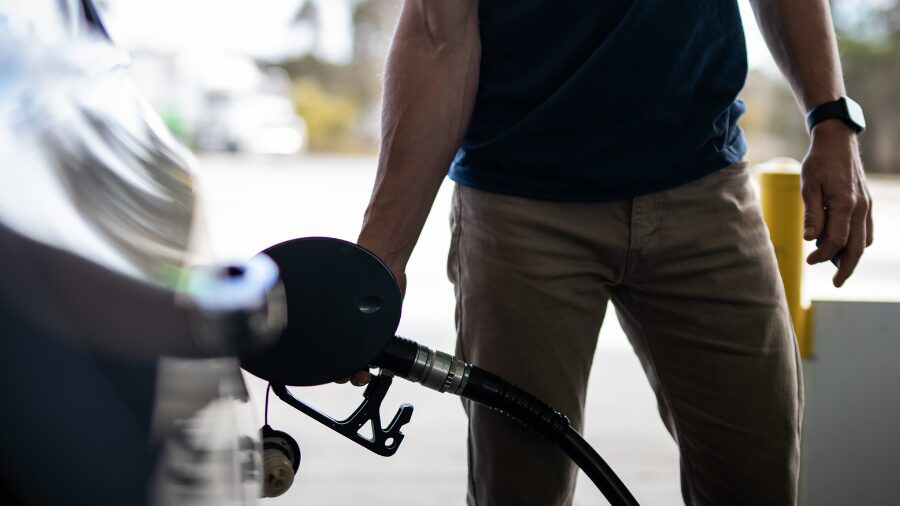
A man refills a vehicle at an outdoor gas station. (Photo: Lightitup_now via Envato)
(Photo: Lightitup_now via Envato)

The sweeping U.S. oil agreement with Venezuela announced last week will take years to meaningfully lower gas prices, and renewed military strikes in the Strait of Hormuz are pushing costs higher heading into what could be the most expensive Labor Day weekend on record, a leading petroleum analyst said Monday.
Patrick De Haan, head of petroleum analysis at GasBuddy, told “Seattle’s Morning News” on KIRO Newsradio that while the deal covering 65 billion barrels of proven Venezuelan reserves represents a potentially tremendous long-term boost to supply, Americans should not expect near-term relief.
“It will have a tremendous impact, but likely not for several years,” De Haan said. “Venezuela has oil. Unlike our Strategic Reserve, where oil has been pumped into that reserve, the reserves that we’re referencing here in Venezuela are proven oil reserves beneath their soil, meaning it has to be pumped to the surface.”
Extracting that oil requires wells, drilling rigs and exploration — infrastructure that does not yet exist and demands billions in investment, De Haan said.
President Donald Trump on Friday called the agreement “THE BIGGEST OIL DEAL IN WORLD HISTORY,” saying it would give the United States majority control of more than 65 billion barrels across 17 Venezuelan oil fields. Venezuela’s acting president, Delcy Rodríguez, said the 25-year project aims to produce more than 1.5 million barrels per day and could draw $100 billion in investment.
But De Haan raised legal questions about the arrangement. Venezuela’s 1999 constitution states that the country’s natural resources are for the sole benefit of Venezuelans, he noted.
“There certainly will be questions there,” De Haan said. “Many ask if this is a legitimate regime in Venezuela making what potentially is a questionable deal with the United States. So there are legal risks here with companies that simply dive into investing those billions in Venezuela.”
Rodríguez was installed as acting president after U.S. forces captured Nicolás Maduro in a January raid and brought him to New York to face federal drug trafficking charges.
RELATED STORIES

Iran conflict, Olympic Pipeline troubles could push gas prices even higher
Meanwhile, renewed hostilities between the U.S. and Iran sent oil prices surging more than 3% Monday after American forces struck Iranian rocket launchers on Larak Island in the strait on Sunday. Brent crude climbed above $91 a barrel, and U.S. benchmark crude rose above $86.
“New escalations have reignited the risk calculus,” De Haan said. “The Strait of Hormuz is likely to remain closed for a longer period of time, that is pushing oil prices back up again.”
De Haan also flagged trouble closer to home, warning that fresh problems with the Olympic Pipeline over the weekend could cause a spike in western Washington and Oregon gas prices.
Diesel prices are within 25 cents of an all-time record, a cost De Haan said hits every American indirectly through higher prices at the grocery store and beyond.
“Much of the U.S. economy runs on diesel from tractors to trains and trucks that haul all of these goods to market,” he said. “Pricier diesel is something that’s very concerning.”
He added that Ukrainian strikes on Russian oil refineries are compounding the pressure on diesel supplies.
The U.S. Strategic Petroleum Reserve, meanwhile, sits near a 40-year low. De Haan said that once the current authorized release concludes, the reserve will hold roughly 250 million barrels.
Manda Factor is the host of “Seattle’s Morning News” on KIRO Newsradio. Follow Manda on X and email her here.