Lynnwood becomes first WA city to cancel active Flock Safety contract over privacy, immigration concerns
Feb 24, 2026, 9:26 AM

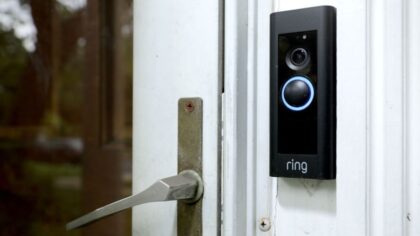
A Flock Safety Falcon, a type of security camera. (Photo courtesy of Flock Safety via KIRO 7)
(Photo courtesy of Flock Safety via KIRO 7)

The Lynnwood City Council unanimously voted on Monday to cancel its contract with Flock Safety over privacy concerns, becoming one of the first Washington cities to do so.
The council voted 7-0 to terminate its contract with the automated license plate reader company after a University of Washington (UW) report revealed that out-of-state agencies were accessing Lynnwood’s data for immigration enforcement purposes, according to The Everett Herald.
A Flock Safety camera uses artificial intelligence to collect footage of a vehicle, whether it be a license plate or other characteristics, and then the data is used by law enforcement to search for the vehicle.
RELATED STORIES


Lynnwood residents raised concerns about data privacy, corporate exploitation
Lynnwood’s community members have expressed concerns about the cameras since late last year, with some residents noting that the company is willing to use its data against the city for financial gain.
“These big public or private corporations do not have a vested interest in the city, and their contracts are only there to make them money, and they will exploit the city for everything that they need, and that includes our data, that includes our privacy,” Lynnwood resident Tyler Hall said, according to HeraldNet.
In January 2025, Lynnwood’s City Council unanimously approved a two-year, $171,000 contract with Flock Safety to provide the city with 25 automated licence plate readers.
The majority of the contract was funded through a grant from the Washington Auto Theft Prevention Authority, with the remaining $38,000 coming from the police budget. The financial impact on the city is not immediately clear following the termination of the contract.
Several law enforcement agencies nationwide have implemented Flock Safety cameras for investigations, as it can assist with solving crimes like vehicle theft.
In Lynnwood, the technology went live in June 2025. Lynnwood Police Chief Cole Langdon later learned that out-of-state agencies were capable of accessing the network, even though the department intended to solely allow in-state agencies to access the network after signing a user agreement.
Several agencies were unaware that a feature on Flock Safety’s software, a “nationwide lookup” tool, was enabled. The feature allowed any participating agency in the U.S. to search through the network.
The nationwide tool was active for nine days in Lynnwood before Chief Langdon turned it off. In those nine days, out-of-state agencies conducted more than 100,000 searches within Lynnwood’s network, which included at least 16 searches directly related to immigration enforcement by two agencies, according to The Everett Herald.
Out-of-state agencies made more than 100K searches in nine days
After learning about the extensive amount of searches in Lynnwood’s network, Langdon decided to put the program on pause, which had been running for approximately four months at the time.
Langdon noted that Flock Safety representatives had said that they “were not sure how this was happening” when Lynnwood staff contacted the company about the searches.
Lynnwood is the first city in the state to cancel its contract with Flock Safety after its cameras had been activated. In Mountlake Terrace, the city terminated its contract before the cameras were installed. Redmond and Olympia have also paused the program indefinitely. Additionally, Skamania County suspended the program until the contract expires at the end of this year, leaving the cameras installed until that time.
At a Feb. 17 meeting, Langdon said the Flock Safety cameras are a beneficial tool for law enforcement investigations, though the alternatives are much more costly, as Lynnwood is working through a $5 million budget shortfall.
Chief Langdon noted that he would turn the cameras back on if the Washington legislature passed Senate Bill 6002, which would regulate automated license plate reader use.
Mayor George Hurst requested that the Monday vote be postponed until the bill is voted on, but community members and council members lobbied to keep the vote on Monday.
“Public trust cannot be put on hold while we wait to see if safeguards might work next time, and at a time when trust in government is already fragile, continuing with a system that has breached our confidence is a risk we should not take,” Lynnwood Councilmember Isabel Mata said, according to The Everett Herald.
Follow Jason Sutich on X. Send news tips here.