Senator Patty Murray wants to make turning the clock back a thing of the past
Jul 15, 2026, 2:33 PM | Updated: 5:09 pm
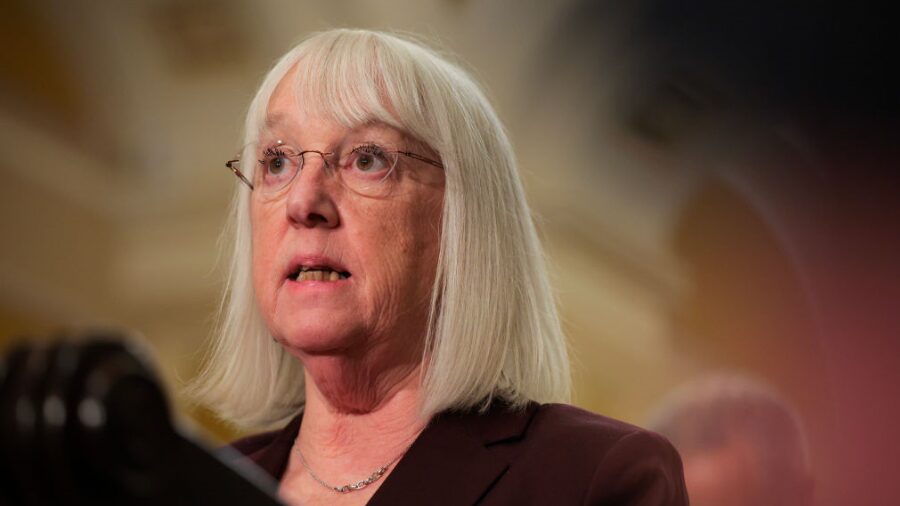
U.S. Sen. Patty Murray (D-WA) (L) speaks to reporters following the weekly Senate Democrat caucus policy luncheon at the U.S. Capitol on February 25, 2025 in Washington, DC. (Photo: Kayla Bartkowski, Getty Images)
(Photo: Kayla Bartkowski, Getty Images)
Time changes could be a thing of the past if the Senate approves a bill to make Daylight Saving Time permanent.
H.R. 139, the Sunshine Protection Act, would keep the entire country on Daylight Saving Time, meaning there would be no one-hour “fall back” in November to adjust clocks.
As a result, winter sunsets are later. But mornings would also be darker.
Push to end clock changes has been building for years, including in WA
This effort has been in the works for years in various forms, including a bill passed in Washington in 2019 to switch to permanent daylight saving, if federal rules ever changed to allow it.
The latest measure, H.R. 139, was introduced in January 2025 but languished in the House Committee on Energy and Commerce until yesterday, when it passed in a bipartisan vote of 308 to 117.
Part of this re-energized effort is because of the personal lobbying of President Donald Trump. The White House has consistently called for the change and put out a statement of administrative policy this week to encourage passage, citing studies that show various health benefits.
“For example, one study found that permanent DST would prevent hundreds of traffic deaths every year by shifting daylight to times of day when more Americans drive,” the statement read. “Another study found that more daylight in the evening from DST reduced robberies by seven percent, which would mean thousands fewer robberies each year.”
Politico reported the president even made phone calls to some republican lawmakers.
The bill has the support of Washington Senator Patty Murray, who helped push for this latest effort and co-sponsored a similar bill back in 2022 that was passed by the Senate. It died in the House.
“My state, where it is often dark earlier than 4 p.m. in the winter, has made it abundantly clear we want permanent Daylight Saving Time,” Senator Murray wrote in a press release celebrating the House passage. “Americans from Seattle to Miami believe it’s way past time to lock the clock—I am calling on Leader Thune to bring this bill to a vote as soon as possible.”
Bill faces hurdles before it can reach the Senate floor
Just getting the bill to the floor may prove a challenge, though. Senator Tom Cotton, R-Arkansas, has been a vocal opponent.
He shared a graphic on X showing sunrise times in Kalispell, Montana hit 9:29 a.m. and 11:13 a.m. in Anchorage, Alaska.
— Tom Cotton (@TomCottonAR) July 15, 2026
GOP aides who spoke to Politico said Cotton wasn’t the only opponent, and that Senate Majority Leader John Thune may side with him and others who “ask Thune not to bring it up.”
Interestingly enough, Montana is one of 19 states that have passed legislation to adopt permanent Daylight Saving Time, along with Washington, Oregon, and Idaho. According to the National Conference of State Legislatures, more than 800 bills and resolutions have been debated in almost every state in recent years to make the switch away from changing the clock.
Medical professionals, almost across the board, recommend eliminating the time change. But the recommendation is usually to adopt permanent standard time, not daylight saving.
That’s the official recommendation the American Academy of Sleep Medicine (AASM) released when the time change effort last gained momentum in 2022 with Senator Murray’s bill.
“By artificially shifting the clock time an hour forward, Daylight Saving Time causes a misalignment between the clock time and solar time, which interferes with the timing of our circadian rhythm,” reads a fact sheet published by the AASM. “This disruption results in a condition known as ‘social jet lag,’ which is associated with an increased risk of obesity, metabolic syndrome, cardiovascular disease, and depression. If Daylight Saving Time becomes permanent, then Americans will be living with social jet lag year-round.”
The report echoed what other opponents said: That later sunrises and darker, colder mornings could be difficult and dangerous for children going to school, morning commuters, and those with seasonal affective disorder.
Local experts side with the push for permanent standard time
Nate Watson is a professor of neurology at the UW School of Medicine and co-director of the UW Medicine Sleep Center. He agreed with the AASM.
“The sunlight entrains our body clock to the 24-hour day,” Professor Watson said. “And that’s how our body can function because it knows, based on where the sun is, what should be happening and how it should be functioning.”
The U.S. has experimented with permanent Daylight Saving Time before. In 1973, Congress passed a bill establishing the change. It was repealed after just one winter of implementation. Studies conducted by the U.S. Department of Transportation showed plummeting approval for year-round daylight saving tied to those later sunrises and children going to school in the dark.
While stopping the time change can be unpopular in agricultural regions, University of Washington Law Professor Steve Calandrillo said the origins of the time change actually come from a European World War II-era effort to conserve energy.
“Everybody is awake and moving around at 5 p.m. or 6 p.m., whenever the sunset time would be, and the longer you can keep the sunset from happening, the more that sun is out in the evening, the more that people can benefit from it,” Professor Calandrillo said. “They don’t need to use as much energy to heat their homes or as much electricity to light their homes. We can save energy, we can save oil.”
RELATED STORIES



U.S. has tried permanent daylight saving before — and reversed course
Economic concerns may hold more sway in this debate. The Uniform Time Act prevents states from acting on their own to change time, hence states that passed measures — contingent on federal action — to stop time changes. Each time it was re-authorized, special interests showed their investment.
“Both times, the largest contributors to the lobbying effort for this were convenience stores like 7/11 and the sporting goods industry,” Professor Watson said. “And, actually, in 1987, there were two Idaho legislators who voted for it, saying there are more French fries sold when we’re on Daylight Saving Time than when we’re not.”
During a previous passage effort in 2021, Professor Calandrillo said he thought permanent Daylight Saving Time had the best shot to pass.
“I will say this is an issue that is the last non-partisan topic, I think, in America, both republicans and democrats agree,” Calandrillo said. “We have senators like our own Patty Murray in agreement with Florida’s Marco Rubio on the need for permanent Daylight Saving Time. So, if there’s anything that could unite Congress, I think it could be permanent Daylight Saving Time.”
Read more of Jillian Raftery’s stories here.