Affordability concerns help explain WA’s midterm shift, political scientist says
Nov 16, 2026, 10:50 AM | Updated: 10:55 am
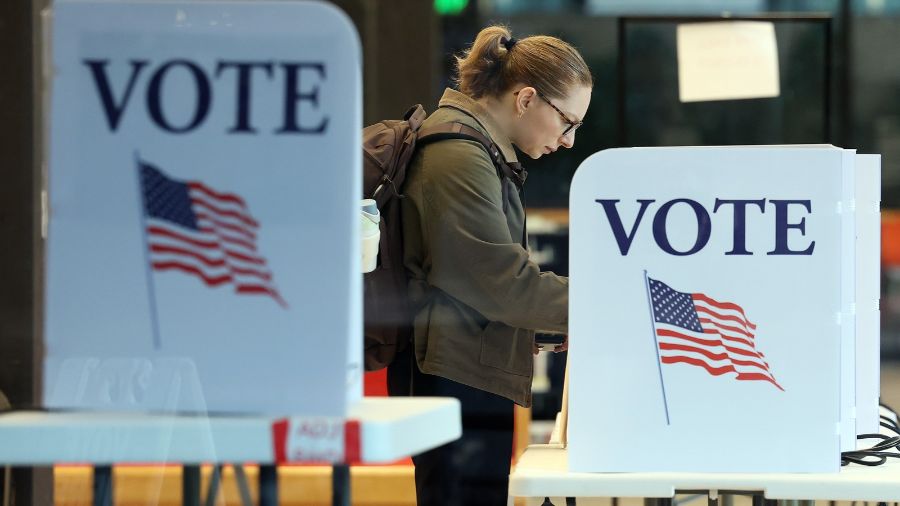
A voter fills out their ballot. (Photo: Kevin Dietsch, Getty Images)
(Photo: Kevin Dietsch, Getty Images)

Washington voters’ concerns about household finances, housing, and childcare helped shape a strong appetite for political change in this year’s midterm elections, political scientist David Sterrett said in an interview on “Seattle’s Morning News.”
More than eight in 10 Washington voters surveyed said they wanted substantial change or complete upheaval, according to Sterrett, who discussed findings from the National Opinion Research Center (NORC) at the University of Chicago’s Civic Health and Elections Project.
The project interviewed more than 110,000 registered voters nationwide, including about 1,200 in Washington. Sterrett said affordability and the cost of living stood out as concerns both in the state and across the country.
“Those were issues both in Washington and nationwide that really pop out on the survey,” he said.
Financial pressures shape voter choices, policy priorities
The findings offer insight into the mood behind Democratic gains in the midterms, though Sterrett cautioned against attributing the results solely to individual Republican candidates.
Among voters seeking substantial change, about 70% voted for a Democratic candidate, he said. That relationship suggests dissatisfaction with current conditions played an important role in voters’ choices.
“It’s hard to tell if it was the candidates or just kind of the mood of the electorate,” Sterrett said.
In Washington, nearly a third of registered voters — 31% — said their families were falling behind financially. Sterrett pointed to that finding as an example of how voters’ circumstances can influence election outcomes.
The survey also found support for policies aimed at easing two household expenses: housing and childcare.
According to Sterrett, 52% of Washington voters supported changing local zoning rules and permitting requirements to allow more affordable housing. A majority also supported expanding state subsidies to help cover childcare costs.
Those findings put specific policy preferences behind the broader concern about affordability. They also suggest housing access and childcare assistance could remain important issues for Washington policymakers following the election.
Sterrett said the survey’s Washington-specific questions helped clarify where voters stood on those proposals, rather than simply measuring dissatisfaction with their finances.
When asked whether polling had underestimated the Democratic shift, Sterrett said polls in both 2024 and 2026 were relatively accurate overall. Predicting who will actually vote remains a persistent challenge, he said.
RELATED STORIES
Affordability remains central to WA voters’ concerns
President Donald Trump has attracted new voters when appearing on the ballot, Sterrett said. This year, new voters may have leaned toward Democrats, potentially explaining why some polls slightly underestimated Democratic support in certain states.
But Sterrett cautioned against treating the midterm results as a reliable forecast for the 2028 election.
“I think it’s always really hard to use current election data to predict what’s going to happen in 2028,” he said.
Instead, he said, future results will depend heavily on economic conditions and voters’ assessments of politicians.
For Washington, the survey’s clearest message was the importance of affordability: whether families feel they are keeping up financially, can find affordable housing, and can manage the cost of childcare.
Those pressures, Sterrett said, help explain voters’ desire for change — and could shape their judgments when they next head to the polls.
Manda Factor is the host of “Seattle’s Morning News” on KIRO Newsradio. Follow Manda on X and email her here.