Controversial bill expanding protections for undocumented or gender-diverse students advances to House
Mar 18, 2025, 4:50 AM | Updated: 5:59 am

Certain students will be offered additional protections from discrimination under a new bill. (Photo by John Moore/Getty Images)
(Photo by John Moore/Getty Images)
Should students who are undocumented, neurodivergent, homeless, or gender-diverse receive additional protections? That was the central question during a House Committee on Education meeting Monday, as it heard public testimony on Senate Bill 5123.
The bill passed the state Senate two weeks ago in a straight party-line vote of 30-19, with all Democrats in favor and all Republicans against. It expands Washington’s existing nondiscrimination laws to include additional protected categories for students. These new provisions would cover students who are undocumented, neurodivergent, homeless, or gender-diverse.
Currently, Washington public schools prohibit discrimination on the basis of sex, race, religion, national origin, and disability. However, supporters of the bill argue that these existing measures no longer adequately protect students from emerging threats, such as deportation and hate.
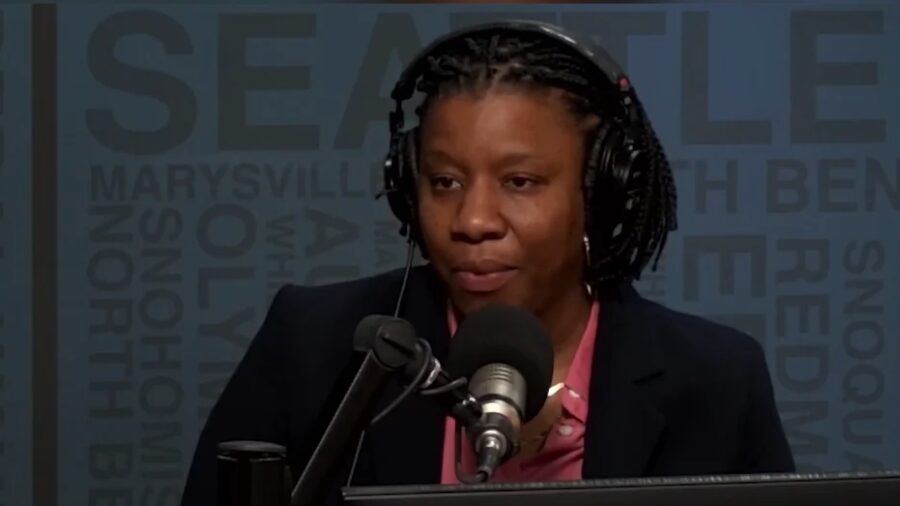
“Laws need to evolve to reflect our growing understanding of identity and discrimination,” said Senator T’wina Nobles (D-Fircrest), the bill’s prime sponsor. “Discrimination has real consequences—lower academic performance, higher dropout rates, and mental health challenges. This bill helps ensure every student in Washington feels safe, valued, and seen.”
It’s now the House’s turn to vote on the bill.
RELATED STORIES

The changing landscape of identity
Previously, gender identity, sexual orientation, and gender expression were grouped together under a single protected class. Senate Bill 5123 separates these into three distinct categories: sexual orientation, gender identity, and gender expression. Each category is now more clearly defined to better reflect the complexities of personal identity, according to supporters.
For example, “gender expression” refers to how an individual outwardly presents their gender—through clothing, behavior, and voice—while “gender identity” pertains to one’s internal sense of being male, female, both, neither, or somewhere in between.
Supporters argue that these distinctions will clarify existing gray areas in school policies, particularly when it comes to creating safe spaces for transgender and gender-diverse students.
The bill also offers clarifications for newly protected groups. Supporters say vulnerable students are now more clearly safeguarded in educational settings.
“Neurodivergence” is defined as neurological differences, including autism, dyslexia, and ADHD. Homelessness is defined according to federal guidelines, covering students who lack a fixed, regular, and adequate nighttime residence.
A step toward equality or a cause for division?
During Monday’s public hearing, Grace Nyblade, a clinical social worker, argued that “if these children have adults who support them, it increases their safety.” She emphasized that “one supportive adult decreases the suicide rate among the gender-diverse population by 40%,” underscoring the importance of providing support for vulnerable LGBTQ+ youth.
Lyndon Jordan, a representative of Parents and Friends of Lesbians and Gays (PFLAG), also voiced support for the bill. “Washington state is a beacon of hope in dark times for our community,” he said, advocating for protections for vulnerable students and noting that “sexual orientation, gender identity, and gender expression are separate parts of someone’s identity,” which the bill seeks to address.
However, not everyone agrees with the bill.
Here’s what the critics argue
Critics argue that it could spark a clash between different rights, particularly when it comes to issues surrounding gender identity.
Sharon Dama opposed the bill, asserting that “boys should participate in boys’ sports, not girls’ sports, and use boys’ restrooms.” She argued that including gender identity as a protected class “would actually be discriminatory against girls, because it would deprive them of their right to privacy, safety, and fair sports.”
Tanya Hickman, a Lynden school board member, expressed concern that the bill’s gender-affirming approach could lead to confusion in schools. She noted, “Teachers are not licensed professionals with the ability to diagnose,” and warned that controversial bills like this “are affecting our enrollment rates” in public education.
Some critics raised concerns about the potential impact on federal funding, arguing that the bill could put Washington schools at odds with federal regulations, such as those from the Trump administration attempting to withdraw funding from school DEI programs and its stance on undocumented immigrants.
Jennifer Heine-Withe also opposed the bill, arguing that “we already have protections built into current law to protect all kids.” She questioned what happens to “the right to privacy, dignity, and safety” for students when they’re in restrooms or locker rooms.
Jan Smith, a family rights activist, voiced reservations about “the marriage of psychology and the law,” arguing that there’s no need for “special provisions or categories” for gender identity. “All humans—male, female, doesn’t matter—should have respect and be free from bullying.”
What’s next for the bill?
2,046 people signed in opposing the bill, 950 signed in favor of it.
While the bill has generated significant debate, it still has a long way to go before it could reach a vote in the House.