Seattle mayor unveils three-bill package to add 1,000 shelter beds this year
Mar 30, 2026, 1:06 PM | Updated: 2:45 pm

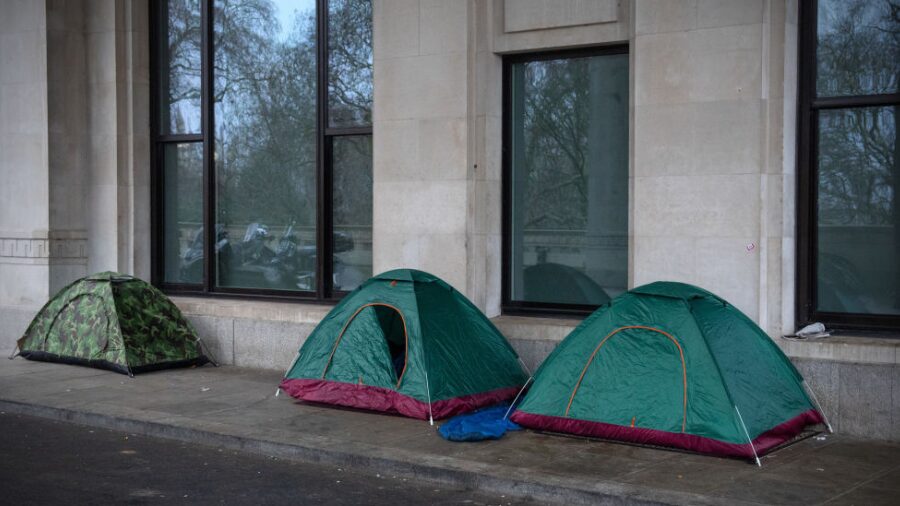
Units within a tiny home village in Seattle. (Photo courtesy of KIRO 7)
(Photo courtesy of KIRO 7)

Seattle Mayor Katie Wilson has unveiled three bills to aid her goal of adding 1,000 new shelter beds this year.
The bills would give more leeway to use land for transitional housing, make funding available, and expand the number of people allowed in transitional encampments.
Seattle bill would cut red tape for leasing encampment land
CB 121184 would make it easier for the city to lease land for transitional encampments by giving the Director of Finance and Administrative Services (FAS) broader signing authority and allowing the city to pay market rate.
Under the current code, the cost per square foot is capped, and the FAS director is not allowed to sign a lease agreement if the land exceeds 18,000 square feet. The ordinance would increase the square-foot limit to 65,000 square feet and allow a market-rate rental for land, according to the bill summary.
The mayor’s office noted that the average microshelter village exceeds the square-footage limit. Because the city can’t offer market-rate rent, few landowners are willing to make a deal. Therefore, securing a site and negotiating a lease can take months.
“If the FAS director had discretion to sign a lease agreement at the front end of the process, and then turn the site over to a non-profit provider to build and operate the shelter program, it could reduce the timeframe to just three to four months to stand up a microshelter village,” the mayor’s office stated.
Mayor’s office looks to redirect $4.8 million toward shelter expansion
CB 121185 would amend the 2026 budget to free up money for both building and running transitional encampments. It taps two underused funding sources: the Downtown Health and Human Services (DHHS) account and the Low-Income Housing Fund.
The mayor’s office explained that the Low-Income Housing Fund, which is funded by Community Development Block Grant (CDBG) dollars through the Office of Housing, was originally set aside for a loan program, but federal regulations prevented it from being fully used. This bill would put it to work building more shelter. The rest comes from the DHHS account, which must be spent to benefit downtown Seattle and would fund new programs to house people living unsheltered downtown.
According to KOMO News, $3.3 million would be used from the Low-Income Housing Fund, and $1.5 million from the DHHS account.
Seattle wants to fit more people on encampment sites
The third ordinance tackles a size problem. Right now, transitional encampments are capped at 100 people per site. This would bump that to 150 people citywide and allow one site per council district to go up to 250.
“The current land use code limits the size of each transitional encampment to 100 people per site. This creates a significant barrier to using limited city-owned lands efficiently, in particular if there is already a smaller microshelter on the site that has the potential to be expanded,” the mayor’s office stated.
Officials said the city needs to make the most of its limited land by fitting more people on each site. The legislation would raise the current 100-person limit, allowing the city to expand microshelter villages that are already up and running.
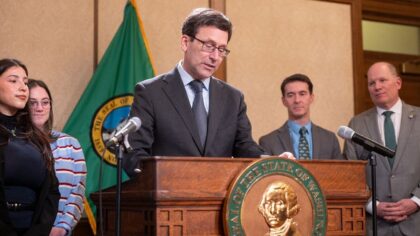
“This package of legislation will provide us with the tools we need to make good on my commitment to open 1,000 units of shelter and emergency housing this year,” Wilson said at a news conference on March 4. “We are moving faster than ever before, but I want to see the ground start breaking, the hammers start swinging, and fewer people left to sleep in doorways and tents.”
RELATED STORIES


‘A bold first step’: Downtown Seattle Association backs Wilson’s plan
The Downtown Seattle Association (DSA) called Wilson’s plan a “bold first step” in addressing the city’s homelessness crisis, adding that services are vital to getting people off the streets.
“Adding supportive services is a critical component of this plan, increasing the likelihood that these residents will be on a clearer path to long-term stability,” DSA President and CEO Jon Scholes said in a statement. “There are far too many people sleeping unsheltered in our city; this plan will ensure more people get inside and connected to the help they desperately need.”
Wilson’s goal has been to open 500 new shelter beds by June 1, when the FIFA games start. But a staff memo stated that even with these new rules to fast-track transitional housing, the earliest a microshelter village could operate is July 14.
Contributing: Jillian Raftery and James Lynch, KIRO Newsradio
Follow Julia Dallas on X. Read her stories here. Submit news tips here.