A look at previous government shutdowns and how they ended
Sep 29, 2025, 4:12 AM
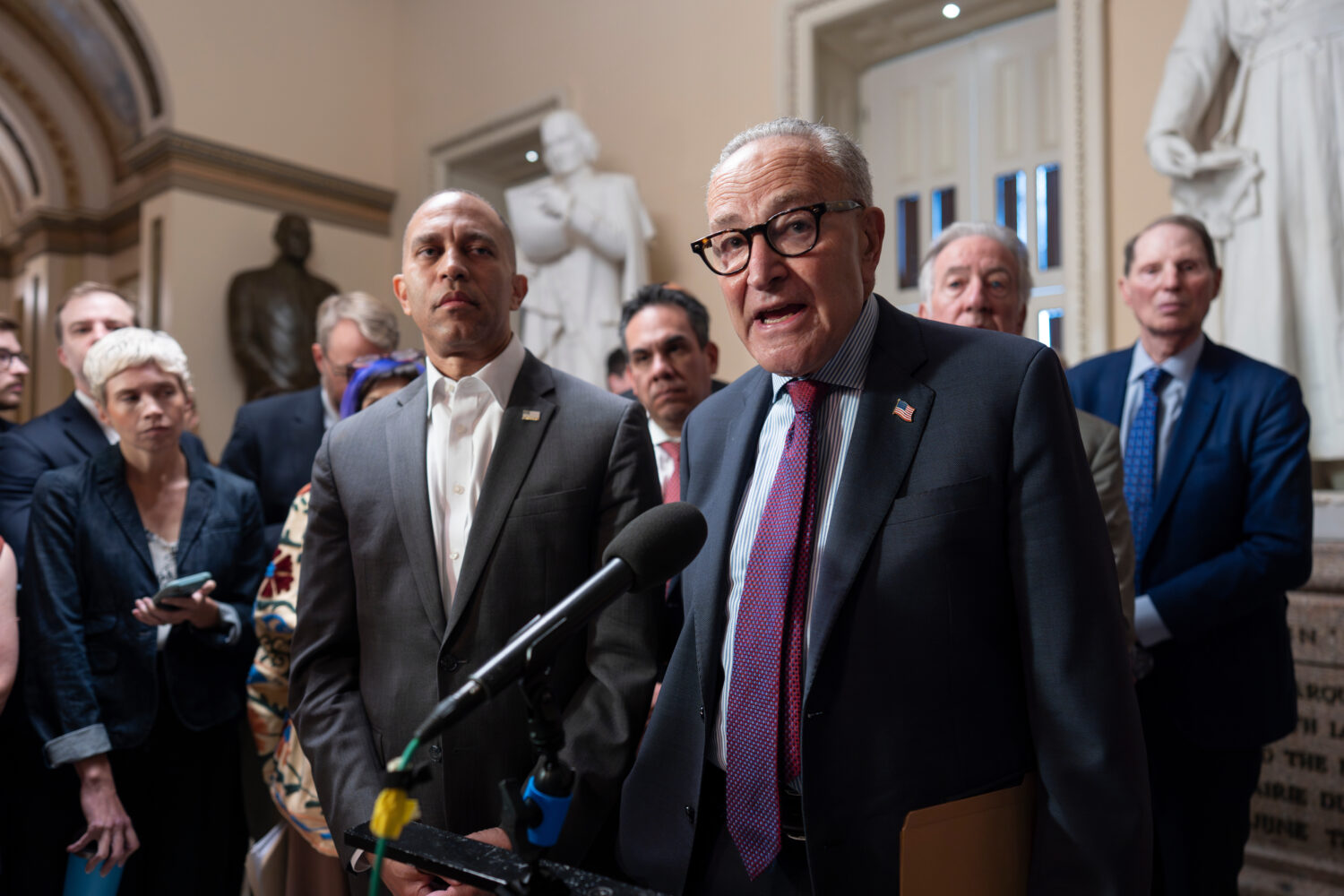
FILE - House Democratic Leader Hakeem Jeffries, left, and Senate Democratic Leader Chuck Schumer, both of New York, tell reporters that they are united as the Sept. 30 funding deadline approaches, at the Capitol in Washington, Sept. 11, 2025. (AP Photo/J. Scott Applewhite, File)
Credit: ASSOCIATED PRESS
(AP Photo/J. Scott Applewhite, File)

WASHINGTON (AP) — Party leaders in Congress have long criticized government shutdowns as toxic and destructive.
“Always a bad idea,” former Senate Majority Leader Mitch McConnell, R-Ky., said of shutdowns in 2024. A potential “disaster,” Democratic Leader Chuck Schumer of New York said of the shutdown the country narrowly avoided when he voted with Republicans to keep the government open in March.
“I don’t think shutdowns benefit anybody, least of all the American people,” Senate Majority Leader John Thune, R-S.D., said last week.
Yet Congress often finds itself at the brink of one as the two major political parties’ differences grow more intractable with each passing year. Democrats are threatening to vote against keeping the government open on Oct. 1.
Schumer and House Democratic leader Hakeem Jeffries, D-N.Y., say they won’t budge unless Republicans immediately extend health care subsidies that expire at the end of the year, among other demands. Republicans say they don’t want to add any complicated policy to their “clean” stopgap bill to keep the government open for the next seven weeks.
Time and time again, lawmakers hold out until just before the deadline and negotiate a last-minute compromise. But this time Democrats see some potential political advantages to a shutdown with their base voters spoiling for a fight.
History shows the tactic almost never works, and federal employees are caught in the middle. The White House has already laid out a plan to potentially lay off hundreds, if not thousands, of federal employees — a significant escalation from previous shutdowns in which federal workers were temporarily furloughed and given back pay when the standoff ended.
A look at some previous shutdowns and how they ended:
Two years into his first term, President Donald Trump led the country into its longest shutdown ever with demands that Congress give him money for a U.S.-Mexico border wall. Similar to Republican leaders today, then-House Speaker Nancy Pelosi, a Democrat, refused to negotiate unless Trump, a Republican, allowed the government to reopen. Democrats had won the House majority in the 2018 election and took power in the middle of the partial shutdown.
Trump retreated after 35 days as intensifying delays at the nation’s airports and another missed payday for hundreds of thousands of federal workers brought new urgency to efforts to resolve the standoff.
The government shut down for three days as Democrats insisted that any budget measure come with protections for young immigrants known as “Dreamers.” Trump refused to negotiate until the government reopened, and the weekend shutdown ended after McConnell, then the Senate majority leader, promised a vote on the issue.
Democrats, led by Schumer, tried to lay blame on Trump. But Republicans said that it was Democrats who “caved” in the end.
The hard-right tea party faction of House Republicans, urged on by Republican Sen. Ted Cruz of Texas, shut the government down for 16 days as they demanded that language to block implementation of President Barack Obama’s signature health care law be added to a spending bill.
The conflict escalated when House Republicans also blocked the needed approval for raising the amount of money the Treasury can borrow to pay U.S. bills, raising the specter of a catastrophic default. Obama, a Democrat, vowed repeatedly not to pay a “ransom” to get Congress to pass normally routine legislation.
Bipartisan negotiations in the Senate finally ended the shutdown, and Republicans did not win any major concessions on health care. “We fought the good fight. We just didn’t win,” then-House Speaker John Boehner conceded.
Intent on slashing the budget, Republicans led by then-Speaker Newt Gingrich forced a three-week shutdown from December 1995 to January 1996 in a bid to coerce President Bill Clinton to sign onto a balanced budget agreement. Republicans were saddled with the blame, and Clinton, a Democrat, was reelected that November.
Under Presidents Jimmy Carter, a Democrat, and Ronald Reagan, a Republican, there were short shutdowns almost every year. The longest was in 1978, for 17 days.
A series of legal opinions issued in 1980 and 1981 made shutdowns more impactful. Then-Attorney General Benjamin Civiletti determined that failure to pass new spending bills required government functioning to shut down in whole or in part. Earlier “shutdowns” did not always entail an actual stop to government functioning and often were simply funding gaps will little real-world effect.
___
Associated Press writer Matthew Daly contributed to this report.