AP reporters reflect on Hurricane Katrina, 20 years later
Aug 27, 2025, 10:35 AM
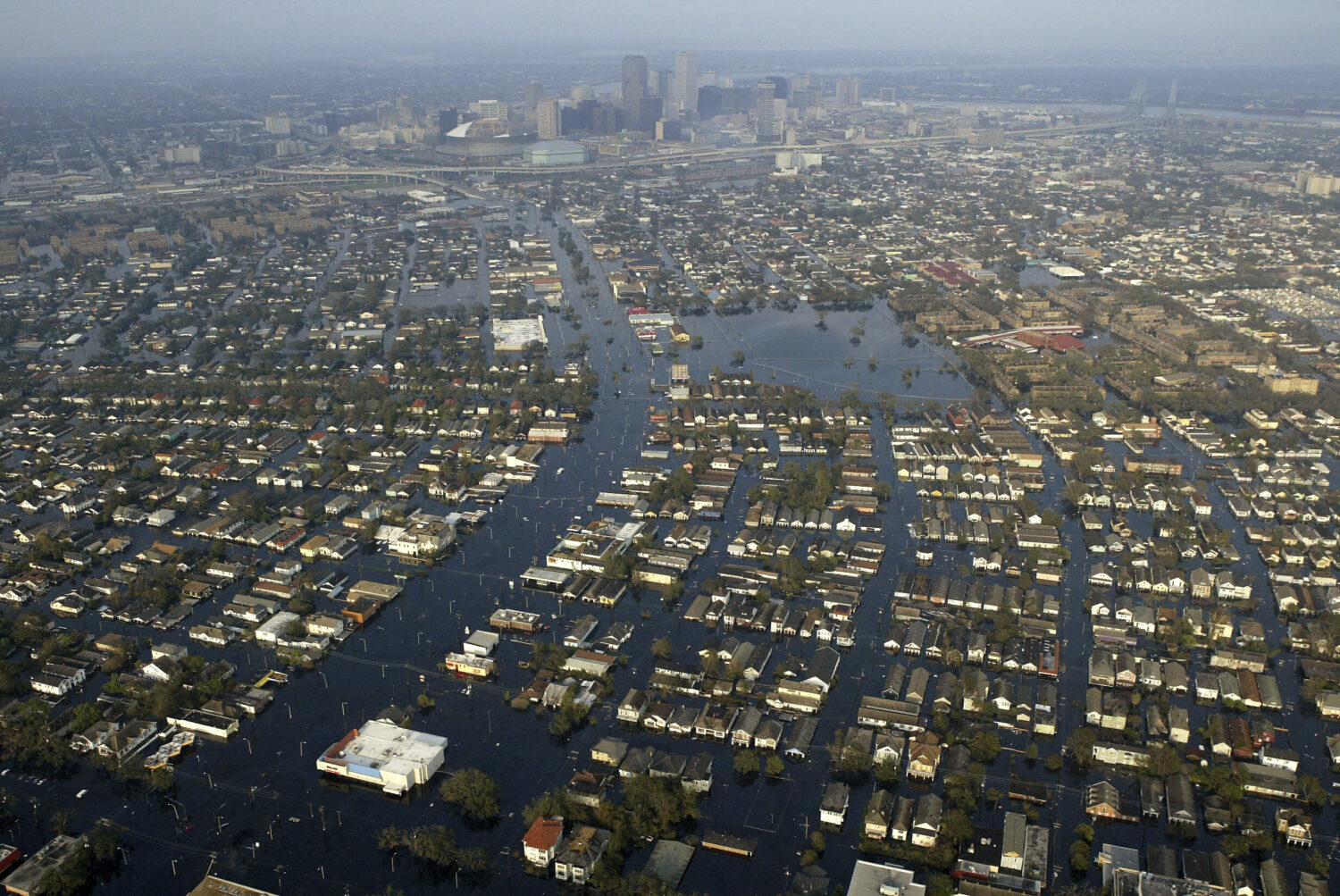
FILE - Floodwaters from Hurricane Katrina fill the streets of New Orleans, Sept. 1, 2005. (AP Photo/David J. Phillip, Pool, File)
Credit: ASSOCIATED PRESS
(AP Photo/David J. Phillip, Pool, File)

WASHINGTON (AP) — Hurricane Katrina claimed hundreds of lives, destroyed homes and changed how emergency response is dealt with forever.
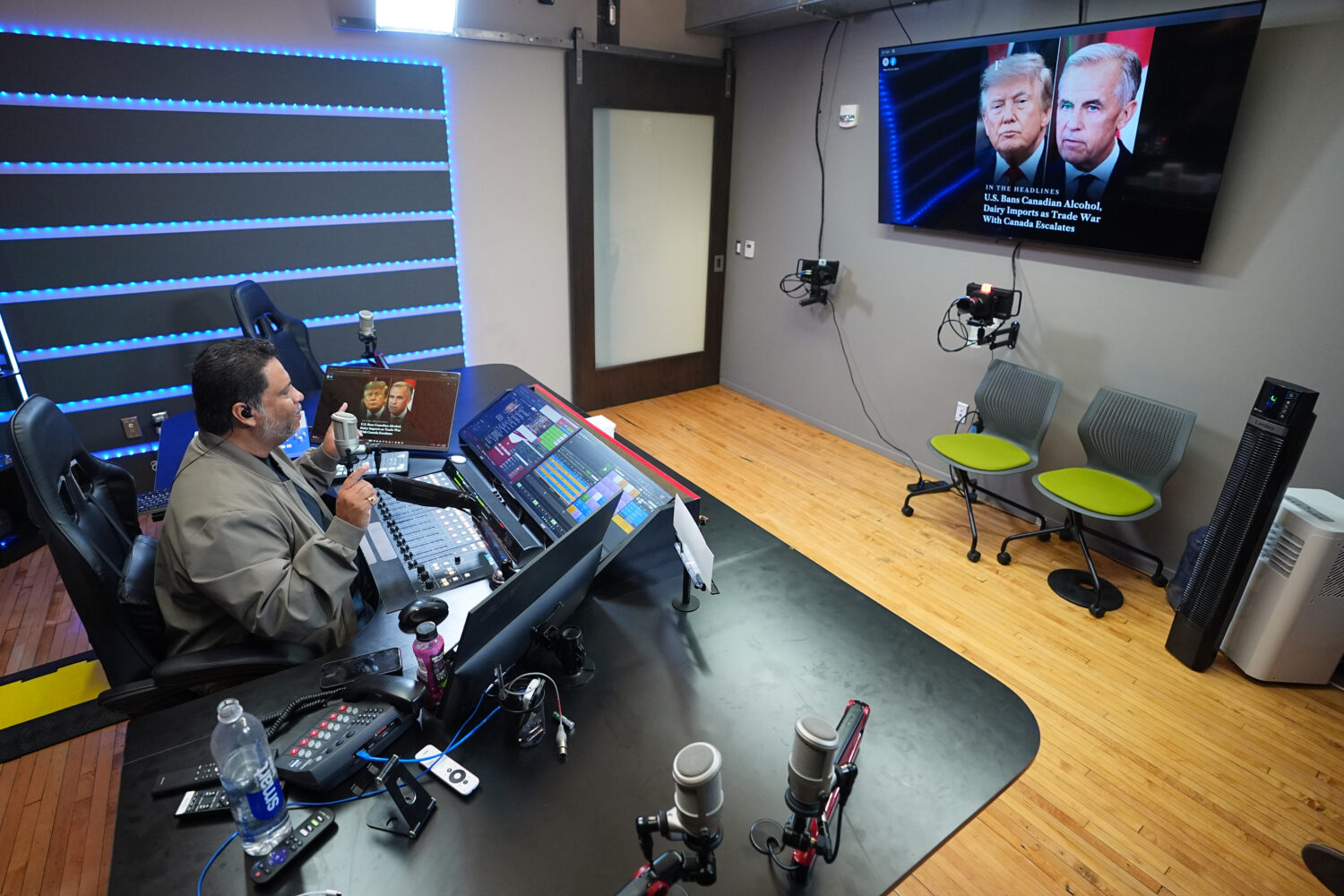
In this episode of “The Story Behind the AP Story,” retired AP journalist Chevel Johnson Rodrigue recalls the eerie calm before the storm and AP photographer Alex Brandon shares his experience working with the New Orleans Police SWAT team during the hurricane.
Alex Brandon, AP photographer: New Orleans, the city, Louisiana, the state, and I believe the United States, the whole United States — what happened to that city during Katrina will forever change, I hope, the response of the federal and state governments to something of this magnitude.
Haya Panjwani, host: Hurricane Katrina was a Category 5 hurricane that made landfall in New Orleans in August 2005. It claimed over 1,800 lives, destroyed entire neighborhoods and changed how emergency response is dealt with in the United States forever. I’m Haya Panjwani. On this episode of “The Story Behind the AP Story,” we go back 20 years to Hurricane Katrina. We’ll hear about the atmosphere in the city leading up to the storm, how current and former AP journalists covered it and how the disaster affected them personally.
Chevel Johnson Rodrigue, retired AP journalist: My name is Chevel Johnson Rodrigue. I am a retired AP journalist. I’ve lived in New Orleans my whole life. My parents were in the military, so we moved around a lot when I was younger, but their home base was always New Orleans.
BRANDON: Hi. My name is Alex Brandon. I’m a staff photographer with The Associated Press based in Washington, D.C. And I was in New Orleans at the time of Hurricane Katrina.
PANJWANI: During Katrina, Brandon worked with the Times-Picayune in New Orleans. He joined The Associated Press in 2006.
JOHNSON RODRIGUE: When Katrina was in the Gulf, it was really eerily quiet in the city. The skies were blue. It was like a perfect summer day. You never would have expected anything.
BRANDON: When you live in the Louisiana Gulf Coast, you really have to pay attention to the hurricanes. When it begins to think about crossing into the Gulf, I’m paying attention. I boarded up my house, as I always do, three days before my neighbors did. Because — and my neighbors would always say, “Why are you boarding up now? Do you know something we don’t?” I said, “No. Because when you’re boarding up your house, I’m working taking a picture of you boarding up your house.”
JOHNSON RODRIGUE: And then when Katrina hit it was like we were just expecting a normal pack a bag for a three-day kind of thing and then come back to your house. But when the storm actually hit, it was a lot worse than that, obviously. I’m not sure if it was the storm or if it was the aftereffects of the storm which really made Katrina devastating. It was the levees breaking that caused a lot of catastrophe in New Orleans. If the levees had withstood whatever damage the storm brought, I think we’d be talking, we’d be having a different conversation.
BRANDON: Every drop of water that falls in New Orleans has to be pumped out. The majority of the city is below sea level. So if a heavy rain comes, instead of flowing down a storm drain and flowing down to the Potomac like we are here in Washington, that flows to a canal, which then pumps the water out into a larger canal and then out into Lake Pontchartrain. For the storm, I was offered the opportunity to go with the New Orleans Police SWAT team during Katrina. I had made contacts with those officers many times and covered them many times, and they allowed me to essentially embed with them and stay at where they were, knowing that they would be some of the first of the first responders during the storm. The boat I was in rescued over a hundred people.
We came to one lady, and I’ll tell you the story about her. She was paraplegic. She’d lost the use of her legs. And somehow, she’d floated up on an air mattress between the slats of the roof and she was sitting on the slats and there was about an inch of free board and then it was water in the house. There was no way she was going to get out. At that point there were only three officers and me. There were four of us in the boat. I set the camera down and I just started helping. I got in the attic, and we tried to get something under her arms to lift her up and couldn’t get her up. We realized really quick that we needed more than what we had. And there was a guy next door who had a little camelback, it’s called a camelback in New Orleans, just another room on the top of the house. And I said, “Ask him what he’s got.” I need a mattress, I need box spring, I don’t care what he’s got. He leans out of his window and says, “I don’t have any of that, but I got this.” And he holds up a metal, lime green ironing board. We get her on that ironing, and we, Dwayne, Lt. Dwayne Scheuermann, pulls the boat up in between the houses, and Todd and I lift her up and get her on the roof and we get her on the boat, get her covered up with a blanket that’s a soaking wet blanket that was in the attic with her.
You know, you alternate, you help someone, and you take a picture. You help someone, you take a picture.
PANJWANI: One of the photos Brandon took was of legendary musician Fats Domino. The photo shows the artist being helped off a boat after being rescued.
BRANDON: During the day, I’d been giving my memory cards out of my camera to other photographers that I saw at the St. Claude Bridge. And I was running out of memory cards. I needed to get back to the paper. And the next morning, this would be Tuesday morning, the 30th, the teams I was with were tasked with evacuating police headquarters because it was surrounded by water. And the newspaper is directly across the street. I said, “Look, I’m gonna be right back. I’m gonna go drop this disk off with Fats Domino.” I had a little life vest on, knowing I was gonna be wading through the water, and I walked down the overpass, and it wasn’t a wade, it was a swim. And I put the memory card in a Ziploc in my teeth, and I swam to the paper, and that was the memory car with Fats Domino in it.
JOHNSON RODRIGUE: I was doing a lot of in-house reporting. I was doing a lot of the phone work and editing and, you know, the regular AP rigmarole, trying to make sure that copy was getting out to wherever it needed to get out and that kind of thing. So they moved me to Baton Rouge, and I stayed with the staffer there, Doug Simpson. Thank you, Doug. Yeah, and I stayed there about maybe a month or so.
After that time there we were able to get back into the city and I was able to see the house because I hadn’t seen the house since then everything. I wasn’t immediately able to see the house. So, finally I was able to go in, and it was, it was a sight. In Katrina we lost the house. We had about 6 feet of water in the house. It was totally destroyed. I think witnessing that was one of the most devastating parts of the whole thing because, like I said, after my mother passed away, coming back to the home, you know, was the last remnants of her. Seeing the destruction that the water did was really, really — I was amazed that water could do as much destruction as it did, even though I know that it can. It was just amazing to see.
When I came into her house, our refrigerator, which was in the kitchen, was floating in my den, which was about 10 feet away, I guess. Everything was gone. It was just really hard to describe, especially like if you were riding on the interstate, which is an elevated portion in our city, and you look down onto the neighborhoods, you really did see people on the roofs of houses. You saw a lot of just destroyed housing. It was just crazy. People trying to get into shelters that weren’t really shelters. They were walking towards higher parts of the city that weren’t flooded. And then we’re talking about New Orleans in August, which is not the most pleasant temperature in the world. So, you have water up to your knees. You have sweat. You have chaos, really, and people wondering what are they going to do because it’s like, “OK my house is gone, and what do I do now?”
BRANDON: You’ve also got to remember how much we’re talking about here. We’re talking about six islands of Manhattan underwater. Think about the square mileage that we’re talking about. Everything that water touches, pretty much you need to throw away. Your wedding albums, your wedding dress, your child’s toys.
JOHNSON RODRIGUE: You’re at a loss about what to do next. I mean, just imagine if you were in a storm, do you have insurance? Do you have clothes? Do you have food? Do you know where your people are? You know, the communication was a little suspect at the time. So it’s a lot to deal with. On the flip side of all that is, you realize how resilient you can be and how resilient and strong you are within yourself because you have to get through it.
PANJWANI: This has been the story behind the AP story. For more on AP’s coverage of Hurricane Katrina, and for previous episodes, visit apnews.com.