Bernard LaFayette, Selma voting rights organizer, has died
Mar 5, 2026, 2:44 PM
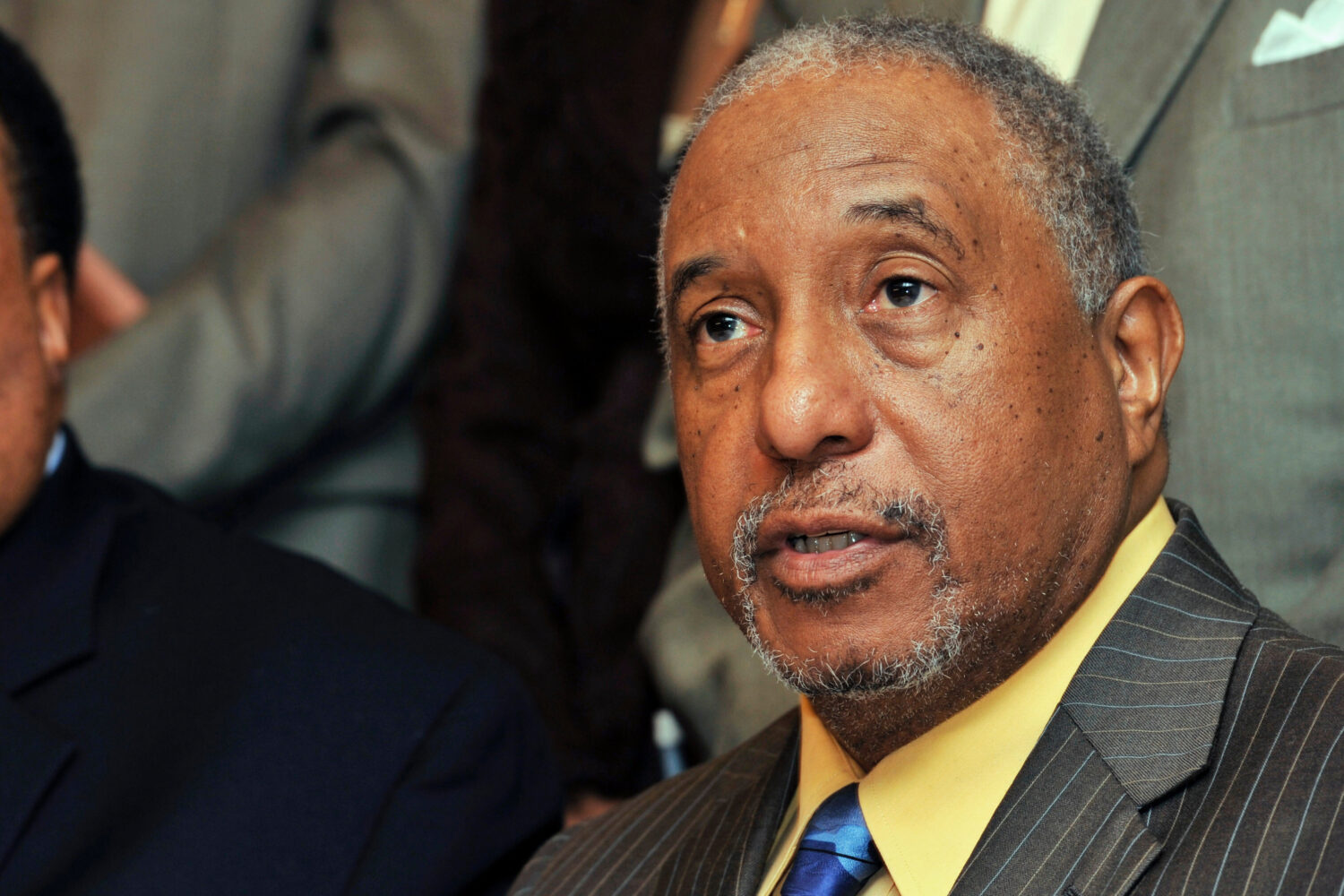
FILE - Southern Christian Leadership Conference spokesman Bernard LaFayette speaks to reporters after attending a SCLC meeting, March 6, 2010, in Atlanta. (AP Photo/Gregory Smith, File)
Credit: ASSOCIATED PRESS
(AP Photo/Gregory Smith, File)

NASHVILLE, Tenn. (AP) — Bernard LaFayette, the advance man who did the risky groundwork for the voter registration campaign in Selma, Alabama, that culminated in the passage of the Voting Rights Act of 1965, has died.
Bernard LaFayette, III, said his father died Thursday morning of a heart attack. He was 85.
On March 7, 1965, the beating of future congressman John Lewis and voting rights marchers on Selma’s Edmund Pettus Bridge led the evening news, shocking the nation’s conscience and pushing Congress to act. But two years before “Bloody Sunday,” it was LaFayette who quietly set the stage for Selma and the advances in voting rights that would follow.
LaFayette was one of a delegation of Nashville students who in 1960 had helped found the Student Nonviolent Coordinating Committee, which organized desegregation and voting rights campaigns across the South. SNCC crossed Selma off its map after some initial scouting determined “the white folks were too mean and the Black folks were too scared,” LaFayette said.
But he insisted on trying anyway. Named director of the Alabama Voter Registration Campaign in 1963, LaFayette moved to the town and, with his former wife Colia Liddell, gradually built the leadership capacity of the local people, convincing them change was possible and creating momentum that could not be stopped. He described this work in a 2013 memoir, “In Peace and Freedom: My Journey in Selma.”
The many dangers LaFayette faced included an assassination attempt on the same night Medgar Evers was murdered in Mississippi, in what the FBI said was a conspiracy to kill civil rights workers. LaFayette was beaten outside his home before his assailant pointed a gun at him. His calls for help brought out a neighbor with a rifle. LaFayette found himself standing between the two men, asking his neighbor not to shoot.
LaFayette said he felt “an extraordinary sense of internal strength instead of fear” at that moment. Rather than fight back, he looked his attacker in the eyes. Nonviolence is a fight “to win that person over, a struggle of the human spirit,” he wrote.
He also acknowledged that his neighbor’s gun may have been what saved his life.
LaFayette was already working on a new project in Chicago by the time his work in Selma came to fruition in 1965. He had planned to join the Selma-to-Montgomery march on day two, so he missed Bloody Sunday when the march was stopped by tear gas and club-wielding state troopers before it even got out of Selma.
“I felt helpless at a distance,” he wrote. “I was stricken with grief, concerned that so many people in my beloved community were hurt, possibly killed.”
But he shifted quickly, rounding up people in Chicago and arranging transport to Alabama for a second attempt. They set off two weeks later on what had become a victory march: President Lyndon Johnson had introduced the Voting Rights Act to Congress.
LaFayette grew up in Tampa, Florida, where he recalled trying to board a trolley with his grandmother when he was 7 years old. Black passengers had to pay at the front, then walk to the back to climb on. But the conductor began to pull away before they could board, and his grandmother fell. He was too little to help.
“I felt like a sword cut me in half, and I vowed I would do something about this problem one day,” he wrote in his memoir.
It was his grandmother who decided he was destined to become a preacher. She arranged for him to attend Nashville’s American Baptist Theological Seminary (now American Baptist College), where he roomed with Lewis, and both helped lead the nonviolent civil disobedience campaign that led to Nashville becoming the first major Southern city to desegregate its downtown accommodations.
President Barack Obama spoke about the roommates in a eulogy after Lewis died in 2020, recalling how they integrated a Greyhound bus while riding home for Christmas break (Lewis to Troy, Alabama, and LaFayette to Tampa, Florida) just weeks after the Supreme Court banned segregation in interstate travel in 1960.
The two sat up front and refused to move, angering the driver, who stormed off at every stop, all through the night.
“Imagine the courage of these two people … to challenge an entire infrastructure of oppression,” Obama said. “Nobody was there to protect them. There were no camera crews to record events.”
LaFayette has said they didn’t fully realize the impact of all this work at the time.
“We lived through this, but this was our daily lives,” he told The Associated Press in a 2021 interview. “When you think about it, we weren’t trying to make history or trying to rewrite history. We were responding to the problems of the particular time.”
In 1961, LaFayette dropped out of college in the middle of final exams to join an official Freedom Ride, one of many that sought to force Southern authorities to comply with the court’s ruling. He was beaten in Montgomery, Alabama, and arrested in Jackson, Mississippi, becoming one of more than 300 Freedom Riders sent to Parchman Prison.
LaFayette later trained Black youth to become leaders in the Chicago Freedom Movement and helped organize tenant unions.
“The tenant protections we have today are really a direct outcome of that work in Chicago,” said Mary Lou Finley, a professor emeritus at Antioch University Seattle who worked with LaFayette in Chicago in the 1960s.
And when he learned that one of his secretaries had two children sickened by lead — a huge problem that was not well understood at the time — Lafayette organized high school students to screen toddlers for lead poisoning by collecting urine samples, and prodded Chicago to help develop the nation’s first mass screening for lead poisoning, Finley said.
“Bernard has always worked quietly behind the scenes,” said Finley, who later collaborated with LaFayette on nonviolence training. “He has avoided the spotlight. In some ways, I think he felt like he could do more if he were doing it quietly.”
LaFayette also worked alongside Andrew Young and the Southern Christian Leadership Conference to prepare for the Rev. Martin Luther King Jr.’s ill-fated Northern campaign. Several of King’s marches were attacked by white mobs, but LaFayette and Young challenged the notion that the Chicago movement was a failure.
Young noted in a 2021 interview that in Chicago they were trying to organize a population 20 times larger than Birmingham’s, while pursuing a range of difficult issues, from neighborhood integration to the quality of schools and jobs. “In each one of those we made progress,” Young said.
By 1968, LaFayette was the national coordinator of the King’s Poor People’s Campaign and was with King at the Lorainne Motel on the morning of his assassination. King’s last words to him were about the need to institutionalize and internationalize the nonviolence movement. LaFayette made this his life’s mission.
After King died, LaFayette returned to American Baptist to complete his bachelor’s degree and then earned a master’s and doctorate from Harvard University. LaFayette later served as director of Peace and Justice in Latin America; chairperson of the Consortium on Peace Research, Education and Development; director of the Center for Nonviolence and Peace Studies at the University of Rhode Island; distinguished senior scholar-in-residence at the Candler School of Theology, Emory University, Atlanta; and minister of the Westminster Presbyterian Church in Tuskegee, Alabama, among other positions.
“Bernard did work in Latin American with violent groups there. He did nonviolence workshops in South Africa with the African National Congress. He went to Nigeria when the civil war was happening there,” Young said. “Bernard literally went everywhere he was invited as sort of a global prophet of nonviolence.”
DeMark Liggins, president of the Southern Christian Leadership Conference, said Thursday that LaFayette’s, “legacy lives in the thousands if not hundreds of thousands of people he helped both in America and abroad.”
In his memoir, Lafayette wrote that the ever-present threat of death during those early years of organizing taught him that the value of life “lies not in longevity, but in what people do to give it significance.”