Big changes are being proposed for a US food aid program. Here’s a breakdown by the numbers
Jun 10, 2025, 8:33 PM | Updated: Jul 3, 2025, 12:52 pm
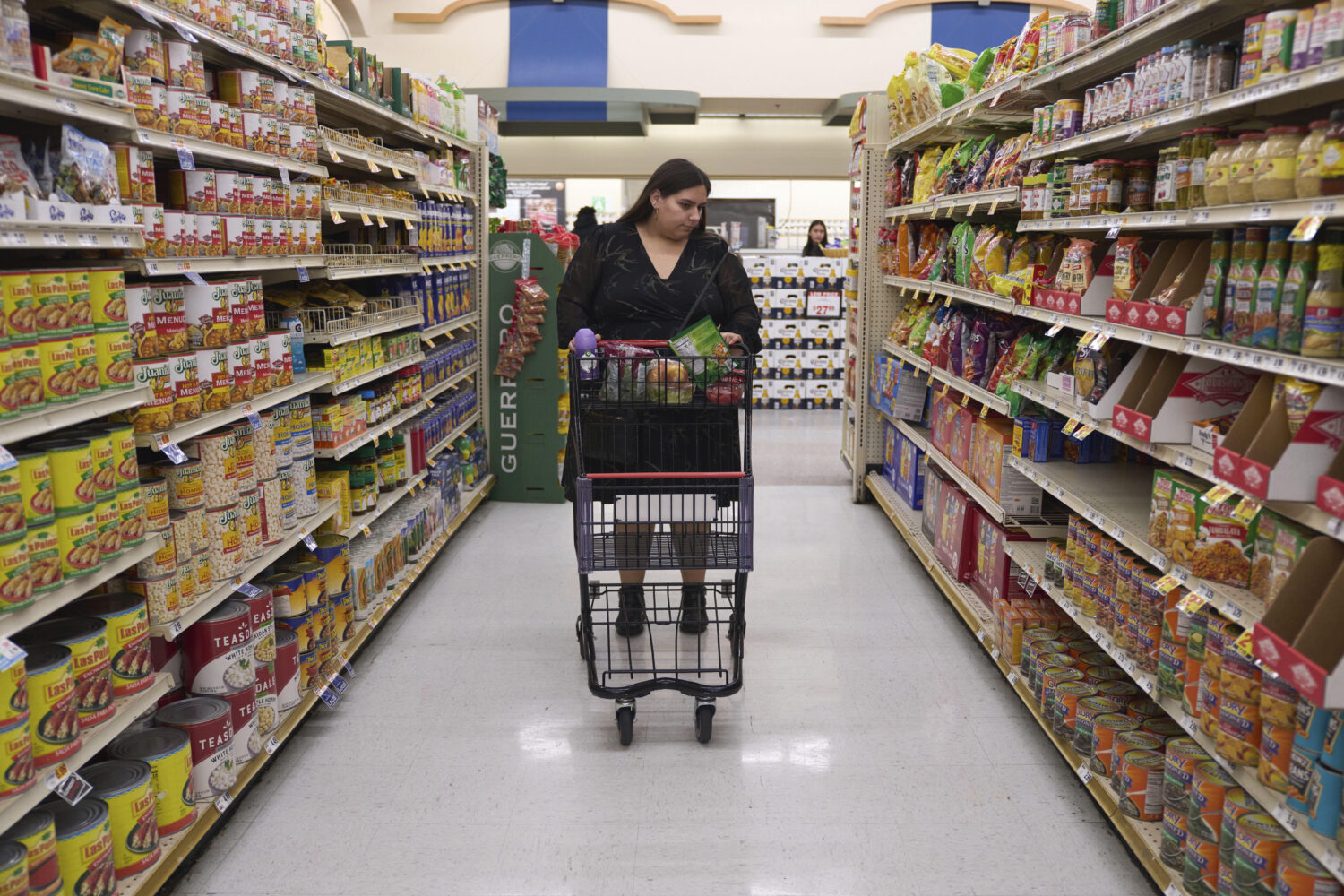
FILE - Jaqueline Benitez pushes her cart down an aisle as she shops for groceries at a supermarket in Bellflower, Calif., on Monday, Feb. 13, 2023. (AP Photo/Allison Dinner, file)
Credit: ASSOCIATED PRESS
(AP Photo/Allison Dinner, file)

TPresident Donald Trump’s plan to cut taxes by trillions of dollars could also trim billions in spending from social safety net programs, including food aid for lower-income people.
The proposed changes to the Supplemental Nutrition Assistance Program would make states pick up more of the costs, require several million more recipients to work or lose their benefits, and potentially reduce the amount of food aid people receive in the future.
The legislation, which narrowly passed the U.S. House, could undergo further changes in the Senate, where it’s currently being debated. Trump wants lawmakers to send the “One Big Beautiful Bill Act” to his desk by July 4, when the nation marks the 249th anniversary of the Declaration of Independence.
Here’s a look at the food aid program, by the numbers:
The federal aid program formerly known as food stamps was renamed the Supplemental Nutrition Assistance Program, or SNAP, on Oct. 1, 2008. The program provides monthly payments for food purchases to low-income residents generally earning less than $1,632 monthly for individuals, or $3,380 monthly for a household of four.
The nation’s first experiment with food stamps began in 1939. But the modern version of the program dates to 1979, when a change in federal law took effect eliminating a requirement that participants purchase food stamps. There currently is no cost to people participating in the program.
A little over 42 million people nationwide received SNAP benefits in February, the latest month for which figures are available. That’s roughly one out of every eight people in the county. Participation is down from a peak average of 47.6 million people during the 2013 federal fiscal year.
Often, more than one person in a household is eligible for food aid. As of February, nearly 22.5 million households were enrolled SNAP, receiving an average monthly household benefit of $353.
Legislation passed by the House is projected to the Congressional Budget Office.
A little more than half of those federal savings would come by shifting costs to states, which administer SNAP. Nearly one-third of those savings would come by expanding a work requirement for some SNAP participants, which the CBO assumes would force some people off the rolls. Additional money would be saved by eliminating SNAP benefits for between 120,000 and 250,000 immigrants legally in the U.S. who are not citizens or lawful permanent residents.
Another provision in the legislation would cap the annual inflationary growth in food benefits. As a result, the CBO estimates that the average monthly food benefit would be about $15 lower than it otherwise would have been by 2034.
To receive SNAP benefits, current law says adults ages 18 through 54 who are physically and mentally able and don’t have dependents would need to work, volunteer or participate in training programs for at least 80 hours a month. Those who don’t do so are limited to just three months of benefits in a three-year period.
The legislation that passed the House would expand work requirements to those ages 55 through 64. It also would extend work requirements to some parents without children younger than age 7. And it would limit the ability of states to waive work requirements in areas that lack sufficient jobs.
The combined effect of those changes is projected by the CBO to reduce SNAP participation by a monthly average of 3.2 million people.
The federal government currently splits the administrative costs of SNAP with states but covers the full cost of food benefits. Under the legislation, states would have to cover three-fourths of the administrative costs. States also would have to pay a portion of the food benefits starting with the 2028 fiscal year.
All states would be required to pay at least 5% of the food aid benefits, and could pay more depending on how often they make mistakes with people’s payments.
States that had payment error rates between 6-8% in the most recent federal fiscal year for which data is available would have to cover 15% of the food costs. States with error rates between 8-10% would have to cover 20% of the food benefits, and those with error rates greater than 10% would have to cover 25% of the food costs.
Many states could get hit with higher costs. The national error rate stood at 11.7% in the 2023 fiscal year, and just three states — Idaho, South Dakota and Vermont — had error rates below 5%. But the 2023 figures are unlikely to serve as the base year, so the exact costs to states remains unclear.
As a result of the cost shift, the CBO assumes that some states would reduce or eliminate benefits for people.
House Resolution 1, containing the SNAP changes and tax cuts, passed the House last month by a margin of just one vote — 215-214.
A vote also could be close in the Senate, where Republicans hold 53 of the 100 seats. Democrats did not support the bill in the House and are unlikely to do so in the Senate. Some Republican senators have expressed reservations about proposed cuts to food aid and Medicaid and the potential impact of the bill on the federal deficit. GOP Senate leaders may have to make some changes to the bill to ensure enough support to pass it.