China and the US have long collaborated in ‘open research.’ Some in Congress say that must change
Oct 13, 2025, 6:01 PM
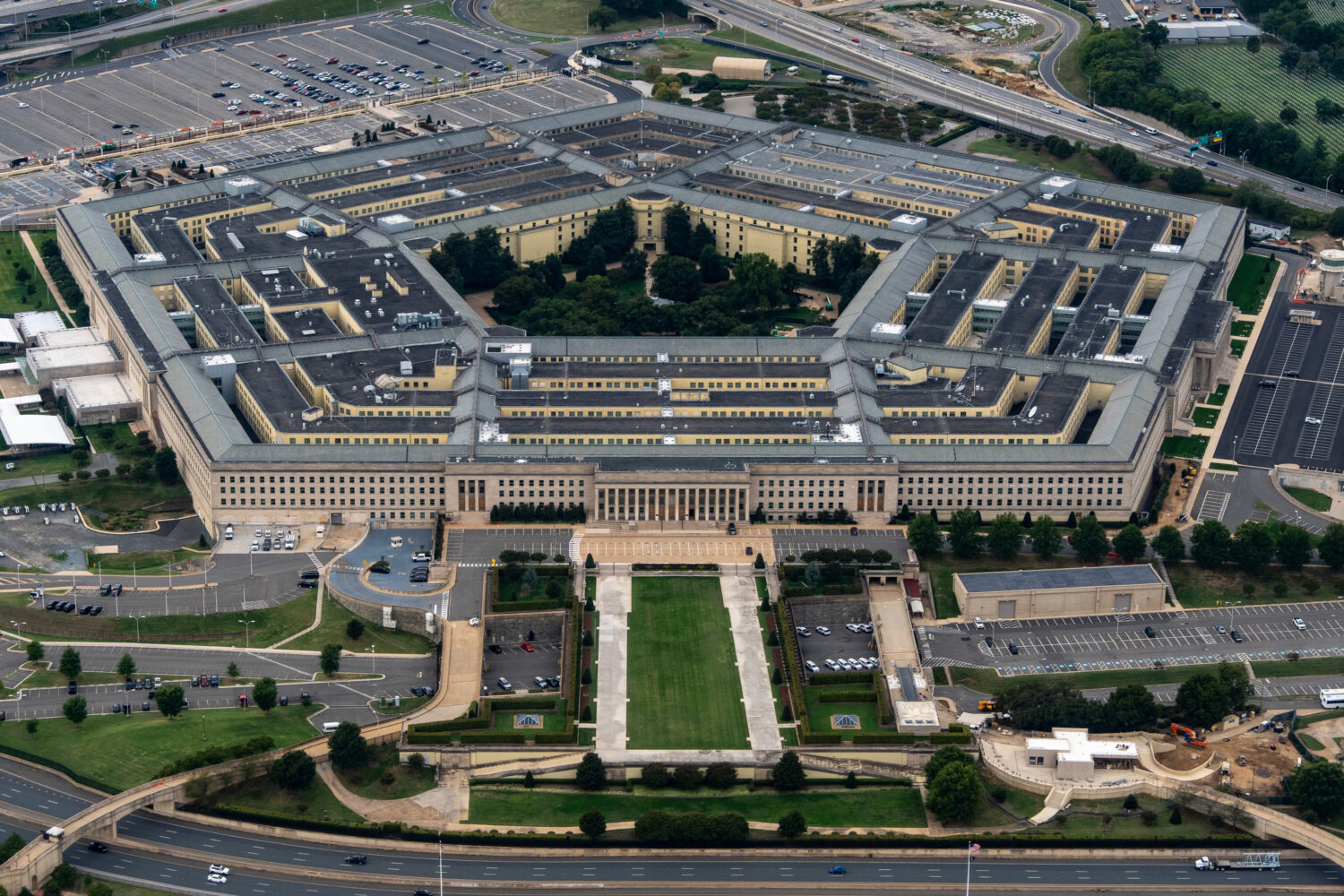
FILE - The Pentagon, the headquarters for the U.S. Department of Defense, is seen from the air, Sept. 20, 2025, in Arlington, Va. (AP Photo/Alex Brandon, File)
Credit: ASSOCIATED PRESS
(AP Photo/Alex Brandon, File)

WASHINGTON (AP) — For many years, American and Chinese scholars worked shoulder to shoulder on cutting-edge technologies through open research, where findings are freely shared and accessible to all. But that openness, a long-standing practice celebrated for advancing knowledge, is raising alarms among some U.S. lawmakers.
They are worried that China — now considered the most formidable challenger to American military dominance — is taking advantage of open research to catch up with the U.S. on military technology and even gain an edge. And they are calling for action.
“For far too long, our adversaries have exploited American colleges and universities to advance their interests, while risking our national security and innovation,” said Sen. Tom Cotton, an Arkansas Republican and chair of the Senate Intelligence Committee. He has introduced legislation to put new restrictions on federally funded research collaboration with academics at several Chinese institutions that work with the Chinese military, as well as institutions in other countries deemed adversarial to U.S. interests.
The House Select Committee on the Chinese Communist Party makes it a priority to protect American research, having accused Beijing of weaponizing open research by converting it into a “pipeline of foreign talent and military modernization.”
The rising concerns on Capitol Hill threaten to unravel deep, two-generations-old academic ties between the countries even as the world’s two largest economies are moving away from each other through tariffs and trade barriers. The relationship has shifted from engagement to competition, if not outright enmity.
“Foreign adversaries are increasingly exploiting the open and collaborative environment of U.S. academic institutions for their own gain,” said James Cangialosi, director of the National Counterintelligence and Security Center, which in August issued a bulletin urging universities to do more to protect research from foreign meddling.
The House committee released three reports in September alone. They targeted, respectively, Pentagon-funded research involving military-linked Chinese scholars; joint U.S.-China institutes that train STEM talent for China; and visa policies that have brought military-linked Chinese students to Ph.D. programs at American universities. The reports recommend more legislation to protect U.S. research, tighter visa policies to vet Chinese students and scholars and an end to academic partnerships that could be exploited to boost China’s military powers.
More than 500 U.S. universities and institutes have collaborated with Chinese military researchers in recent years, helping Beijing develop advanced technologies with military applications, such as anti-jamming communications and hypersonic vehicles, according to a report by the private U.S. intelligence group Strider Technologies.
Despite efforts in recent years by the U.S. government to set up guardrails to prevent such collaboration from boosting China’s military capabilities, the practice is still prevalent, according to Strider, based in Salt Lake City, Utah.
The report identified nearly 2,500 publications produced in collaboration between U.S. entities and Chinese military-affiliated research institutes in 2024 on STEM research, which includes physics, engineering, material science, computer science, biology, medicine and geology. While the number peaked at more than 3,500 in 2019, before some new restrictive measures came into effect, the level of collaboration remains high, the report said.
This collaboration not only facilitates “potential illicit knowledge transfer,” but supports China’s “state-directed efforts to recruit top international talent, often to the detriment of U.S. national interests,” the report said.
Foreign countries can exploit American research by stealing secrets for use in military and commercial settings, by poaching talented researchers for foreign companies and universities and by recruiting students and researchers as potential spies, authorities say.
Fostering a climate of robust academic research takes funding and long-term support. Stealing the fruits of that labor, however, can be as easy as hacking into a university network, hiring away researchers or coopting the research itself. That’s why, authorities say, it’s so tempting for American adversaries looking to take advantage of U.S. institutions and research.
The most recent threat assessment report from the Department of Homeland Security highlights concerns that American adversaries — and China specifically — seek to illicitly acquire U.S. technology. Authorities say China aims to steal military and computing technology that might give the U.S. an advantage, as well as the latest commercial innovations.
Abigail Coplin, assistant professor of sociology and science, technology and society at Vassar College, said there are already guardrails for federally funded research to protect classified information and anything deemed sensitive.
She also said open research goes both ways, benefiting the U.S. as well, and restrictions could be counterproductive by driving away talents.
“American national security interests and economic competitiveness would be better served by continuing — if not increasing — research funding than they are by implementing costly research restrictions,” Coplin said.
Arnie Bellini, a tech entrepreneur and investor, also said efforts to protect U.S. research risk stifling progress if they go too far and prevent U.S. colleges or startups from sharing information about new and emerging technology. Keeping up with China will also require big investments in efforts to protect innovation, said Bellini, who recently donated $40 million to establish a new cybersecurity and AI research college at the University of South Florida.
Bellini said it’s imperative to encourage research and development without giving secrets away to America’s enemies. “In the U.S., it is a reality now that our digital borders are under siege — and businesses of every size are right to be concerned,” Bellini said.
According to Department of Justice figures, about 80% of all economic espionage cases prosecuted in the U.S. involve alleged acts that would benefit China.
Some members of Congress have pushed to reinstate a Department of Justice program created during the first Trump administration that sought to investigate Chinese intellectual espionage. The so-called “ Initiative ” ended in 2022 after critics said it failed to address the problem even as it perpetrated racist stereotypes about Asian American academics.