From tech podcasts to policy: Trump’s new AI plan leans heavily on Silicon Valley industry ideas
Jul 22, 2025, 9:04 PM | Updated: Jul 23, 2025, 3:34 pm

An artificial intelligence agenda that started coalescing on the podcasts of Silicon Valley billionaires is now being forged into U.S. policy as President Donald Trump leans on the ideas of the tech figures who backed his election campaign.
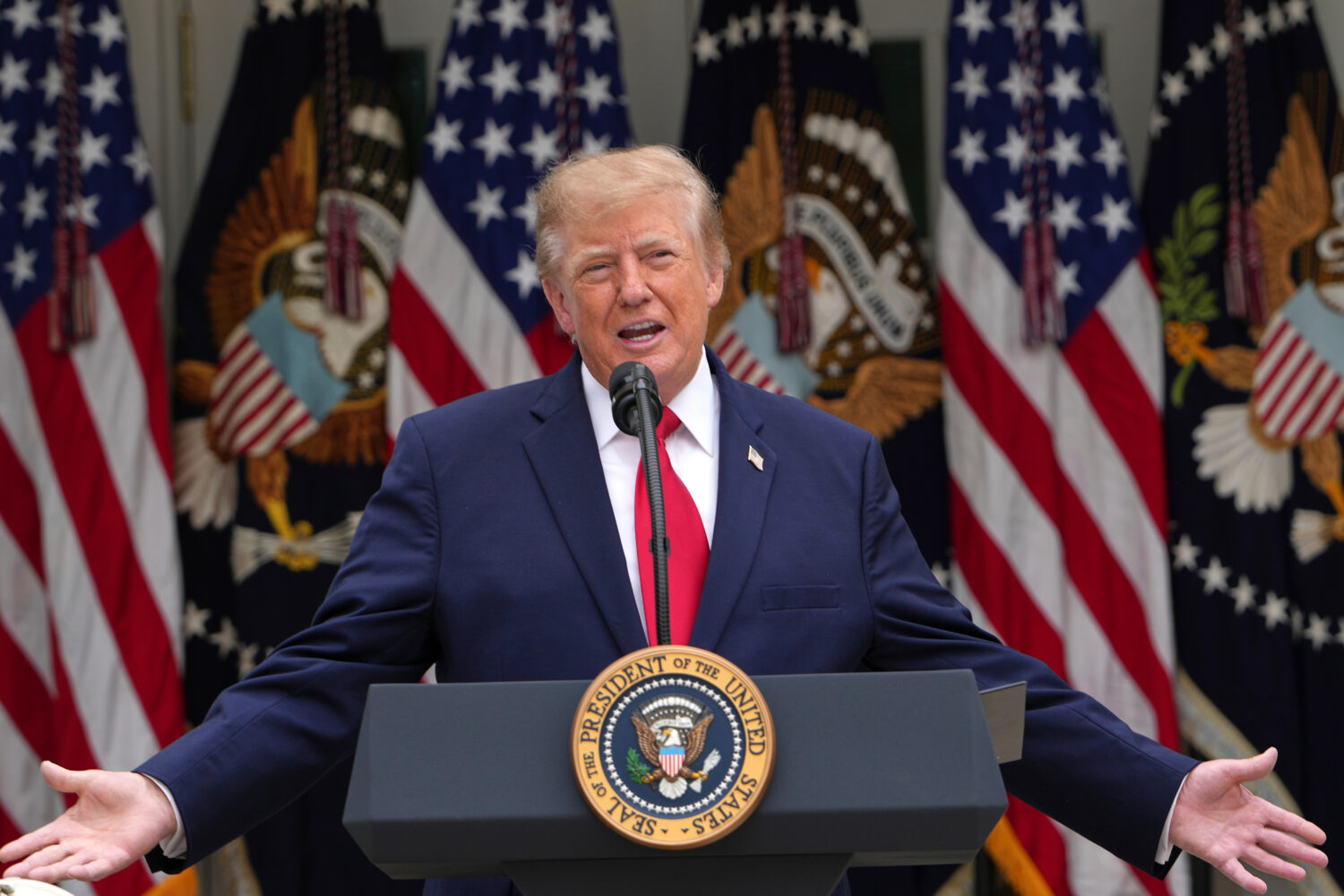
Trump on Wednesday is planning to reveal an “AI Action Plan” he ordered after returning to the White House in January. He gave his tech advisers six months to come up with new AI policies after revoking President Joe Biden’s signature AI guardrails on his first day in office.
The unveiling is co-hosted by the bipartisan Hill and Valley Forum and the All-In Podcast, a business and technology show hosted by four tech investors and entrepreneurs who include Trump’s AI czar, David Sacks.
The plan and related executive orders are expected to include some familiar tech lobby pitches. That includes accelerating the sale of AI technology abroad and making it easier to construct the energy-hungry data center buildings that are needed to form and run AI products, according to a person briefed on Wednesday’s event who was not authorized to speak publicly and spoke on condition of anonymity.
It might also include some of the AI culture war preoccupations of the circle of venture capitalists who endorsed Trump last year.
Countering the liberal bias they see in AI chatbots such as ChatGPT or Google’s Gemini has long been a rallying point for the tech industry’s loudest Trump backers.
Sacks, a former PayPal executive and now Trump’s top AI adviser, has been criticizing “woke AI” for more than a year, fueled by Google’s February 2024 rollout of an AI image generator that, when asked to show an American Founding Father, created pictures of Black, Latino and Native American men.
“The AI’s incapable of giving you accurate answers because it’s been so programmed with diversity and inclusion,” Sacks said at the time. Google quickly fixed its tool, but the “Black George Washington” moment remained a parable for the problem of AI’s perceived political bias, taken up by X owner Elon Musk, venture capitalist Marc Andreessen, Vice President JD Vance and Republican lawmakers.
The administration’s latest push against “woke AI” comes a week after the Pentagon announced new $200 million contracts with four leading AI companies, including Google, to address “critical national security challenges.”
Also receiving one of the contracts was Musk’s xAI, which has been pitched as an alternative to “woke AI” companies. The company has faced its own challenges: Earlier this month, xAI had to scramble to remove posts made by its Grok chatbot that made antisemitic comments and praised Adolf Hitler.
Trump has paired AI’s need for huge amounts of electricity with his own push to tap into U.S. energy sources, including gas, coal and nuclear.
“Everything we aspire to and hope for means the demand and supply of energy in America has to go up,” said Michael Kratsios, the director of the White House’s Office of Science and Technology Policy, in a video posted Tuesday.
Many tech giants are already well on their way toward building new data centers in the U.S. and around the world. OpenAI announced this week that it has switched on the first phase of a massive data center complex in Abilene, Texas, part of an Oracle-backed project known as Stargate that Trump promoted earlier this year. Amazon, Microsoft, Meta and xAI also have major projects underway.
The tech industry has pushed for easier permitting rules to get their computing facilities connected to power, but the AI building boom has also contributed to spiking demand for fossil fuel production that will contribute to global warming.
United Nations Secretary-General Antonio Guterres on Tuesday called on the world’s major tech firms to power data centers completely with renewables by 2030.
“A typical AI data center eats up as much electricity as 100,000 homes,” Guterres said. “By 2030, data centers could consume as much electricity as all of Japan does today.”
It’s long been White House policy under Republican and Democratic administrations to curtail certain technology exports to China and other adversaries on national security grounds.
But much of the tech industry argued that Biden went too far at the end of his term in trying to restrict the exports of specialized AI computer chips to more than 100 other countries, including close allies.
Part of the Biden administration’s motivation was to stop China from acquiring coveted AI chips in third-party locations such as Southeast Asia or the Middle East, but critics said the measures would end up encouraging more countries to turn to China’s fast-growing AI industry instead of the U.S. as their technology supplier.
It remains to be seen how the Trump administration aims to accelerate the export of U.S.-made AI technologies while countering China’s AI ambitions. California chipmakers Nvidia and AMD both announced last week that they won approval from the Trump administration to sell to China some of their advanced computer chips used to develop artificial intelligence.
AMD CEO Lisa Su is among the guests planning to attend Trump’s event Wednesday.
There are sharp debates on how to regulate AI, even among the influential venture capitalists who have been debating it on their favorite medium: the podcast.
While some Trump backers, particularly Andreessen, have advocated an “accelerationist” approach that aims to speed up AI advancement with minimal regulation, Sacks has described himself as taking a middle road of techno-realism.
“Technology is going to happen. Trying to stop it is like ordering the tides to stop. If we don’t do it, somebody else will,” Sacks said on the All-In podcast.
On Tuesday, 95 groups including labor unions, parent groups, environmental justice organizations and privacy advocates signed a resolution opposing Trump’s embrace of industry-driven AI policy and calling for a “People’s AI Action Plan” that would “deliver first and foremost for the American people.”
Amba Kak, co-executive director of the AI Now Institute, which helped lead the effort, said the coalition expects Trump’s plan to come “straight from Big Tech’s mouth.”
“Every time we say, ‘What about our jobs, our air, water, our children?’ they’re going to say, ‘But what about China?’” she said in a call with reporters Tuesday. She said Americans should reject the White House’s argument that the industry is overregulated and fight to preserve “baseline protections for the public” as AI technology advances.
___
Associated Press writer Seung Min Kim in Washington contributed to this report.