Hegseth’s comments are a reminder that government isn’t always eager to show the human cost to war
Mar 6, 2026, 3:38 AM
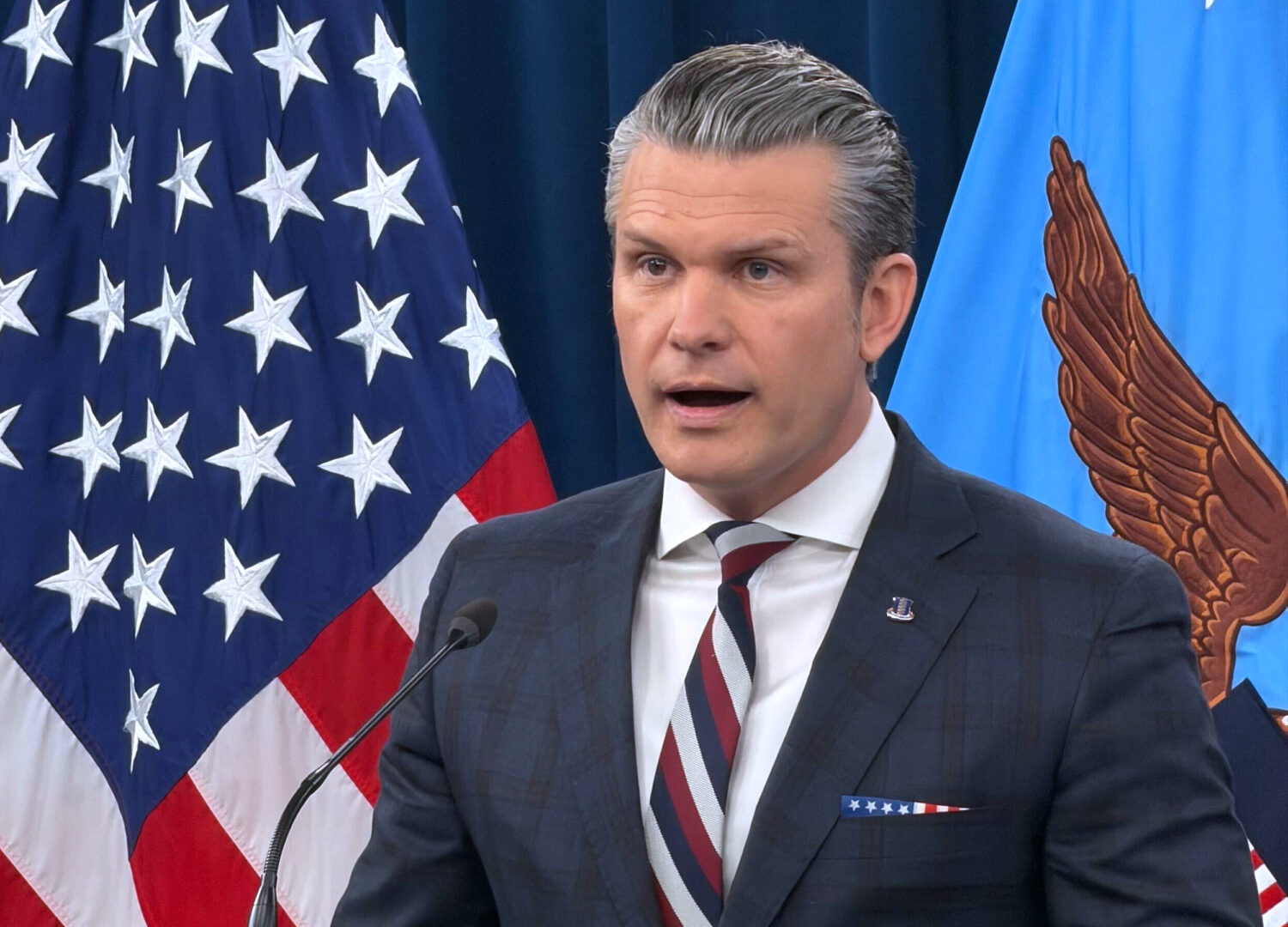
Defense Secretary Pete Hegseth speaks during a press briefing at the Pentagon, Wednesday, March 4, 2026, in Washington. (AP Photo/Konstantin Toropin)
Credit: ASSOCIATED PRESS
(AP Photo/Konstantin Toropin)

Remarks by Defense Secretary Pete Hegseth that the American press emphasizes U.S. casualties in the Iran war because it “wants to make the president look bad” are a reminder of something that has endured across many decades and conflicts: the tension and trepidation about news that reminds Americans of the human cost of war.
During his Pentagon briefing on the war on Wednesday, Hegseth bashed “fake news” while addressing the six U.S. Army reservists killed in an Iranian attack on an operations center in Kuwait.
“When a few drones get through or tragic things happen, it’s front-page news,” Hegseth said. “I get it. The press only wants to make the president look bad. But try for once to report the reality. The terms of this war will be set by us at every step.”
White House press secretary Karoline Leavitt, when questioned about the remark by CNN’s Kaitlan Collins at her own news conference later, doubled down. “You take every single thing this administration says and try to use it to make the president look bad,” Leavitt said. “That’s an objective fact.”
Memories of night after night of graphic images beamed into homes through a then-recent invention — television — were hard to shake for those who lived through the Vietnam War in the 1960s. Many believed the cumulative impact of seeing that suffering night after night turned Americans from supporters to skeptics.
Such vivid, intimate scenes of military action by Americans haven’t been seen to that extent since, a legacy still in place with the war that President Donald Trump and Hegseth are waging right now on behalf of the United States.
“For many presidents, the lesson seemed to be: Don’t allow the realities of war into people’s living rooms if you can help it,” said Timothy Naftali, senior research scholar at Columbia University’s School of International and Public Affairs.
Today, the images the public sees of warfare can resemble a video game — explosions seen lighting up the sky from afar — with the pain much more private.
Generations ago during World War II, journalists were embedded with the military, and many became household names — reporters Ernie Pyle and Walter Cronkite, photographers Robert Capa and Margaret Bourke-White. Those were the days before television, however.
Vietnam was arguably the most accessible American war for reporters. Journalists stationed in the country sent back a steady stream of death and destruction.
Cronkite, by then a CBS-TV anchorman of the most popular evening news program in the U.S., reported from Vietnam in 1968 and concluded the only rational way out was a negotiated peace. “If I’ve lost Cronkite,” President Lyndon Johnson said, “I’ve lost Middle America.”
During the Gulf War in 1991, President George H.W. Bush was angered by split-screen television images that showed the coffins of U.S. service members being returned to the United States while he, apparently unaware of the timing, was joking with reporters about another subject at the White House. The Pentagon banned coverage of these ceremonies, saying it was to protect the privacy of family members of the dead, although critics said it was to avoid showing pictures of coffins.
That ban, with a few exceptions, stayed in place until it was lifted by President Barack Obama in 2019.
Reporters who approached the battlefield in wars fought by the U.S. military in the 2000s were likely to have their movements restricted, if they were allowed at all. Jessica Donati, a reporter for The Wall Street Journal and Reuters who covered the war in Afghanistan, wrote for the Modern War Institute in 2021 that “it’s easier these days for journalists in Afghanistan to embed with the Taliban than with the U.S. military.”
The nature of this war — fought thousands of miles from the American homeland and not yet on the ground in Iran — has limited the number of American casualties and thus made them more newsworthy. Several journalists have pointed out that reporting about military casualties predates Trump’s presidency. Hegseth’s statement “is a warped way of looking at the world,” said CNN’s Jake Tapper. “Ahistorical.”
“The news media covers fallen service members because they have made the ultimate sacrifice for their country,” he said. “It’s a tribute. It’s an honor.”
There has been relatively little coverage from the ground in Iran. A CNN team led by Frederik Pleitgen on Thursday became the first journalists from a U.S.-based television network to enter the country, and he spent the day racing across the country to Tehran.
Dan Lamothe, military affairs reporter for The Washington Post, posted on social media that Hegseth’s comments won’t stop him from continuing to cover the casualties of war — as has been done under presidents of both major political parties.
“These efforts haven’t always been perfect,” Lamothe wrote. “But they’ve highlighted sacrifices by American servicemembers and their families, and shortcomings that sometimes allowed these deaths to happen. We’ll continue to do so. It’s too important to stop.”
When Robert H. Reid was a top editor at Stars and Stripes between 2014 and 2025, he found that the newspaper’s audience, primarily service members, wanted more than raw numbers when Americans were killed in military action. They wanted to know details about the lives of the people who served — where they grew up, who they left behind, what their passions were, he said.
In 10 or 20 years, many of these people will be forgotten by all but those who loved them. But for what they gave for their country, they deserve recognition for their lives, said Reid, an Associated Press international correspondent for most of his career.
“The public needs to know that war is not a video game,” Naftali said. “It affects people.”
___
David Bauder writes about the media for the AP. Follow him at http://x.com/dbauder and https://bsky.app/profile/dbauder.bsky.social.