Naturalized US citizens thought they were safe. Trump’s immigration policies are shaking that belief
Nov 14, 2025, 9:01 PM
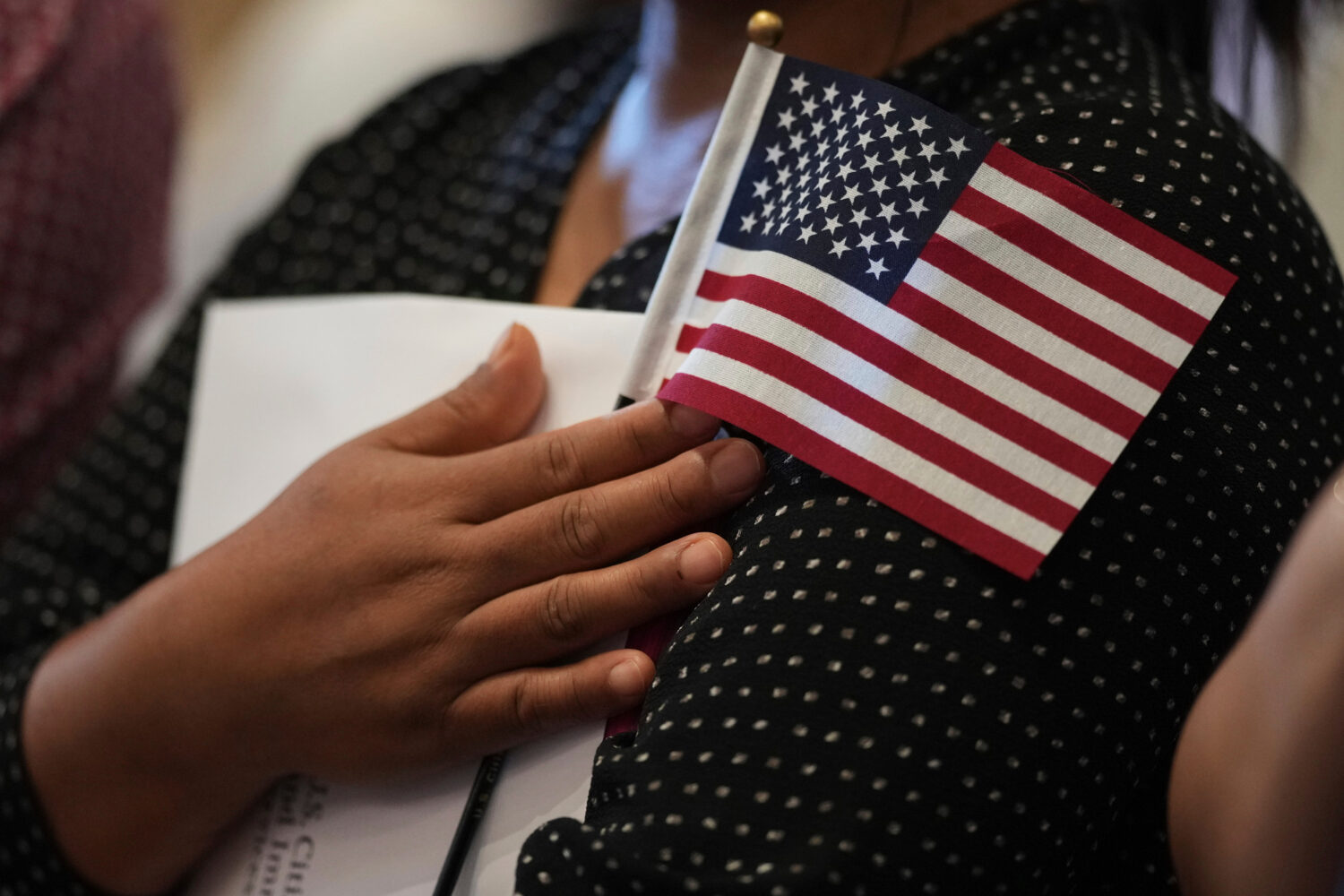
FILE - A woman clutches a U.S. flag as she and applicants from other countries prepare to take the oath of citizenship in commemoration of Independence Day during a Naturalization Ceremony in San Antonio, July 3, 2025. (AP Photo/Eric Gay, File)
Credit: ASSOCIATED PRESS
(AP Photo/Eric Gay, File)

NEW YORK (AP) — When he first came to the United States after escaping civil war in Sierra Leone and spending almost a decade in a refugee camp, Dauda Sesay had no idea he could become a citizen. But he was told that if he followed the rules and stayed out of trouble, after some years he could apply. As a U.S. citizen, he would have protection.
It’s what made him decide to apply: the premise — and the promise — that when he became a naturalized American citizen, it would create a bond between him and his new home. He would have rights as well as responsibilities, like voting, that, as he was making a commitment to the country, the country was making one to him.
“When I raised my hand and took the oath of allegiance, I did believe that moment the promise that I belonged,” said Sesay, 44, who first arrived in Louisiana more than 15 years ago and now works as an advocate for refugees and their integration into American society.
But in recent months, as President Donald Trump reshapes immigration and the country’s relationship with immigrants, that belief has been shaken for Sesay and other naturalized citizens. There’s now fear that the push to drastically increase deportations and shift who can claim America as home, through things like trying to end birthright citizenship, is having a ripple effect.
What they thought was the bedrock protection of naturalization now feels more like quicksand.
Some are worried that if they leave the country, they will have difficulties when trying to return, fearful because of accounts of naturalized citizens being questioned or detained by U.S. border agents. They wonder: Do they need to lock down their phones to protect their privacy? Others are hesitant about moving around within the country, after stories like that of a U.S. citizen accused of being here illegally and detained even after his mother produced his birth certificate.
Sesay said he doesn’t travel domestically anymore without his passport, despite having a REAL ID with its federally mandated, stringent identity requirements.
Immigration enforcement roundups, often conducted by masked, unidentifiable federal agents in places including Chicago and New York City, have at times included American citizens in their dragnets. One U.S. citizen who says he was detained by immigration agents twice has filed a federal lawsuit.
Adding to the worries, the Justice Department issued a memo this summer saying it would ramp up efforts to denaturalize immigrants who’ve committed crimes or are deemed to present a national security risk. At one point during the summer, Trump threatened the citizenship of Zohran Mamdani, the 34-year-old democratic socialist mayor-elect of New York City, who naturalized as a young adult.
The atmosphere makes some worried to speak about it publicly, for fear of drawing negative attention to themselves. Requests for comment through several community organizations and other connections found no takers willing to go on the record other than Sesay.
In New Mexico, state Sen. Cindy Nava says she’s familiar with the fear, having grown up undocumented before getting DACA — Deferred Action for Childhood Arrivals, the Obama-era program that protected people brought to the U.S. as children from being deported — and gaining citizenship through her marriage. But she hadn’t expected to see so much fear among naturalized citizens.
“I had never seen those folks be afraid … now the folks that I know that were not afraid before, now they are uncertain of what their status holds in terms of a safety net for them,” Nava said.
What citizenship has meant, and who was included, has expanded and contracted over the course of American history, said Stephen Kantrowitz, professor of history at the University of Wisconsin-Madison. He said while the word “citizen” is in the original Constitution, it is not defined.
“When the Constitution is written, nobody knows what citizenship means,” he said. “It’s a term of art, it comes out of the French revolutionary tradition. It sort of suggests an equality of the members of a political community, and it has some implications for the right to be a member of that political community. But it is … so undefined.”
The first naturalization law passed in 1790 by the new country’s Congress said citizenship was for any “free white person” of good character. Those of African descent or nativity were added as a specific category to federal immigration law after the ravages of the Civil War in the 19th century, which was also when the 14th Amendment was added to the Constitution to establish birthright citizenship.
In the last years of the 19th century and into the 20th century, laws were put on the books limiting immigration and, by extension, naturalization. The Immigration Act of 1924 effectively barred people from Asia because they were ineligible for naturalization, being neither white nor Black. That didn’t change until 1952, when an immigration law removed racial restrictions on who could be naturalized. The 1965 Immigration and Naturalization Act replaced the previous immigration system with one that portioned out visas equally among nations.
American history also includes times when those who had citizenship had it taken away, like after the 1923 Supreme Court ruling in U.S. vs. Bhagat Singh Thind. That ruling said that Indians couldn’t be naturalized because they did not qualify as white and led to several dozen denaturalizations. At other times, it was ignored, as in World War II, when Japanese Americans were forced into internment camps.
“Political power will sometimes simply decide that a group of people, or a person or a family isn’t entitled to citizenship,” Kantrowitz said.
In this moment, Sesay says, it feels like betrayal.
“The United States of America — that’s what I took that oath of allegiance, that’s what I make commitment to,” Sesay said. “Now, inside my home country, and I’m seeing a shift. … Honestly, that is not the America I believe in when I put my hand over my heart.”