New California law aims to improve school nutrition by phasing out some ultraprocessed foods
Oct 8, 2025, 2:57 PM
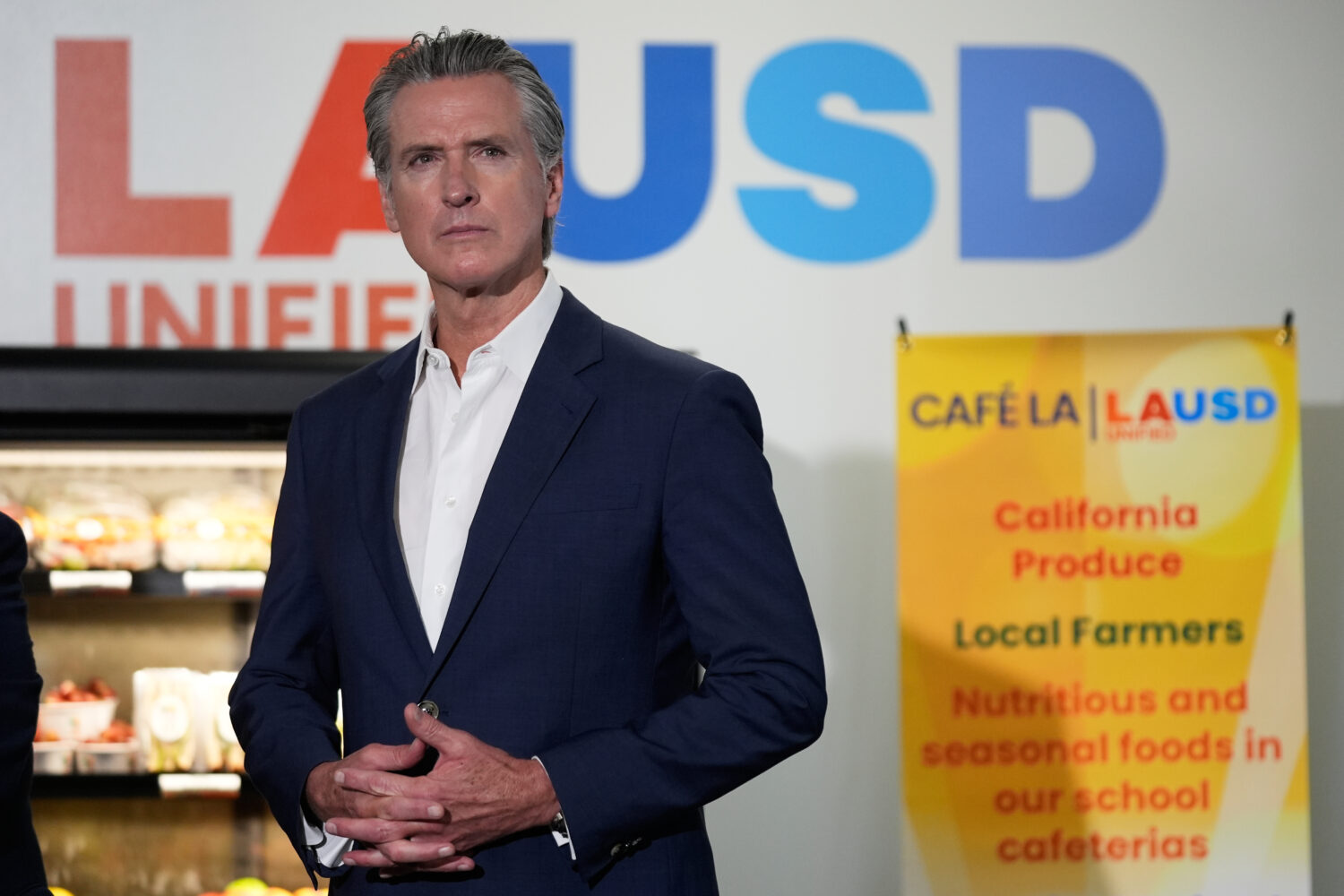
Gov. Gavin Newsom prepares to speak at a news conference at Belvedere Middle School, Wednesday, Oct. 8, 2025, in Los Angeles. (AP Photo/Damian Dovarganes)
Credit: ASSOCIATED PRESS
(AP Photo/Damian Dovarganes)

SACRAMENTO, Calif. (AP) — California will phase out certain ultraprocessed foods from school meals over the next decade under a first-in-the-nation law signed Wednesday by Gov. Gavin Newsom.
The law seeks to define ultraprocessed foods, the often super-tasty products typically full of sugar, salt and unhealthy fats. The legislation requires the state’s Department of Public Health to adopt rules by mid-2028 defining “ultraprocessed foods of concern” and “restricted school foods.”
Schools have to start phasing out those foods by July 2029, and districts will be barred from selling them for breakfast or lunch by July 2035. Vendors will be banned from providing the “foods of concern” to schools by 2032.
Newsom, flanked by first partner Jennifer Siebel Newsom and state lawmakers, signed the measure at a middle school in Los Angeles.
“California has never waited for Washington or anyone else to lead on kids’ health — we’ve been out front for years, removing harmful additives and improving school nutrition,” Newsom said in a statement. “This first-in-the-nation law builds on that work to make sure every California student has access to healthy, delicious meals that help them thrive.”
Newsom issued an executive order earlier this year requiring the Department of Public Health to provide recommendations by April on limiting harms from ultraprocessed foods. The Democratic governor signed a law in 2023 banning certain synthetic food dyes from school meals.
Legislatures across the country have introduced more than 100 bills in recent months seeking to ban or require labeling of chemicals that make up many ultraprocessed foods, including artificial dyes and controversial additives.
Americans get more than half their calories from ultraprocessed foods, which have been linked to a host of health problems, including obesity, diabetes and heart disease. However, studies haven’t been able to prove that the foods directly cause those chronic health problems.
Defining ultraprocessed foods has been tricky. The most common definition is based on the four-tier Nova system developed by Brazilian researchers that classifies foods according to the amount of processing they undergo.
Researchers often describe ultraprocessed foods as the types of products that contain industrially made ingredients that you won’t find in a home kitchen.
But some highly processed foods –— think tofu, certain types of whole-grain bread and infant formula – can be healthful. And it’s not clear whether it’s the processing of the foods or the combination of nutrients such as sugar, fat and salt that leads to poor health outcomes.
U.S. health officials recently launched an effort to come up with a federal definition of ultraprocessed foods, saying there are concerns over whether current definitions “accurately capture” the range of foods that may affect health.
Some critics of the ban say it is too broad and could unintentionally limit access to nutritious foods.
“For foods served in schools, food and beverage manufacturers meet the rigorous unique safety and nutrition standards set by the USDA and state agencies,” John Hewitt with the Consumer Brands Association said in a statement. He added the brands the association represents are committed to “providing safe, nutritious and convenient” products.
The California School Boards Association is concerned about the cost for districts to phase out these foods in the next few years. There is no extra money attached to the bill.
“You’re borrowing money from other areas of need to pay for this new mandate,” spokesperson Troy Flint said.
The law could raise costs for school districts by an unknown amount by potentially making them purchase more expensive options, according to an analysis by the Senate Appropriations Committee.
Some school districts in California are already phasing out foods the law seeks to ban.
Michael Jochner spent years working as a chef before taking over as director of student nutrition at the Morgan Hill Unified School District about eight years ago. He fully supports the ban.
“It was really during COVID that I started to think about where we were purchasing our produce from and going to those farmers who were also struggling,” he said.
Now they don’t serve any ultraprocessed foods, and all their items are organic and sourced within about 50 miles (80 kilometers) of the district, Jochner said. They removed sugary cereals, fruit juices and flavored milks, and deep-fried foods such as chicken nuggets and tater tots from their menus, he said.
Many of their dishes are made from scratch or semi-homemade, including an item that has long been a staple in U.S. school cafeterias: pizza.
Pizza is also a popular option for students in the Western Placer Unified district northeast of Sacramento, where Director of Food Services Christina Lawson has spent the past few years introducing more meals made from scratch to their school menus.
She estimates up to 60% of school menus in the district are made up of dishes made from scratch, up from about 5% three years ago. They also purchase more foods locally to prepare a wide variety of items, including buffalo chicken quesadillas using tortillas made in nearby Nevada City.
“I’m really excited about this new law because it will just make it where there’s even more options and even more variety and even better products that we can offer our students,” Lawson said. “Because variety is the number one thing our students are looking for.”
Dr. Ravinder Khaira, a pediatrician in Sacramento who supports the law, said at a legislative hearing that the ban will help respond to a surge of chronic conditions in children fueled by poor nutrition.
“Children deserve real access to food that is nutritious and supports their physical, emotional and cognitive development,” Khaira said. “Schools should be safe havens, not a source of chronic disease.”
—-
Associated Press health writer JoNel Aleccia in Temecula, California, contributed.