The divided Supreme Court’s birthright citizenship decision exposes sharp rifts among justices
Jun 30, 2026, 1:56 PM
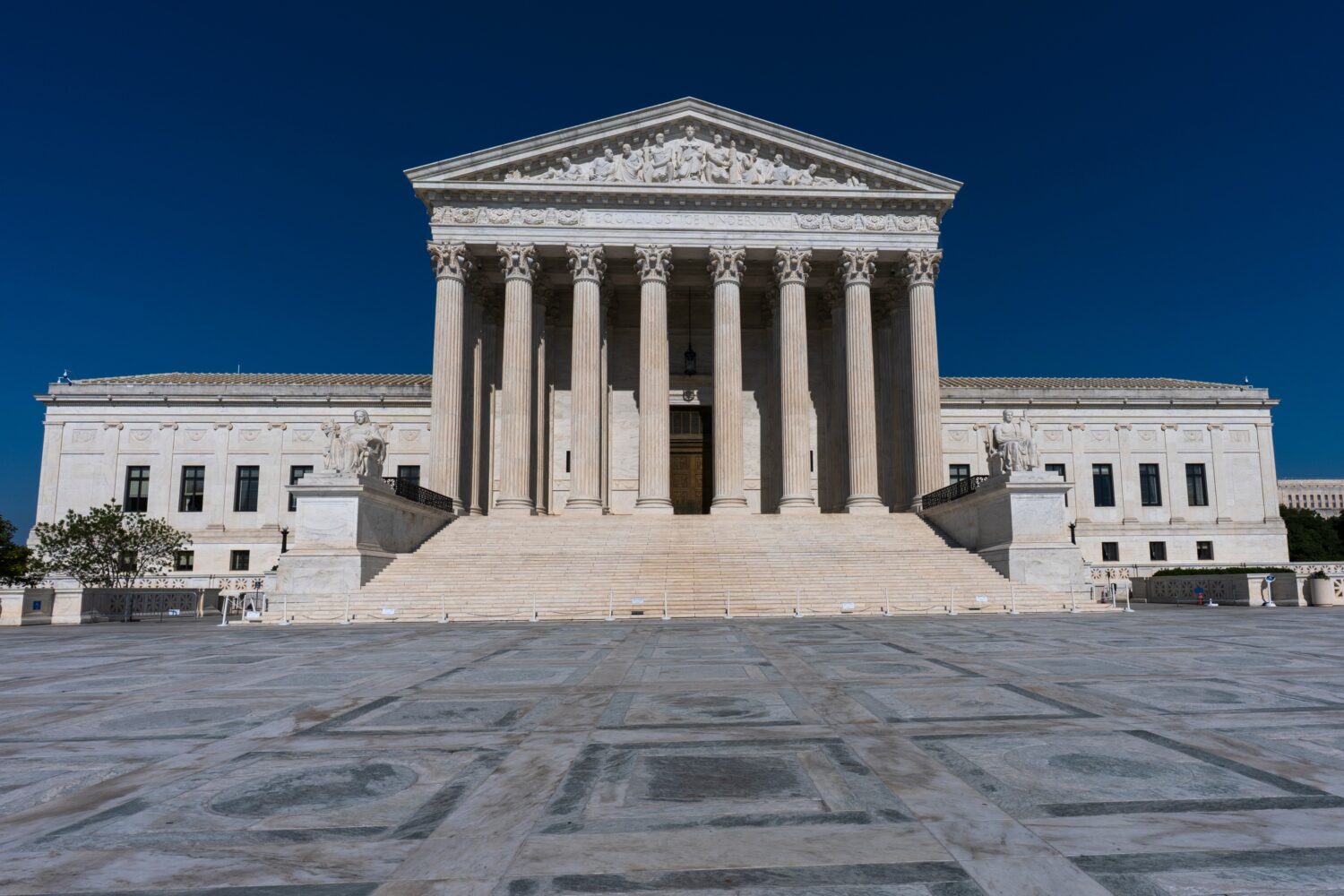
FILE - The Supreme Court is seen in Washington, May 18, 2026. (AP Photo/J. Scott Applewhite, File)
Credit: AP Photo/J. Scott Applewhite
(AP Photo/J. Scott Applewhite, File)

WASHINGTON (AP) — The U.S. Supreme Court’s divided ruling that children born in the U.S. are citizens under the Fourteenth Amendment — even if their parents are in the country unlawfully or only temporarily — exposed deep fissures in the justices’ views on the issue and toward each other.
The court’s two Black justices notably had very different views on U.S. citizenship in the context of Reconstruction after the Civil War.
Tuesday’s decision rejects an order President Donald Trump issued at the start of his second term, declaring that children born to people who are in the United States illegally or temporarily are not American citizens.
The majority, composed of Chief Justice Roberts and Justices Sonia Sotomayor, Elena Kagan, Amy Coney Barrett, and Ketanji Brown Jackson, determined that birth on U.S. soil plus being subject to U.S. law is enough for citizenship.
Several dissenters, including Justices Clarence Thomas and Samuel Alito, say birth alone is not enough — the child’s parents must have a deeper political allegiance or relationship to the U.S.
Jackson’s direct disagreement with Thomas’ dissent highlights a major rift between the legal minds. Here are the justices in their own words:
Much of Roberts’ opinion was a history lesson on English common law, in which he concluded that birthright citizenship has always depended primarily on birthplace — not on parents’ immigration status or domicile.
“Citizenship, then and now, was the right to have rights — to freely participate in our political community. The Framers of the Fourteenth Amendment extended that promise to ‘every free-born person in this land,’” Chief Justice John Roberts wrote for the court, citing congressional debate over the amendment, “We keep that promise today.”
“We break no new ground today,” Roberts said on the bench as he read the court’s majority opinion.
Thomas, who wrote the main dissent, disagreed with the majority’s opinion and argued that American-born children are not automatically American citizens.
The basis of his argument, among other things, is that the court ignored evidence from Reconstruction debates that suggested citizenship depended on a deeper relationship to the country. After the Civil War, the U.S. underwent a series of political and constitutional battles over how to define the civil rights and citizenship status of formerly enslaved Black Americans.
“The Citizenship Clause was enacted for people who were born in this country and called it home. It was enacted for freed slaves such as Dred Scott, who had ‘a domicile’ here and therefore were entitled to sue as citizens,” Thomas wrote in his dissent, concluding that Reconstruction was a targeted remedy for freed slaves to restore citizenship to a wrongfully excluded group.
“In my view, the Citizenship Order is not facially unconstitutional,” Thomas wrote, referring to Trump’s executive order. “The Order is consistent with the original meaning of the Citizenship Clause, at least insofar as it applies to children born to parents, here lawfully or unlawfully, who are not domiciled in the United States.”
Justice Ketanji Brown Jackson agreed with the opinion in full, but wrote to respond to Clarence Thomas’ dissent, arguing that Thomas fundamentally misunderstands what the Reconstruction Amendments — the Thirteenth, Fourteenth, and Fifteenth Amendments — are trying to accomplish.
“Despite his longstanding endorsement of a ‘colorblind’ Constitution, Justice Thomas, now surprisingly suggests that the Citizenship Clause was a race-conscious remedial measure, relating only to ‘freed slaves such as Dred Scott’ — but that narrow vision of the Fourteenth Amendment bears little relationship to the history of its ratification.”
“The Reconstruction Amendments were an anti-caste, anti-subordination reset for the Nation, not a mere spot treatment for the dark stain of slavery.”
“The Court’s conception of a color-blind Constitution and the Government’s (and principal dissent’s) cramped, group-specific reading of the Citizenship Clause are two sides of the same coin, stemming from a basic misunderstanding of the relevant history.”