To make AI morally good, tech companies are turning to religion. But some say it isn’t that simple
Oct 25, 2026, 3:57 AM
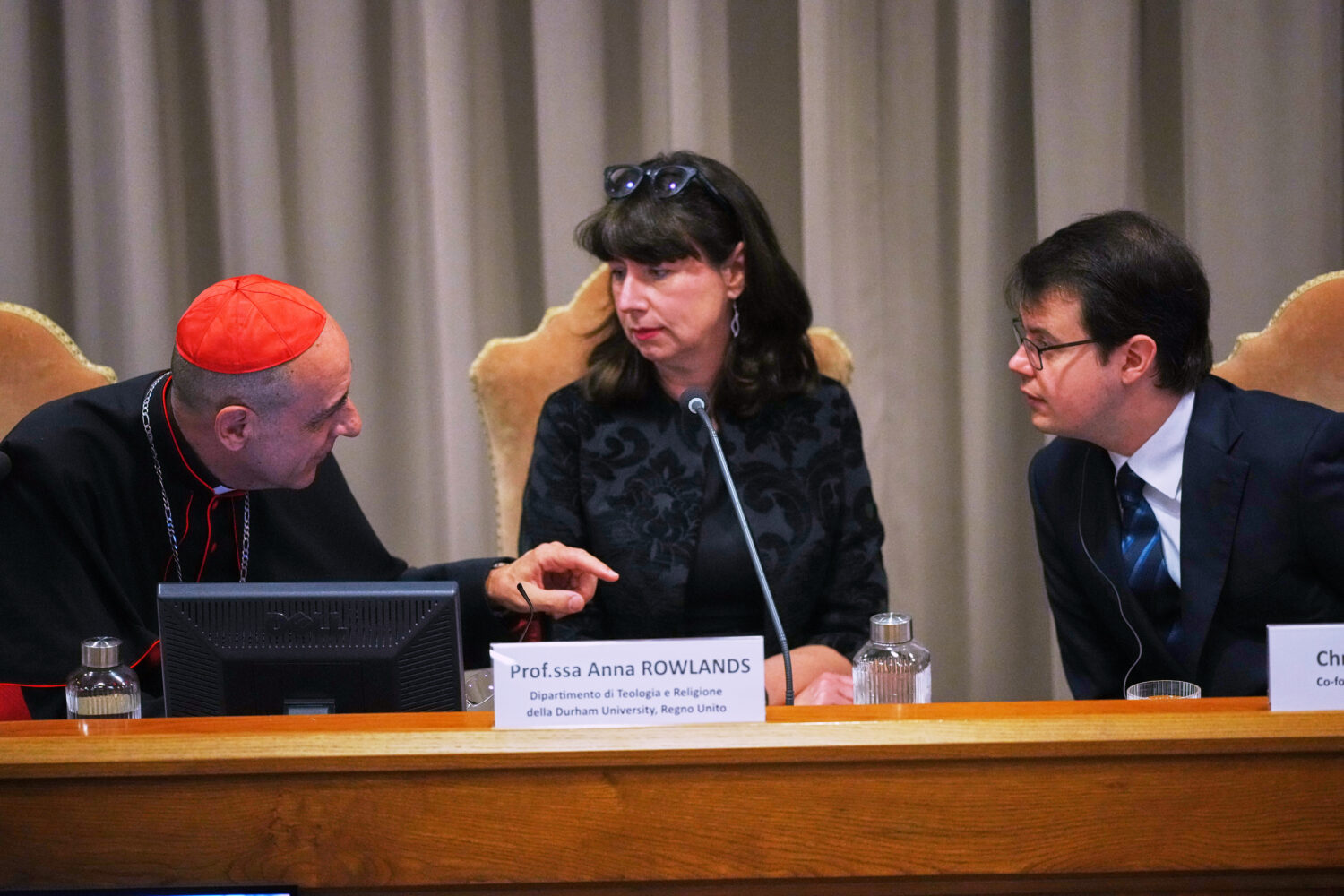
FILE - From left, Cardinal Víctor Manuel Fernández, prefect of the Dicastery for the Doctrine of the Faith, talks with theologian Anna Rowlands, and Anthropic co-founder Christopher Olah during the presentation of Pope Leo XIV's first encyclical, "Magnifica humanitas: On Safeguarding the Human Person in the Time of Artificial Intelligence," at the Vatican, May 25, 2026. (AP Photo/Alessandra Tarantino, File)
Credit: AP Photo/Alessandra Tarantino
(AP Photo/Alessandra Tarantino, File)

LOS ANGELES (AP) — As tech companies race to build the most powerful artificial intelligence, some are also asking how to teach a chatbot right from wrong. Their answer? Religion.
“These are not questions a lab can answer,” Anthropic co-founder Chris Olah said earlier this year at the Vatican’s presentation of Pope Leo XIV’s encyclical on AI. “They are questions traditions like yours have carried for millennia.”
Amid this much-discussed turn to faith, there has been little public scrutiny surrounding what exactly these technology companies think religion is — and, perhaps more important, what they hope to get out of it.
As executives sound the alarm about AI’s destructive potential and debate the need to develop morally good models, they are increasingly seeking input from philosophers and faith leaders. The executives’ philosophy goes something like this: that religion can help inform AI to be morally good in an environment where fears about it — founded and unfounded — are hopscotching across the culture.
Because these companies are not bound to a particular religion, the goal is often quite broad — an aggregate of moral ideas that can inform their models. “What I think ChatGPT should do is reflect that weighted average, or whatever, of humanity’s moral view,” OpenAI CEO Sam Altman said last year.
But experts and adherents alike warn that this idea fails to reckon with how different traditions and worldviews can often contradict one another. In short, they say, it’s not exactly how religion works.
For decades, scholars have pushed back against a widespread view of religion as a set of rules or principles that can be divorced from the “messy, practical, ad hoc” ways adherents live, argues Webb Keane, an anthropologist at the University of Michigan.
The idea that religion can be separated from things like culture and politics remains entrenched, even though it suffuses both in many ways. Some worry that AI companies, as they ask various faith leaders to answer ethical questions, will further perpetuate a theory of religion that fails to recognize the importance of doctrine, ritual and relationships.
Here’s the issue, Keane argues: If you assume that religion overall can offer a distinct set of extractable moral principles, using it to train AI risks prioritizing certain traditions and distorting others — particularly when it comes to faiths that do not see themselves primarily as a system of ethics.
“There’s a very conventional way of thinking of religion as a rule book,” he said. “It is certainly very tied to scriptural religion, and the scriptural religions at the end of the day really turn out to be the Abrahamic religions.”
That’s not to say these meetings have lacked diverse representation. Nor does it suggest that their engagement with religion hasn’t been thoughtful from the perspective of those in attendance, like Meghan Sullivan, a philosopher of religion who leads an initiative on ethics and AI at the University of Notre Dame.
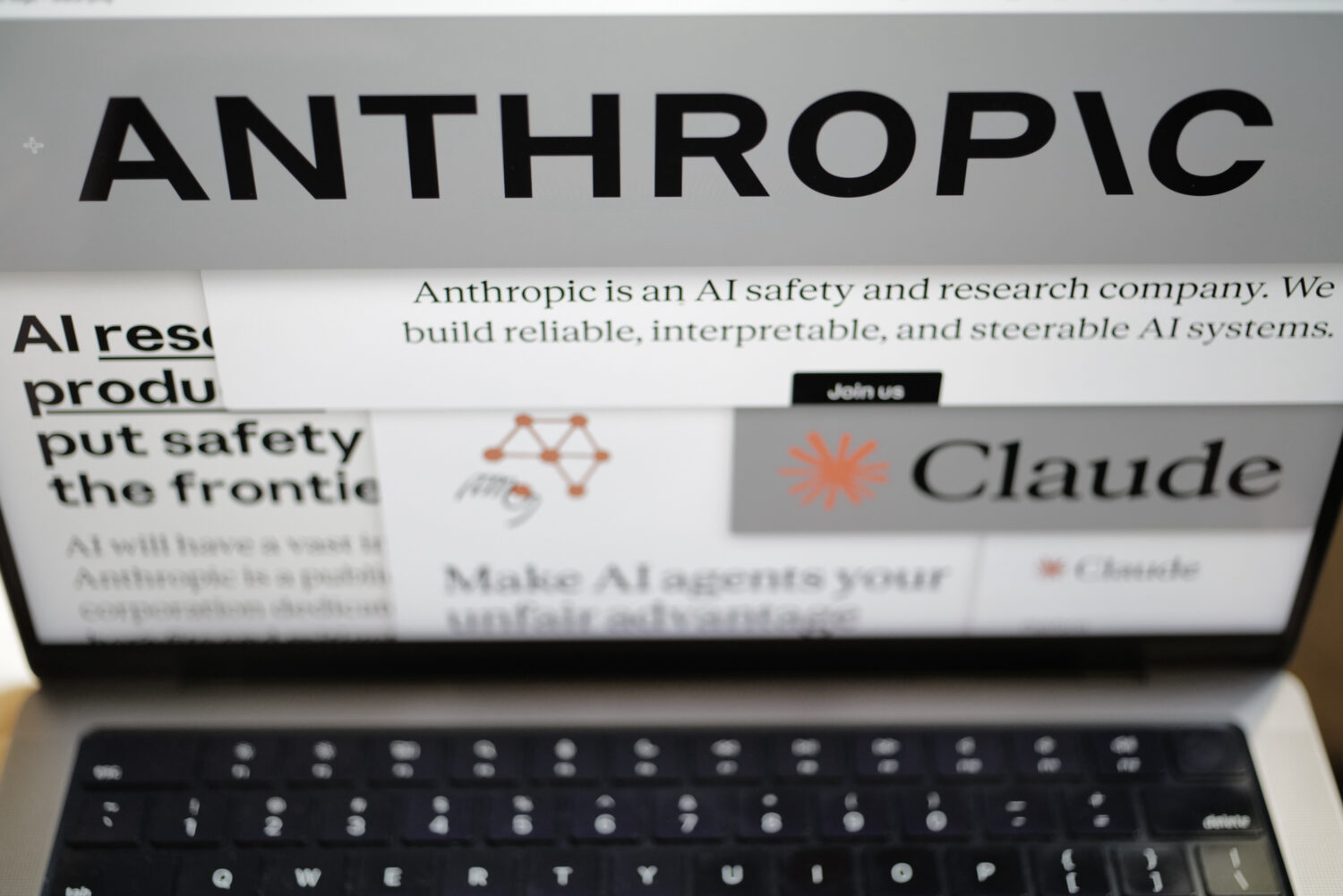
Though it doesn’t enumerate the traditions it has consulted, Anthropic said in a May blog post that they’d met with “scholars, clergy, philosophers and ethicists from more than 15 religious and cross-cultural groups” — a pool they hope to broaden in the future.
Earlier this year, Sullivan went to Anthropic for one of their meetings, which included Christians from different denominations. In contrast to conversations she’d had with other tech companies, she was impressed by the rigorous engagement with religion at Anthropic, which is widely seen as the AI company taking ethics and safety most seriously.
“The culture inside the company is similar to that on a good college campus in the sense that you’ve got a collection of very intellectually curious people,” she said. “These meetings are pretty nerdy — I don’t know if that’s the best way to put it — in a good way.”
Their meeting was split into two parts. First, the company explained their models “in layman’s terms” to those in attendance. Next, the faith leaders responded with feedback and discussions, Sullivan said. “Every kind of moral question that this technology raises — everything from, ‘Do humans have souls?’ to ‘Should third graders be able to access a chatbot for literacy education?’”
Representatives from Meta, Google and Amazon have also met with the Vatican, while Microsoft has been vigorous about its religious outreach.
Religion is generally considered both ancient and universal. And while experts like the late influential scholar of Jonathan Z. Smith concede that is true in some ways, they say it’s also not the full picture.
“Man has had his entire history in which to imagine deities and modes of interaction with them. But man, more precisely Western man, has had only the last few centuries in which to imagine religion,” Smith wrote in 1982.
Many scholars of religion today share Smith’s view of their field. They call into question the idea that religions are a set of distinct, comparable systems, saying it’s a modern notion that can be traced to as late as the 19th century.
Buddhism and Hinduism, for example, were not recognized as clearly bounded traditions by the people who practiced them prior to the arrival of European scholars, says Tomoko Masuzawa, a religious studies scholar who wrote “The Invention of World Religions.” Says Mazuzawa: “All these categories were not native.”
Western academics solidified those categories for years, only beginning to seriously reexamine them in the latter half of the 20th century.
Those entrenched ideas about religion — that it is easily comparable across cultures — help explain why Silicon Valley might not feel the need to define its own understanding of it. In an effort to represent various viewpoints, religion is often an obvious way to showcase diversity of thought.
“Somehow, religion becomes a way of kind of mapping out the world,” Masuzawa said. “It’s as if the whole world has kind of bought into it.”
Some people want companies to further define terms and intentions to better understand what exactly they hope to gain from religion.
“This work isn’t about aligning our models with any one tradition’s worldview. We want Claude to draw from a full range of viewpoints — religious, secular, political — with equal depth and rigor,” Anthropic said in the blog post. “What we’re after in these conversations is careful, accumulated thinking on how good character actually forms.”
Large language models work by repeatedly guessing the next word in a sentence after having “learned” the patterns of a huge trove of human-written works, including religious texts.
Paolo Carozza, a member of the independent Meta Oversight Board and a legal expert who studies Catholic social thought and technology, worries that in the quest for accumulation, there is potential for a given tradition’s defining characteristics to be lost — in effect, homogenized into something that pulls toward the middle or even favors Western religions.
“Any living, sophisticated tradition over time is capable of interacting with others outside of it and absorbing some new knowledge and growing. But it does so in this organic way,” he said. “What AI, I think, often does and potentially does, is not in an organic way, but in a way that just throws it all together, mixes it all up, and therefore makes sense of none of it.”
___
Associated Press religion coverage receives support through the AP’s collaboration with The Conversation US, with funding from Lilly Endowment Inc. The AP is solely responsible for this content.