Trump’s trade war with Canada: A timeline of how we got here
Aug 22, 2026, 9:00 AM
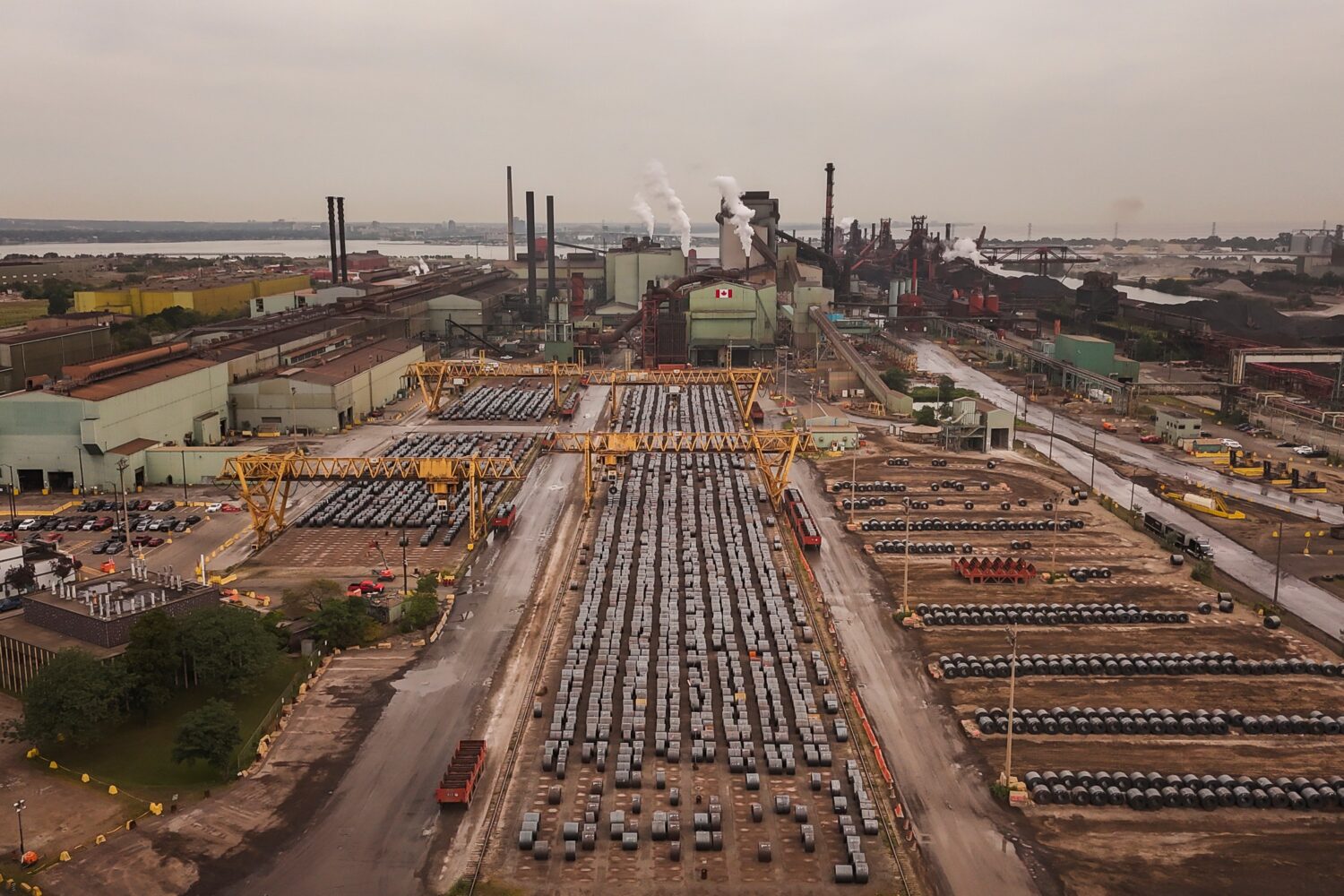
Rolled coils of steel sit in the yard at the ArcelorMittal Dofasco steel plant in Hamilton, Ont. on Thursday, Aug. 20, 2026. (Nick Iwanyshyn /The Canadian Press via AP)
Credit: Nick Iwanyshyn/The Canadian Press via AP
(Nick Iwanyshyn /The Canadian Press via AP)

CHICAGO (AP) — President Donald Trump’s barrage of tariffs — and threats of even more — has strained the United States’ longstanding relationship with Canada.
Over the course of his second term in office, Trump has threatened Canada’s economy and sovereignty with steep new import taxes on its goods. He’s gone as far as suggesting that his northern neighbor could be “the 51st state.” That rhetoric — paired with volleys of on-again, off-again new tariffs — has outraged Canadians, whose government has responded with its own retaliatory measures. All the while, uncertainty for businesses and consumers across both sides of the border only grows.
Most recently, Trump followed through on a threat to impose 50% U.S. tariffs on $20 billion worth of Canadian imports. Those levies kicked in Saturday after last-ditch negotiations failed, and Canada’s Prime Minister Mark Carney quickly promised to match the new import taxes.
Here’s a timeline of how we got here.
On his first day back in office, Trump says he expects to put 25% tariffs on imports from Canada.
The president later signs an executive order to impose 25% tariffs on imports from Canada starting Feb. 4, 2025 — invoking this power by declaring a national emergency over undocumented immigration and drug trafficking. Outgoing Canadian Prime Minister Justin Trudeau promises retaliatory levies.
But the tariffs soon get pushed back, cooling tensions at least temporarily. Trump first agrees to a 30-day pause, and more limited tariffs on Canadian imports kick in March 4. Within days, the U.S. rolls out an additional exemption for automakers and postpones the 25% tariff on goods that comply with the US-Mexico Canada Agreement, a trade pact from Trump’s first term.
Meanwhile, worldwide, Trump’s new steel and aluminum tariffs — which now tax imports of both metals at 25% — still go into effect. Canada imposes more retaliatory tariffs worth $29.8 billion Canadian dollars ($20.7 billion) on U.S. imports.
Trump announces his long-promised “reciprocal” tariffs on nearly all of America’s trading partners on April 2, 2025, but doesn’t unveil additional levies on Canada.
Trump soon faces legal challenges to these sweeping tariffs he invoked emergency powers to impose — which beyond “reciprocal” levies, include the 25% rate he slapped on Canadian goods earlier in the year. The U.S. Court of International Trade rules that Trump overstepped his authority in late May 2025, but a federal appeals court quickly halts that order temporarily.
Meanwhile, separate sectoral levies continue to pile up worldwide. Trump’s sweeping 25% tariffs on auto imports also begin in April 2025, and Canada’s Carney responds by matching the 25% rate with a tariff on non-USMCA compliant vehicles imported from the U.S.
Trump’s new 50% tariffs of nearly all foreign steel and aluminum later take effect in June 2025. Carney similarly threatens to impose new tariffs on U.S. steel and aluminum starting in July, pending progress of trade talks. Negotiations hit a temporary snag after Trump takes aim at Canada’s plans to continue with a tax on tech firms, which Carney soon walks back on.
Trade tensions bubble up again in the second half of the year. Trump threatens and then imposes a heightened 35% tariff rate on a range of Canadian goods starting Aug. 1, 2025. Globally, the U.S.’s new 50% levy on imported copper also kicks in the same day.
Later that month, Carney says Canada will drop many of its retaliatory tariffs to match U.S. exemptions for goods covered under the USMCA pact. Critics decry the move as capitulation to Trump, but the prime minister maintains Canada is in a good position and that such exemptions would jump-start further trade talks.
All the while, Trump imposes more tariffs worldwide in the coming weeks and months and ends the “de minimis” rule on Aug. 29 for low-value imports coming into the U.S.
In late October, Carney outlines plans for Canada to double its non-U.S. exports in the next decade, citing the affects of Trump’s tariffs. Separately, Trump’s anger over a television ad opposing U.S. tariffs leads him to pull the plug on all trade talks with Canada. Ontario Premier Doug Ford, whose provincial government paid for the ad, later says he’ll pull it so talks may resume, although Trump still threatens an added 10% tariff.
Trump’s legal fight over the tariffs he imposed using emergency powers eventually makes it to the Supreme Court, with arguments in November. In February, a 6-3 decision strikes down those import taxes — including country-specific levies imposed on Canada. Trump quickly enacts a temporary 10% global levy using a different law.
U.S.-Canada trade relations had been souring ahead of that ruling. Notably in January, Canada’s Carney focuses on mending trading ties with China — and in a break from the U.S., soon agrees to cut Canadian tariffs on Chinese EVs. An angry Trump later threatens an (eventually unrealized) 100% tariff on Canadian goods that he says he will impose if Canada moves forward with a trade deal with China, but Carney says his country has no intention of pursuing a more sweeping agreement.
Trump at one point also threatens a 50% levy on Canadian aircraft sold to the U.S., but that similarly goes unrealized. He also later threatened to block the opening of a new Canadian-built bridge across the Detroit River.
Negotiations to renew the US-Mexico-Canada Agreement, or USMCA, kick off in March — and ahead of the official July 1 review date, Canada calls for the pact to be renewed for 16 years.
But the outlook remains cloudy. And the U.S. eventually rules that it’s not ready to renew that pact for that length of time, leaving the current USMCA in effect until at least its 2036 expiration date.
Then later in July, Trump threatens to impose even steeper tariffs on Canada. He says the U.S. will slap 50% levies on many Canadian goods — including those previously-protected under the USMCA — while claiming that Canada unfairly discriminates against U.S. automobiles, alcohol and dairy products.
Those levies were originally slated to start kicking in Aug. 19. Trump declared the U.S. had reached a deal with Canada to delay the taxes until at least Saturday (Aug. 22), but its key terms weren’t disclosed, and when last-minute negotiations failed, the new tariffs kicked in just after midnight.
The 50% tariffs tax about 5% of what Canada ships to the United States every year, including products that range from hockey sticks to tongue depressors. Carney promises to match them “dollar for dollar” with retaliatory tariffs taking effect Sept. 8.