Why prosecutors charged Luigi Mangione with terrorism and a judge said no
Sep 16, 2025, 11:09 AM
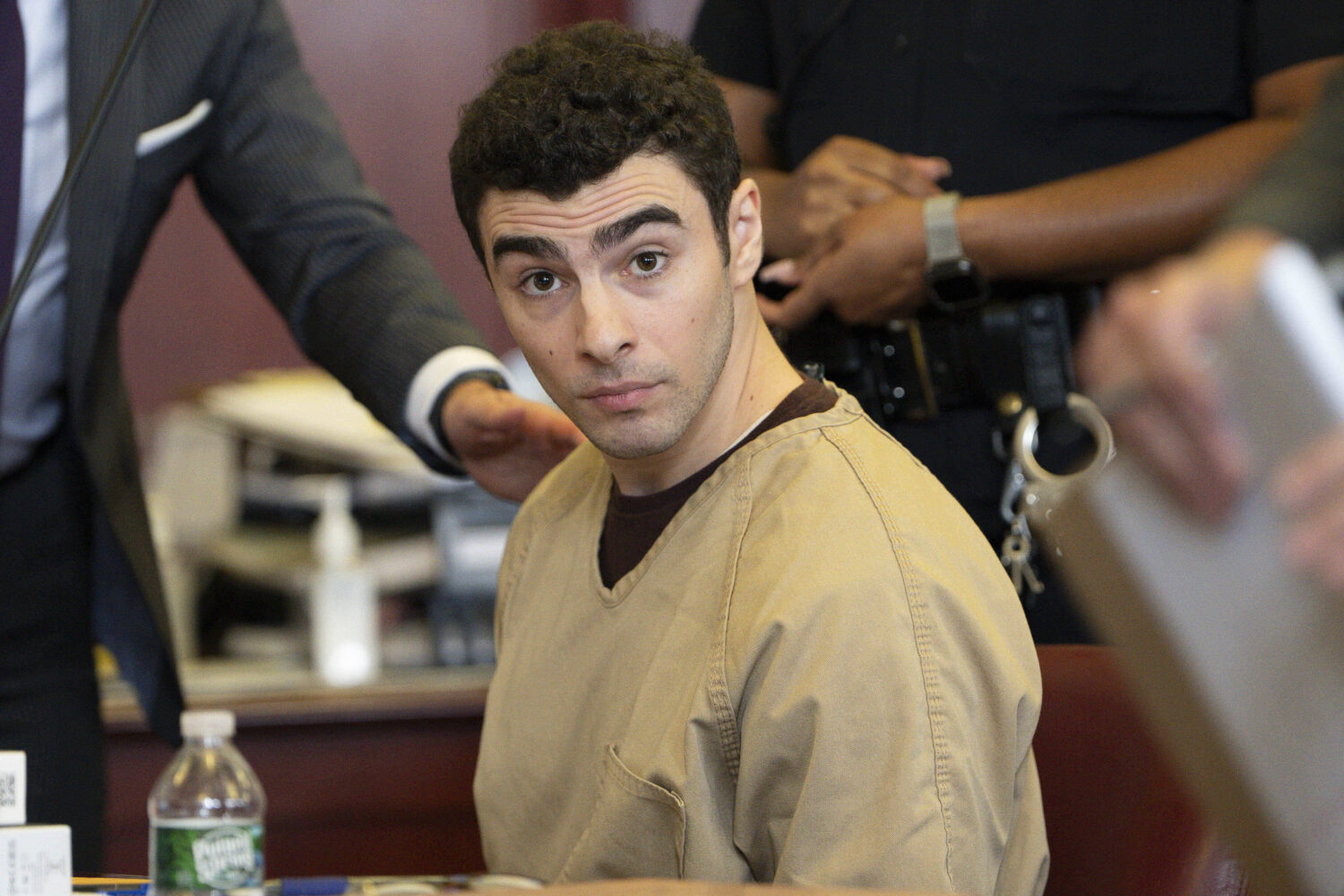
Luigi Mangione, accused of fatally shooting UnitedHealthcare CEO Brian Thompson, appears in Manhattan state court in New York, Tuesday, Sept. 16, 2025. (Steven Hirsch /New York Post via AP, Pool)
Credit: ASSOCIATED PRESS
(Steven Hirsch /New York Post via AP, Pool)

NEW YORK (AP) — New York prosecutors tried to use a 9/11-era terrorism law in their case against Luigi Mangione. But a judge ruled Tuesday that the state anti-terror statute doesn’t apply to the killing of UnitedHealthcare’s chief executive on a midtown Manhattan street last year.
The judge let murder and other charges stand against Mangione, who also faces a federal murder case in CEO Brian Thompson’s death.
What Mangione no longer faces are New York state charges of murder as an act of terrorism.
If it sounded like an unusual application of a terrorism law, it wasn’t a first. Such charges have been brought — and sometimes rejected — in other cases that weren’t about cross-border extremism or a plot to kill masses of people.
Here are some things to know about New York’s anti-terrorism law.
State lawmakers passed it in 2001, six days after the Sept. 11 attacks, saying the state needed “legislation that is specifically designed to combat the evils of terrorism.” Proponents pointed out that many cases could come via state and local law enforcement officers, not just from federal investigations.
Many other states passed similar laws around the same time, and Congress approved the Patriot Act.
Essentially an add-on to existing criminal statutes, it says that an underlying offense constitutes terrorism if it’s done with an intent to “intimidate or coerce a civilian population,” to “influence the policy of a unit of government by intimidation or coercion” or to “affect the conduct of a unit of government by murder, assassination or kidnapping.”
If a defendant is convicted, the terrorism designation boosts the underlying offense into a more serious sentencing category. For example, an assault normally punishable by up to 25 years in prison would carry a potential life sentence.
In Mangione’s case, one of the terror-murder charges carried a mandatory life sentence. The remaining murder charge against him is punishable by 15 years to life in prison if he’s convicted.
New York does not have the death penalty. The state’s highest court threw out a capital punishment law in 2004.
Manhattan District Attorney Alvin Bragg, a Democrat, put it simply last year: “The intent was to sow terror.”
The shooting happened early on a workday in a busy area where UnitedHealthcare was holding an investor conference, prosecutors noted. They also have said Mangione’s writings show that he aimed “to intimidate and coerce UHC workers and other workers in the health insurance industry.”
In a handwritten diary, the 26-year-old described himself as a “revolutionary anarchist” and mused about rebelling against “the deadly, greed fueled health insurance cartel,” prosecutors wrote in a court filing. They said Mangione researched UnitedHealthcare — having apparently never been a customer himself — and laid out a plan to “wack” the CEO during the “parasitic” investor gathering, asserting that such a killing would be “targeted, precise and doesn’t risk innocents.”
“Most importantly, the point is self-evident,” Mangione added, according to prosecutors’ filing.
They said he underscored the point by marking shell casings and a cartridge with words that mimic a phrase sometimes used to criticize insurers’ practices: “deny,” “defend” and “depose.”
Thompson’s death unleashed public complaints about the U.S. health insurance industry. Concerned companies canceled some in-person investor meetings and told employees to work from home temporarily. According to prosecutors, some doctors distanced themselves from UnitedHealthcare, company call-takers got death threats, and employees wouldn’t sign denial letters.
Mangione’s attorneys argued that there were “absolutely no facts to support this theory” that Thompson’s killing fit within the state terror law.
Thompson wasn’t a government official, and UnitedHealthcare’s dispersed workforce doesn’t qualify as a “civilian population,” the defense lawyers wrote in a court filing.
In their view, his alleged diary writings “make clear that Mr. Mangione was not looking to terrorize any community.” His lawyers noted that the purported diary discounts the idea of bombing an insurer’s corporate headquarters, with entries saying “bombs=terrorism” and involve “recklessly endangering countless employees.”
Manhattan Judge Gregory Carro said there is “no doubt that the crime at issue here is not ordinary ‘street crime,’” but that doesn’t make it terrorism. Prosecutors “appear to conflate an ideological belief with the intent to intimidate or coerce a civilian population,” he wrote.
Prosecutors didn’t establish that intent, nor an aim to influence policy, Carro concluded. He dismissed the terror charges but allowed the others to continue toward trial.
There’s no comprehensive statewide count, but there have been over a half-dozen cases in New York City alone. They include plots to bomb synagogues or open fire on their congregants; a plan to build pipe bombs to try to undermine public support for the U.S. wars in Iraq and Afghanistan; efforts to recruit support for the Islamic State group and to provide money and knives to Syrian extremists; and a white supremacist who killed a Black man because of racial hatred.
One of Mangione’s lawyers, Karen Friedman Agnifilo, was a top deputy to former Manhattan DA Cyrus Vance Jr. when some of those cases were prosecuted.
New York’s top court rejected the very first use of the law, in a 2004 Bronx case surrounding a deadly shooting at a christening party. Prosecutors said the defendant, a gang member, was targeting a rival but killed a 10-year-old girl and paralyzed another man.
In overturning the defendant’s conviction, justices expressed skepticism that the shooting was meant to intimidate the broader community. They also worried that the meaning of terrorism could be trivialized if “applied loosely.”
The man, who denied involvement in the shooting, was retried on manslaughter and other charges. He was convicted and sentenced to 50 years in prison.