Global temperatures hit record highs in 2024, AMS report finds
Aug 18, 2025, 6:14 AM

People and families enjoy the lake on a hot day. (Photo courtesy of KIRO 7)
(Photo courtesy of KIRO 7)
The American Meteorological Society (AMS) recently released the 35th annual State of the Climate report. The report has a number of highlights regarding the warming planet, both on land and at sea.
The AMS advances atmospheric and related sciences, technologies, applications, and services for the benefit of society as a whole. Founded in 1919, AMS has a membership of approximately 12,000 professionals, students, and weather enthusiasts. The State of the Climate report involved 589 scientists from 58 countries worldwide.
A significant finding was that the average global temperatures, both on land and in the oceans, reached all-time record highs, surpassing the new record set in 2023. The back-to-back record warm years were the first time it’s happened since 2015 and 2016. The report also noted that the last decade (2015-2024) was the warmest on record. These measurements go back to the mid-1800s.
The primary reason behind the record global temperatures was that the three main greenhouse gases — carbon dioxide (CO2), methane, and nitrous oxide — reached record-high averages. For CO2, the global average level reached 422.8 parts per million, a 52% increase from the pre-industrial level of about 278 parts per million in the late 1800s. The global rise in CO2 emissions has accelerated more sharply since the 1960s.
North America, including the U.S., was the warmest in its 115-year record. Some U.S. findings include the usually hot Las Vegas hitting an all-time record high of 120 degrees on July 7, 2024. Phoenix had 113 consecutive days reaching 100 degrees or warmer, surpassing the former record of 76 days in 1993.
RELATED STORIES



Study reveals summers growing globally by days
In a recent study by researcher Dr. Yupong Guan, it was discovered that from the 1950s to 2011, global summers have increased by 3.4 days per decade, while the other three seasons have become shorter. The annual AMS State of the Climate reports for this century so far reflect the continued warming of the planet, characterized by longer summers and overall warmer temperatures for all four seasons.
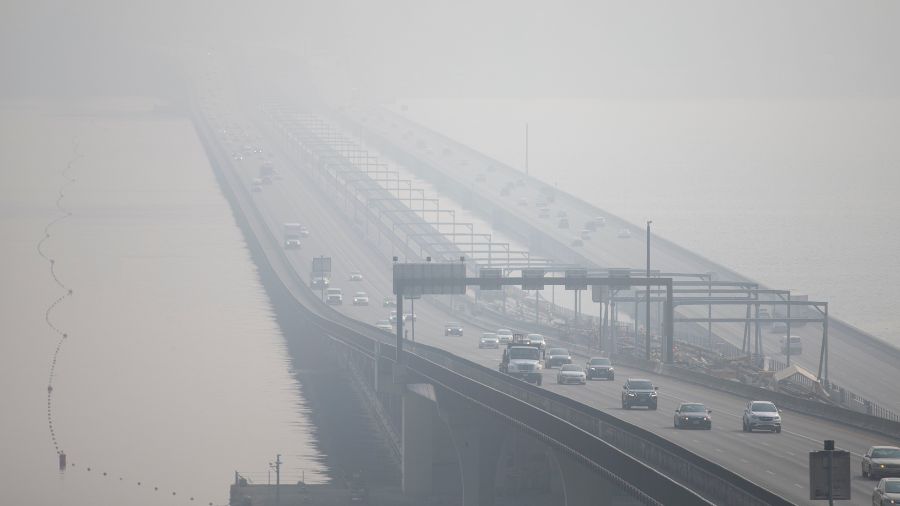
The longer, warmer summers have also led to more heat waves and wildfires around the globe. In 2024, Canada suffered its worst drought in its 75-year history, leading to hundreds of wildfires and smoke that spread south into the U.S.
Global average ocean temperatures also reached their warmest level on record in 2024. These warmer ocean temperatures helped fuel tropical cyclones (e.g., hurricanes) around the globe, along with more intense storms. November’s ‘bomb cyclone’ off the Pacific Northwest coast last year was but one example.
Scientists behind the State of the Climate report follow 58 glaciers around the globe. All 58 glaciers lost ice again, the most ice loss ever recorded. One example was the Mendenhall Glacier outside of Juneau, Alaska, which had a glacial outburst of melting ice in 2024, flooding low-lying parts of Alaska’s capital city. The same glacier suffered another glacial outburst last week, again creating flooding conditions.
Global mean sea levels also climbed to their highest ever on record for the thirteenth-straight year, according to the report. Mean sea levels in 2024 were about 4 inches higher than the 1993 average. The expansion of ocean waters due to warmer sea temperatures and melt from glaciers and ice sheets contributed to the higher sea levels.
Warmer global temperatures also impacted the amount of water in the atmosphere. Evaporation from land areas in the Northern Hemisphere reached one of the highest annual values on record last year. The amount of water vapor in the air reached an all-time record high in 2024, creating more humid conditions.
As a result, precipitation was globally high, with 2024 being the third-wettest year on record. Extreme rainfall (heavy amounts of rain) was the wettest on record. Heavier rainfall events led to more flash floods and flooding events around the globe, including the U.S. One key example was the flooding involving heavy rainfall from former Hurricane Helene last September that occurred in North Carolina and other parts of the southern and mid-Appalachian mountain region.
“The State of the Climate report is an annual scientific landmark,” AMS President David J. Stensrud said. “It is a truly global effort, in which hundreds of researchers from universities, government agencies, and more come together to provide a careful, rigorously peer-reviewed report on our planet’s climate. High-quality observations and findings from all over the world are incorporated, underscoring the vital importance of observations to monitor and climate science to understand our environment. The results affirm the reality of our changing climate, with 2024 global temperatures reaching record highs.”
Ted Buehner is the KIRO Newsradio meteorologist. You can read more of Ted’s stories here and follow him on X