A rare parade of planets is coming to the night sky
Feb 21, 2026, 5:02 AM

Jupiter (L) and Saturn appear about one-tenth of a degree apart during an astronomical event known as a Great Conjunction. (Photo: Rodin Eckenroth, Getty Images)
(Photo: Rodin Eckenroth, Getty Images)
For those who enjoy viewing the night sky, a unique opportunity is just around the corner late this month.
Six planets in the solar system are going to align in the western sky just after sunset. Those planets will include Mercury, Venus, Jupiter, Saturn, Uranus, and Neptune.
The latter two planets, Uranus and Neptune, will need binoculars or a telescope to be seen. The others will all be visible with the naked eye.
This alignment of six planets is already moving close to its position. The best alignment date will be Saturday, February 28. From Earth’s perspective, the six planets will not be in a perfect straight line, yet will appear close together.
Your chance to see all six planets will be brief
One key safety note, though, observing this parade of planets will be just after sunset. Ensure the sun has set before viewing this unique night-sky event to avoid serious eye damage.
All six planets will be low in the western sky. Mercury and Venus will be the lowest in the sky and will sink below the horizon not long after sunset. So the opportunity to see all six planets at once will be relatively short-lived.
Just above Mercury and Venus – the two closest planets to the sun – will be Saturn and Neptune. To the left and a bit higher in the western sky will be the other two planets, Jupiter and Uranus. As a bonus, the moon will also appear to the left of Jupiter and Uranus.
The last time there was such a planetary alignment was last year, in February, when Mars joined these six planets.
RELATED STORIES


How to view this unique event
Having this six-planet alignment in late February means the weather will be a key factor. Will there be no clouds in the western sky just after sunset during this period of time?
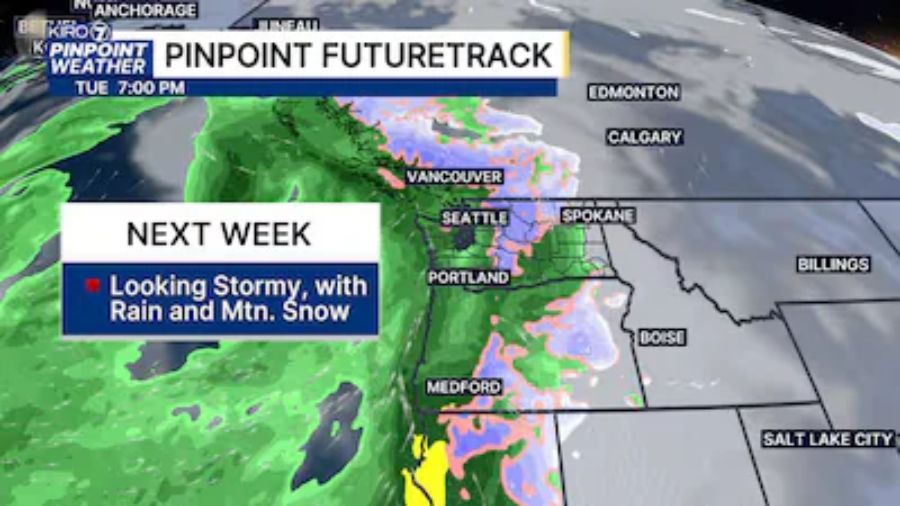
If longer-range forecast charts are on track, a break in the upcoming period of showers starting this weekend is expected to unfold, just in time for the peak of this event. Low-level offshore flow with air moving toward the Pacific Ocean should result in clearing skies.
Another challenge, though, will be this region’s complex terrain. For instance, the Olympics will obscure the lower western skyline. A solution? The ocean beaches will offer a clear view to the west as this event unfolds.
If you enjoy viewing these kinds of unique night sky events, there is a decent chance it can be seen with clearing skies on Saturday, February 28, with the best viewing spots along the ocean beaches.
Ted Buehner is the KIRO Newsradio meteorologist. Follow him on X and Bluesky. Read more of his stories here.