Can a tsunami occur in Washington? Yes, here’s how
Apr 17, 2025, 7:22 AM

This satellite image shows extensive flooding in Kalutara, Sri Lanka, when a tsunami struck its coast on December 26, 2004. (Photo courtesy of DigitalGlobe via Getty Images)
(Photo courtesy of DigitalGlobe via Getty Images)
Tsunamis have hit Washington in the past, and they will happen again in the future. Here is why.
How a tsunami forms
First, a tsunami, which literally translates to “harbor wave” in Japanese, is a series of waves that inundate coastlines. Tsunamis are generated by an upward lift of waterway bottoms, including oceans and regions like the Puget Sound, via a powerful earthquake, landslide, or even an undersea volcanic eruption. The Tonga tsunami in January 2022 was the result of a strong undersea volcanic eruption that sent tsunami waves across the entire Pacific Ocean basin.
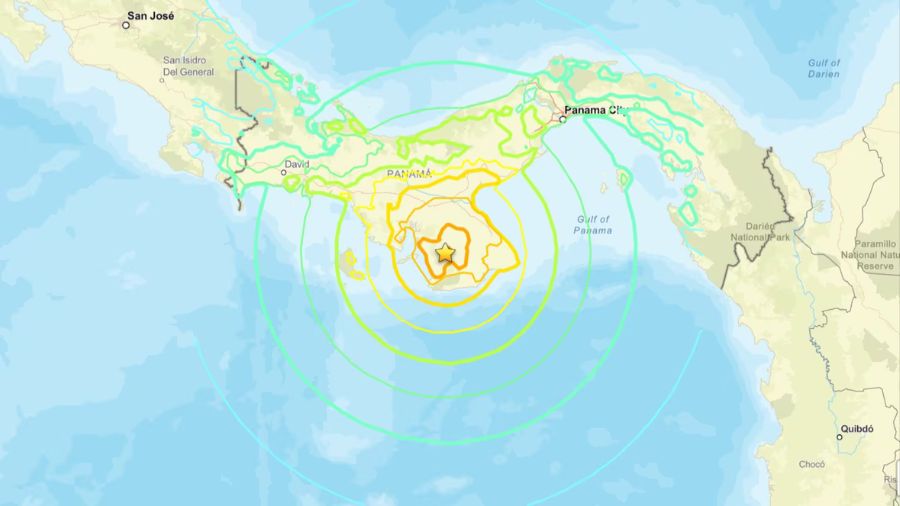
Most tsunamis, though, are generated by powerful undersea earthquakes where the seabed abruptly rises, displacing the water above it. The March 2011 Japan Tohoku earthquake was such a substantial uplift of the seafloor that it generated tsunami waves across the entire Pacific Ocean, including the Washington coast. Fortunately, most of the energy was focused well south of Washington. The outer coastline had tsunami waves of under three feet.
The March 2011 Tohoku earthquake was the result of a subduction zone, where the Pacific plate moves under the Honshu plate. This movement creates building pressure between the two geologic plates until the pressure gives, resulting in a usually large earthquake. In the case of this earthquake, it was measured to be a 9.1 magnitude quake, the fourth strongest in recorded history.
Such a subduction zone resides about 100 miles off the Pacific Northwest coast, stretching from off Northern Vancouver Island south to off Northern California’s Cape Mendocino. This subduction zone is called the Cascadia Subduction Zone. The last time this earthquake zone gave way was on January 26, 1700, when an estimated 9.0 magnitude quake produced tsunami waves across the Pacific Ocean basin. Local tribal legends and Japanese tsunami history reflect this event.
Geologists indicate that the history of the Cascadian Subduction Zone generates a strong earthquake about every 300-500 years. We have now entered that time window.
So, can a tsunami occur in the Puget Sound region? A powerful Cascadia Subduction Zone earthquake would produce tsunami waves, not only across the Pacific Ocean basin, but those tsunami waves would work their way into the Puget Sound through the Strait of Juan de Fuca.
What NOAA tsunami simulations have revealed
RELATED STORIES


Simulations created by the National Oceanic and Atmospheric Administration’s (NOAA) Pacific Environmental Lab and the Washington Department of Natural Resources (DNR) showed tsunamis in interior waters reached 10 feet or more along coastlines, particularly in tight or narrow waterways like the Hood Canal, Tacoma’s Commencement Bay, Seattle’s Harbor Island or Bellingham Bay.
Not only can a Cascadia earthquake event generate tsunamis in the inland waters of Western Washington, but so can local earthquake faults such as the Tacoma Fault, the Seattle Fault, and the South Whidbey Island Fault. The Washington DNR website has a suite of local earthquake fault simulations of tsunamis involving these earthquake sources. The Seattle Fault simulation is based on a strong earthquake that occurred approximately 1,100 years ago.
Recent smaller earthquakes in and around Western Washington over the last few months served as a key reminder that this region is earthquake country. In fact, Washington is the second-most threatened state in the nation, trailing only California.
The Great Shakeout preparation
Earthquakes are no-notice events. Each year, Washington participates in the Great ShakeOut earthquake drill in mid-October. The drill offers the opportunity to practice readiness for an earthquake at any time of day. Schools use this event as their October monthly emergency drill.
It is crucial to consider earthquake safety actions wherever you may be when a quake strikes. Communication with loved ones and work staff is quite important. Power and phone systems will likely be out of service in the wake of an earthquake.
Having a backup communication plan can be critical. The Great ShakeOut drill offers the chance to practice your backup communication plan. Know in advance how and who to reach in case the phone and power systems go offline.
Being ready for an earthquake and a potential tsunami, and knowing what to do when such an event unfolds, can help save the lives of loved ones.
Ted Buehner is the KIRO Newsradio meteorologist. Follow him on X and Bluesky. Read more of his stories here.