Western WA is primed to burn as dry, warm conditions persist
Aug 14, 2026, 5:32 AM
(Photo courtesy of KIRO 7)
(Photo courtesy of KIRO 7)
Western Washington is ready to burn.
There are three primary ingredients that generate wildfires: dry conditions, heat, and an ignition source. If wind becomes involved in new or existing wildfires, fires frequently spread rapidly.
Western Washington is dry, illustrated by all the brown unirrigated lawns and fields of dry grass. The latest U.S. Drought Monitor shows much of western Washington is abnormally dry or in moderate drought conditions.
A great deal of the region is between two and four inches of rainfall behind average for the year. As an example, Olympia is more than two and a half inches drier than average.
Temperature-wise, the region is in the midst of the dog days of August. Not only is the month usually the second driest of the year, with July as the driest month, but also another warm one.
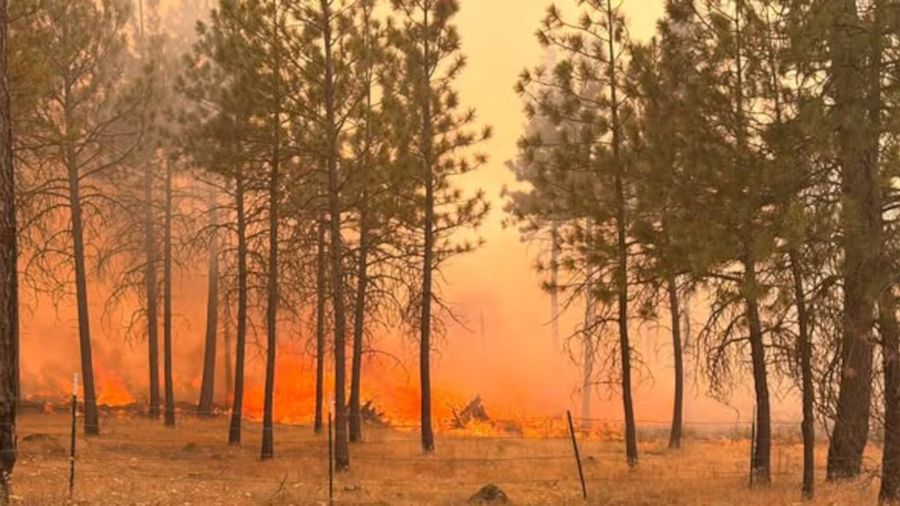
For a wildfire to start, an ignition source is needed. About 80% of wildfires are started by people. The remainder are usually ignited by lightning. Many of the wildfires in eastern Washington that started in July were started by lightning, such as the Kaiser Canyon Fire in north central Washington that has now burned nearly 160,000 acres.
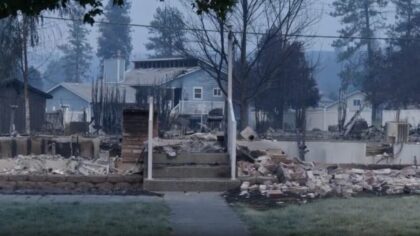
At least one of the Spokane fires was allegedly started by an arsonist who has been arrested. That fire occurred during a period of hot, dry, and windy conditions, ripe for rapid wildfire spread. Once that fire was started, strong winds quickly spread the fire, burning at least 700 neighborhood homes and other structures.
Other human-caused fires include abandoned campfires, fireworks, outdoor burning, discarded cigarettes or other burning materials out of vehicles, and more.
This year is now in the top 3 this century
Earlier this week, the Northwest Interagency Coordination Center in Portland highlighted that more than 720,000 acres or about 1,125 square miles have burned thus far this year in Washington. That statistic is nearly 2% of the state’s total land area and puts this year just behind the record fire years in 2015 and 2020.
Nearly all of the state’s land area that has burned so far this year has been from the Cascades east to the Idaho border. Western Washington is ready to burn, and like recent years, this wildfire season is likely to extend well into September and even October.
Recent western Washington wildfires
Western Washington has experienced wildfires, particularly in the past decade. In August 2017, a wind-driven wildfire in Thurston County started in the Scatter Creek area south of Tumwater and swept across I-5, burning a number of homes and structures, and closing the freeway during the firefighting effort. Even an aircraft dumped fire retardant to help slow the fire’s advance.
In 2020 during Labor Day Weekend, strong east winds blew out of the Cascades during a period of hot, dry weather. A fire started in the Bonney Lake area, spreading rapidly and burning four homes before firefighters got it under control.
In September 2021, the Bolt Creek Fire, close to the Stevens Pass Highway east of Gold Bar, burned into October, closing the highway and sending smoke through much of western Washington.
Just last year, the Bear Gulch Fire in Mason County burned from July into November, also sending smoke through much of the south Puget Sound region.
Weather to extend this wildfire season
Once again, dry, warm environmental conditions are in place for more wildfire activity in western Washington.
The weather outlook for the rest of August reflects odds in favor of warmer-than-average temperatures and little if any rainfall. So the warm, dry conditions look to be in place heading into September.
The seasonal weather outlook for September and October also shows the same warmer and drier than average conditions.
More dangerous east wind weather pattern
During late summer, as days get shorter and North Pacific storms begin to brew well offshore, it is more common for east wind events out of the Cascades to develop. With ongoing dry, warm conditions, any wildfire starts can spread rapidly, such as what happened during the 2020 Labor Day weekend.
This year’s wildfire season appears it will extend well into September, if not October. All precautions are needed to help prevent wildfires and the smoke they produce. With close to seven million living and working in western Washington, wind-driven wildfires are more likely to spread into neighborhoods, similar to what recently happened in Spokane.
RELATED STORIES
Defensible space
Now is the time to build defensible space around homes, neighborhoods, and businesses. Many of the homes in Spokane that survived those wildfires had defensible space around them.
A great resource to help build defensible space is available here. Steps like removing litter from roofs and gutters, trimming tree limbs up to at least head level, and moving firewood away from structures are just a few simple steps to take.
In the coming days, western Washington will experience some of the most pleasant weather when compared to the heat, humidity, heavy rainfall and flash floods, or wildfire smoke much of the rest of the nation is experiencing.
The region’s weather forecast for the next week or so has, in general, sunshine after some morning clouds with seasonable high temperatures ranging from the 70s to mid-80s.
Avoiding wildfire starts in western Washington will help maintain those pleasant summer weather conditions.
Ted Buehner is the KIRO Newsradio meteorologist. Follow him on X and Bluesky. Read more of his stories here.