Climate adaptation for emergency managers course paused by the administration
Feb 19, 2025, 1:30 PM | Updated: Mar 14, 2025, 9:15 am
Late last week, Department of Homeland Security (DHS) Secretary Kristi Noem issued a directive to all DHS agencies including FEMA to immediately stop all work connected to climate change and the elimination of climate-related terms across the department.
The directive to DHS top officials was meant to align with the President’s executive order regarding ‘eliminating all climate change activities and the use of climate change terminology in DHS policies and programs, to the maximum extent permitted by law.”
This action is in contrast to what is happening globally regarding our warming planet. The 2010s was the warmest decade globally, and each year so far this decade has set new high temperature records. Despite the cool January in Western Washington, the World Meteorological Organization just reported January 2025 was the warmest globally in the 176 year record.
I am an instructor that helps deliver many weather-related FEMA courses to the emergency management community and other community leaders. One of the popular courses I deliver to students is Climate Adaptation for Emergency Managers.
This FEMA Climate Adaptation course addresses how our planet is warming – both in the atmosphere and in the oceans, the impacts, and what community leaders can do to help plan and mitigate those impacts in the years and decades ahead. Those impacts include rising sea levels, stronger more intense storms, a greater number of heat waves, longer summers and wildfire seasons, and more heavy rainfall events resulting flash floods and flooding. Those in Kentucky and Tennessee recently suffered such a downpour and flooding event.
FEMA has been responding to more and more disasters in recent decades. The number of billion dollar disasters has risen from about a hand full in the 1990s to 20 or more so far this decade. Last year, there were 27 billion dollar disasters and 2023 had 28.
The FEMA Climate Adaptation for Emergency Managers course helps community leaders better determine how to reduce long-term costs from the impacts of our warming planet. Critical infrastructure and key resources such as highways and bridges, water treatment plants, schools, hospitals, fire and police stations, and more, can be in harm’s way in the decades ahead, and there are ways to reduce the impacts on these community resources.
Related from MyNorthwest: Record-low temperatures in WA: Here’s when warmer weather will arrive
DHS Halts Climate Change Initiatives, Countering Global Trends and Long-Term Efforts
This is a pay me now or pay me later scenario. By planning ahead for those community resources, impacts from future adverse weather can be mitigated or even eliminated, saving taxpayer money.
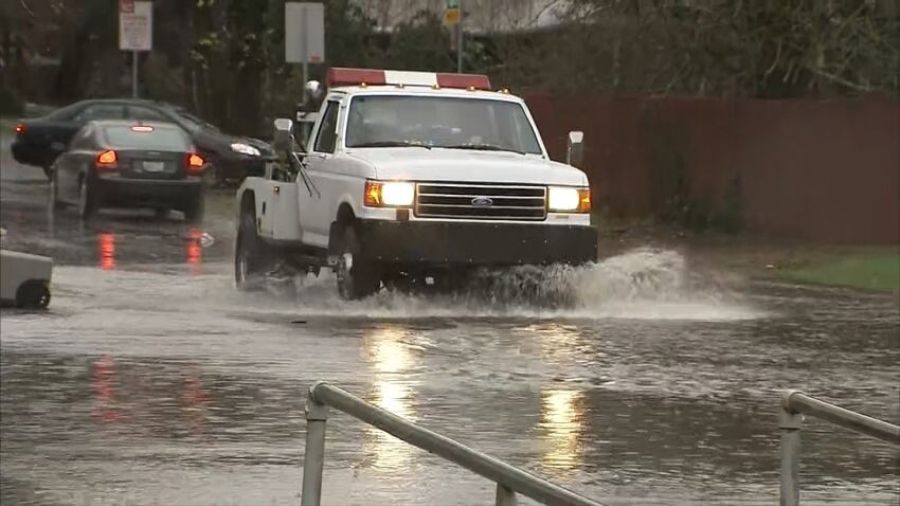
Here is an example. Since the start of the industrial age, the physics of the planet’s warmer air mass can now hold 10 percent more moisture. As a result, rainfall rates are now often greater producing heavy downpours that overwhelm existing drainage and water retention systems.
Many drainage systems and water retention systems were designed at least 100 years ago. Today’s and future rainfall rates now exceed those century old designs, resulting in systems being overwhelmed and producing significant flooding.
A local example occurred on February 9, 2017, when a heavy rainfall event resulted in King County’s West Point Water Treatment Plant being flooded, causing an estimated $25 million in damages and untreated water spilling into Puget Sound.
Consider the number of flood disasters in just the past year that have occurred in the U.S., let alone around the globe. The costliest U.S. flood disaster in 2024 was the heavy rainfall from the leftovers of Hurricane Helene in western North Carolina and surrounding areas. At last count, the price tag was close to $80 billion dollars and a loss of 219 lives.
The January Los Angeles wildfires will be another costly disaster. The losses continue to be tallied, and the latest estimates will be over 18,000 structures burned, a disaster cost of around $30 billion, and the loss of 29 lives.
Ending climate related FEMA course training events goes counter to what is happening across the nation. Community leaders need to learn and use techniques to help reduce long-term and costly losses by implementing the material taught in these courses.
The mission of the emergency management community is to ensure that communities and organizations that support those communities are prepared for, able to respond to, recover from, and mitigate against disasters.
As noted in a recent International Assn of Emergency Managers message to their members, ‘the speed of change occurring and the tendency to start with removal instead of reform creates the potential for gaps in capability and capacity due to the disruption of critical programs and services.”
Related from MyNorthwest: Western Washington escapes the deep freeze; normal conditions set for week
Ted Buehner is the KIRO Newsradio meteorologist. You can follow him on X.