SEATTLE NEWS ARCHIVES & FEATURES
The fear that permeates the streets of Seattle for women
Sep 25, 2019, 1:26 PM | Updated: Sep 26, 2019, 1:09 pm
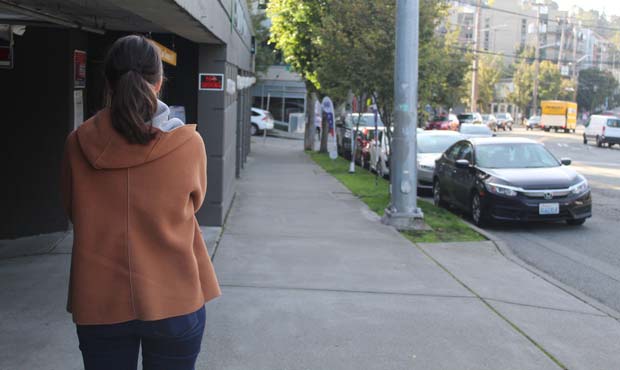
For women, the streets of Seattle can be a scary place. (Nicole Jennings/KIRO Radio)
(Nicole Jennings/KIRO Radio)
A cold sweat. A suddenly racing heart. The hairs on the back of your neck standing up.
Those are the physiological symptoms of fear. And they are felt by women in Seattle every day — simply by walking down a sidewalk.
When the Dori Monson Show put out a call for women’s personal stories of fear on the streets of Seattle, over 400 people shared their feelings and experiences. When another popular Facebook page (warning: mature content) shared the post, it garnered over 200 more comments.
It’s a sad time to be a woman in downtown. Scared to walk alone at night and sometimes even during the day … Something needs to change. I’ve been dealing with this disgusting and scary issue since I was 16. To being afraid of downtown for the last six years is so incredibly disheartening. – Alyssa, a Seattleite who commuted to class in Capitol Hill before beginning a job downtown
Every time I walk the streets of Seattle, I immediately take precautions to protect myself in any situation. It doesn’t matter the time of day, what street I am walking down, it is a constant in my head to be aware and protect myself walking down the streets. – Stephanie
I am fairly small in stature, and for some reason undesirable men tend to target me for striking inappropriate conversations. As a woman I am afraid because of how easily someone could pick me up and carry me off, or simply overpower me; I am a target. – M.
Women working downtown talked of carrying weapons in their purses while on their lunch breaks along Seattle’s most expensive, designer-store-laden streets.
Recent random attacks on Seattle women going about their daily lives, such as the rape of a woman named Lindsey in a Ballard car dealership bathroom one morning, or the attempted rape of jogger Kelly Herron at the Golden Gardens bathroom in the middle of a Sunday afternoon run, have no doubt heightened this fear.
The Seattle Police Department reports that crime is down since last year. But the perception of crime — the fear felt by residents on a daily basis — tells another story, as seen in the 2018 Seattle Public Safety Survey. In the survey, conducted by Seattle University’s Criminal Justice Department, over half the responding residents from South Ballard, Georgetown, SoDo, and Belltown reported feeling afraid of crime not just at night, but during the day as well.
“Whether or not the actual crime is equivalent to someone’s fear of crime, it doesn’t matter — if you’re afraid to walk in your neighborhood, that fear is real and no one should be afraid to walk in their neighborhood,” said Professor Jacqueline Helfgott, the director of Seattle University’s Crime and Justice Research Center. “That takes away people’s power.”
Societal expectations and fighting back
While men are more likely to be the victims of general assault, women are far and away more likely to face sexual assault and harassment, said Lucy Berliner, the director of the Harborview Center for Sexual Assault and Traumatic Stress.
“It is a situation where you can be targeted just for being who you are,” Berliner said.
And if women do not feel comfortable being bold with a street harasser, that may be due to societal expectations, according to Professor Helfgott, the author of, most recently,”No Remorse: Psychopathy and Criminal Justice” and “Women Leading Justice: Experiences and Insights.
“Research has shown that aggression is socialized into boys and out of little girls to the point where girls and women don’t use aggression as a survival tool, so they learn from the media, they learn from culture, that they can’t use aggression as a survival tool,” she said. “So if you can’t use aggression as a survival tool, then it’s very difficult to defend yourself, and if you have this internalization of being a victim, then it can make the world be a very frightening place.”
As an example, Helfgott said, boys are expected to “be boys” and roughhouse with each other, or play with toys that look like weapons. In contrast, girls are taught to be ladylike. This is a form of control over women, she explained.
“From very early on, girls are taught that they get rewarded when they engage in relationships with people, when they don’t behave aggressively,” she said. “Boys get rewarded when they fight with each other.”
Seattle Police Department Southwest Precinct Crime Prevention Coordinator Jennifer Danner agreed.
“We’re taught to be nice, we’re taught to be more concerned with what other people think about us than our own safety,” she said.
Prioritizing safety
On the street, women have to put their safety above manners, Danner said. If someone appears to be in crisis or under the influence and you feel threatened, it’s perfectly fine to walk to the other side of the street or give a wide berth. Never engage if you can help it, but focus on removing yourself from the situation.
Additionally, never be afraid to report any type of street harassment. Danner and Helfgott said that a lot of crime goes unreported in Seattle, in particular crimes that people may think of as “no big deal.”
However, Danner encourages everyone to report any kind of harassment, no matter how small it feels. She hears from many people that they are afraid they are bothering police with small matters, or taking resources away from others who have greater emergencies, but assures residents that they are not bothering SPD — that is why the police department is there.
“It’s very, very important to report, regardless of if you think it’s not that big of a deal or you don’t think anyone is going to do anything about it,” she said. “There’s sort of a secondary purpose to the report — it’s not just getting a report, but it’s also creating that data point, to help us with the patterns.”
Time, shielding, and distance
Experts universally recommend that women take self-defense courses to be prepared in case the worst happens. But personal safety consultant Donna Angevine goes beyond the standard reaction and combat classes, and focuses on changing one’s mindset.
Angevine’s classes at Hard Target Living teach women that they should not automatically think of themselves as prey.
“Just because the threat of a crime or the threat of violence exists does not mean that we are all at risk for it,” she said. “Just because a woman is a small-sized woman doesn’t mean she’s at risk for being assaulted any more than a bigger woman, if she knows to control the opportunities that her habits and lifestyle open up.”
For Angevine, herself a survivor of a brutal armed robbery, this is not meant in the least to victim-shame, but rather to stop treating the dreaded event as a given and to have confidence. It also does not mean being paranoid or on high-alert all the time — it simply means thinking beforehand about what you expect to encounter, and keeping an eye out for anything unexpected.
“If you see something inconsistent, you move away from it,” she said.
Observe what is going on around you, notice who is noticing you, and spot any behavior that doesn’t seem to fit the location, she said. If you’re at a grocery store at night, scan the parking lot before you walk to your car — from right to left, since, as we read from left to right, we’re more likely to miss things that way — with your bags ready to load.
If a person approaches, the first thing to notice is the threat’s hands, which can hold, conceal, and form weapons.
At this point, there are three potential elements that women can be in control of: time (how long it takes to notice a threat); shielding (anything that comes between you and a threat); and, most importantly, the distance of the threat. Keep the distance wide and you can avoid a moment of contact altogether.
“Women’s advantage comes in controlling how close a potential threat can get to them in the first place,” Angevine explained.
So, how should one look when walking the streets of Seattle and scanning for threats? For starters, put away a favorite accessory of pedestrians.
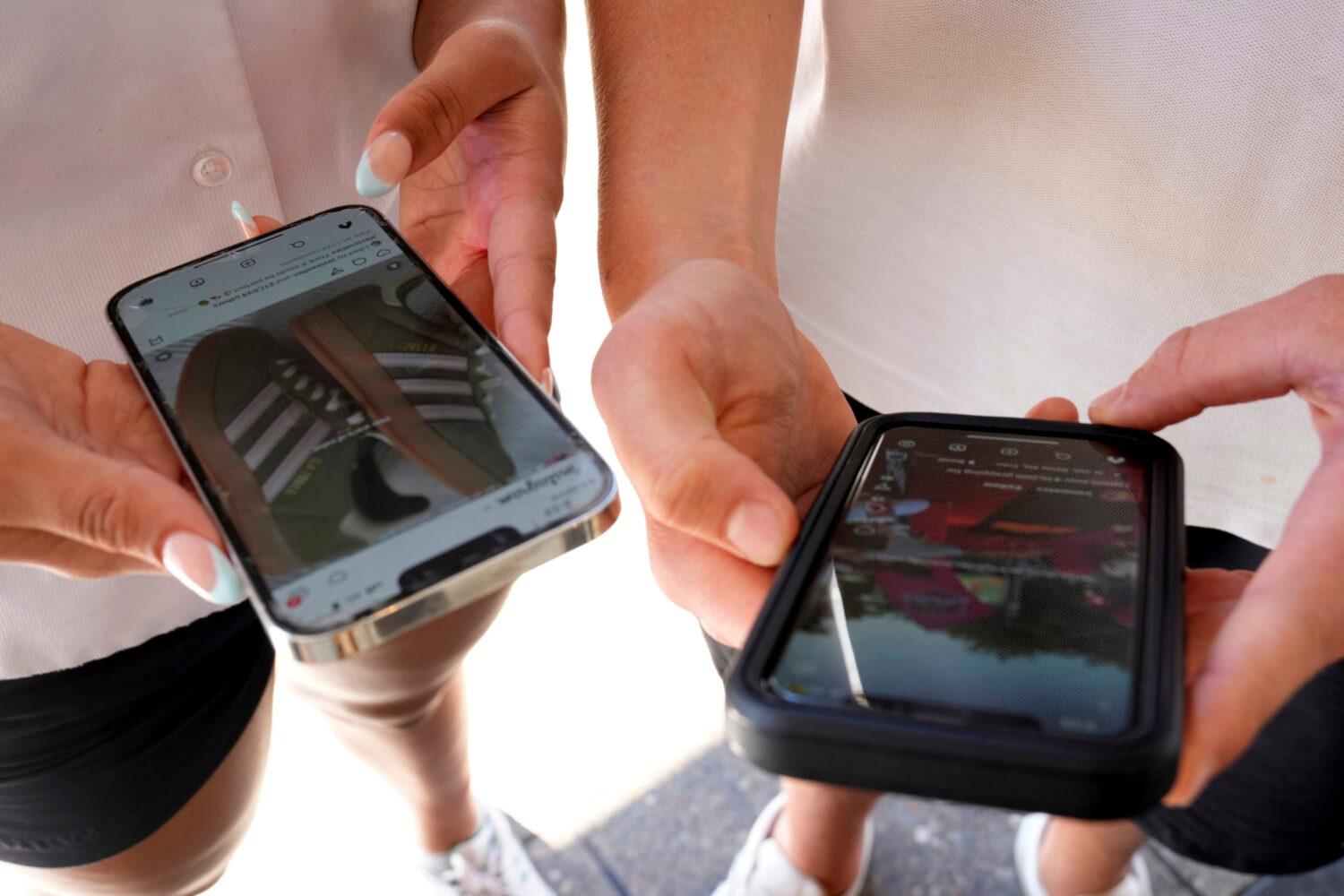
“Put your phones away — never have your phones out in public,” Angevine said. “Keep your hands up at chest level, not down at your sides, not in your pockets. If somebody comes up and gets in your face, your ability to block your head and cover yourself, or even to strike back, is much faster if your hands start at chest level.”
Some people may think that looking at a phone is a form of protection, as it stops them from engaging in eye contact with potential threats. However, it really just makes people more vulnerable, according to Angevine. To show a threat that you are not one to be messed with, meet their eyes confidently with a firm stare.
“If you’re afraid to just make brief eye contact with them, you’re going to be nervous about telling them no,” she said. “Not only that, but they’re going to be able to get really close to you — remember, we’re wanting to control distance — because your eyes are going to be on your phone. So wherever your eyes are, that’s where your boundaries end.”
Weapons on the streets of Seattle
What if the worst-case scenario does happen and a person is able to physically attack you?
While much talk is made of the kinds of weapons that are best — sprays, knives, striking instruments, or firearms — Angevine does not stand behind any of these choices in particular.
On a windy day, pepper spray can actually come back in your face — or the face of a bystander — rather than the predator’s, she pointed out. Slicing instruments are not ideal for keeping the element of distance between you and the predator. Pocketknives require fine motor skills to open, which one can’t count on once fight-or-flight kicks in. Firearms require extensive and precise training.
Instead, Angevine’s weapon of choice is one that most people probably wouldn’t consider a weapon, a high-powered flashlight.
A flashlight can light one’s path, shine in a threat’s eyes to temporarily blind them, and can even be used as a striking instrument. Women should carry a flashlight with them during the day and should always keep it on at night, according to Angevine.
Perhaps the best tool of all, however, is one that humans are born with — the voice.
“This is actually a more powerful weapon than even a flashlight or a firearm … It tightens your core, it forces you to breathe, it sends a message to the would-be threat that you are not prey, and it calls attention to the situation,” Angevine said.
The voice should always be the first weapon used, even if a person is skilled and armed with another kind of weapon. At the beginning of an encounter, a woman can use her voice to de-escalate the situation. She should put a hand up and loudly shout, “Back off!” or, “Get away!” without fear of being rude.
“What you’re hearing is, ‘You may ultimately win the battle if you challenge me, but I am going to make it the worst day of your life, and you’re going to forever be afraid to challenge a woman who looks like me again,'” Angevine said.
She compared it to a hissing cat; despite a cat’s small size, no one wants to grab a cat while it is hissing. It shows that you are not someone to mess with.
If the predator lays a hand on you, channel your loudest, deepest, most guttural sound — rather than a scream, aim for the sound of a lion.
“Any use of your voice should be an animal deep roar, not a whimper or cry,” she said.
Physically, the most important abilities to eliminate are sight and breath. If you take those away, you can incapacitate an attacker.
“Shove your fingers into their eyes, punch their throats,” she said.
It is the psychological component, however, that cannot be understated.
“I am always encouraging women to think about it before it happens,” Danner said. “If you have these skills and these mindsets and these strategies before something happens, maybe we can prevent it from happening to begin with.”
To help with this, SPD offers a free women’s personal safety class on a monthly basis. The next class will take place Saturday, Oct. 12.
“You need to determine before that ever happens that you will prevail,” Angevine said. “You need to be vicious. No cat can have anything on you.”
Reporter Carolyn Ossorio contributed to this article.