Marshawn Lynch making millions by battling with media
Jan 30, 2015, 5:27 AM | Updated: 5:28 am
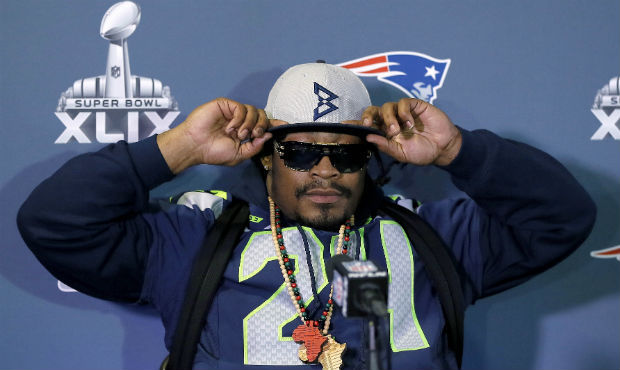
A sports marketing expert estimates Marshawn Lynch has gotten over $2.5 million in free advertising for his Beast Mode brand thanks to his combative sessions with the media. (AP)
(AP)

Marshawn Lynch might act like he doesn’t want any media exposure, but considering how much merchandise he’s hocking this week at the Super Bowl, you have to wonder if it was all just a brilliant scheme to take the Beast Mode brand to the bank.
Thanks to three combative five-minute press conferences this week in Phoenix, Lynch has garnered over $2.6 million worth of advertising exposure, estimates Eric Smallwood, senior vice president with Front Row Marketing and Analytics, a Philadelphia-based sports marketing and research firm.
Watch: Marshawn Lynch gets testy in final Super Bowl press conference
“The less Marshawn Lynch says, the more money he makes. By not responding in the press conferences, that’s given him way more exposure than he would have gotten if he would have responded,” says Smallwood.
Lynch drew widespread international awareness for his Beast Mode line of clothing when he wore one of the hats offered on his website at his media day appearance Tuesday in which he repeatedly uttered “I’m just here so I don’t get fined.”
Reporters trying to get him to talk asked about the hat, and then subsequent reports said the NFL was considering fining him for wearing it, because it wasn’t officially licensed by the league.
“If he wore the Beast Mode hat and spoke during the conference about the game, we wouldn’t be having this conversation,” says Smallwood.
Instead, fans snapped up the hats. All nine models sold out on the site at $33 a piece. There’s no word when they’ll get more in stock.
Lynch and his team have been particularly crafty about handling his exposure this week beyond his combative media sessions. By refusing to speak at press conferences, demand has grown exponentially. He’s leveraged it by making himself available to a select few outlets that have focused almost exclusively on his merchandise, including a Sports Illustrated feature with him and his designer, and an exclusive TV interview with E! Entertainment.
Smallwood says the continued exposure over the next few days approaching the game will continue to add to Lynch’s ever-growing bottom line.
“If he’s fined for wearing the hat, that’s going to grow even more. Either way, as this news keeps going it’s going to grow and grow.”
Smallwood says he’s never seen a player benefit from so much negative publicity before. But he says it reflects a growing trend by street-savvy companies that have learned to leverage controversy to help boost their brands outside conventional advertising.
He points to deals between Beats by Dre and a number of high-profile players including Richard Sherman and San Francisco quarterback Colin Kaepernick. The players have repeatedly worn the company’s headphones on the field and in news conferences despite a prohibition by the NFL, which has an exclusive deal with rival Bose.
The league fined Kaepernick $10,000 in 2013 for wearing his Beats to a news conference, but got hundreds of thousands of dollars in exposure for the company as a result of the subsequent coverage.
“I think it’s about strategy, it’s what makes the greatest marketing initiative for them from a local, regional opportunity, but also can it explode to a more national exposure,” says Smallwood.
Other brands have benefited recently from bad press as well, albeit somewhat accidentally. Gillette’s FlexBall razor got over $5 million in exposure during all of last week’s “Deflategate” coverage, as Patriots coach Bill Belichick and quarterback Tom Brady staged lengthy press conferences to address the deflated ball controversy. Even Saturday Night Live included the logo on a backdrop during a skit parodying the coverage.
“That was very unique for a press conference, and that was attributable to a lot of the broadcast channels carrying the press conferences and each lasted about 30 minutes long each,” says Smallwood.
Aligning with a bad boy or trying to openly defy the NFL might be a growing strategy, but Smallwood cautions it’s no more guaranteed to generate coverage than efforts to created a viral video.
“It’s a perfect storm. If the Seahawks had lost, we’d be talking about Aaron Rogers and the Discount Double Check.”