Holocaust survivors can genetically pass trauma down to their children
Jun 15, 2016, 6:32 PM | Updated: Oct 11, 2024, 10:00 am
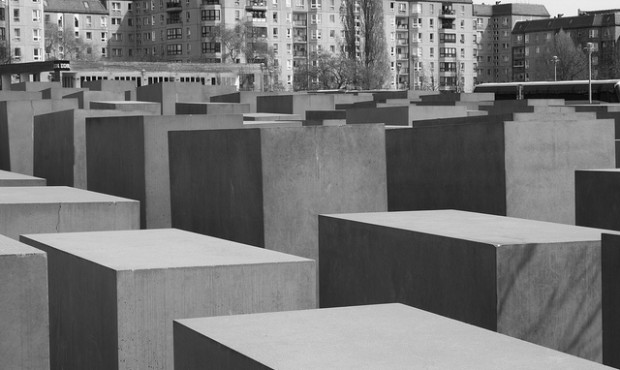
A new study concludes that parents who suffered traumatic experiences, such as the holocaust, can pass down that trauma in their genes. (CC Images: rosy)
(CC Images: rosy)
A few weeks ago I was sitting in my therapist’s office and talking about struggles I have with my father and some of his behavior. I told her that both of my dad’s parents were holocaust survivors. He grew up as an only child with a mother and a father who never recovered from the trauma they experienced.
My therapist told me she’d send me a study which concludes that parents who suffered in the holocaust can actually pass down that trauma to their children in their genes.
So I tracked down the leader of the study, Rachel Yehuda, professor of psychiatry at Icon School of Medicine at Mount Sinai in New York.
Professor Yehuda studied the adult children of 32 Jewish men and women who had either been in a concentration camp, experienced torture or who were forced into hiding during World War II.
“In our first study we simply reported that there was a greater prevalence of post traumatic stress disorder, depression and anxiety disorder among adult children of holocaust survivors compared to Jewish, demographically matched controls,” she said.
The next step was to look into the possibility of epigenetic inheritance — the idea that environmental factors (everything from trauma to smoking) can change the way genes function.
“We began to study the molecular biology and sure enough we found that there are changes to certain stress related genes that seemed to be different as a result of maternal or paternal holocaust exposure,” Yehuda said. “Some of these changes might arguably be due to in utero.”
The idea of passing down trauma, and the fight-or-flight emotional traits that come with that, is not limited to the holocaust.
“We did do a study in pregnant women who survived the World Trade Center attacks and we were able to study them and their babies seven months after they gave birth,” Yehuda said. “And we found that there were some changes in the babies’ cortisol levels that were dependent on the trimester of maternal exposure to the World Trade Center attacks.”
“So we wondered whether there was a relationship between stress exposure and pregnancy and some of the effects and the vulnerability to mental health symptoms in offspring,” she said.
Professor Yehuda explains that this may be the body’s way of trying to protect the next generation from the trauma they experienced.
“That could be a way of preparing you should you experience a similar kind of adversity,” she said. “But most children of holocaust survivors didn’t have to survive those kinds of things. So having the biology that might be most useful in a situation of traumatic stress might be a mismatch for somebody who is living under peaceful, normal conditions.”
“So a lot of children of holocaust survivors report being very on guard and hyper alert to danger,” Yehuda said. “Being hyper alert to danger is a much better trait to have if there is danger. If there isn’t danger, it can really make people very anxious or paranoid.”
She says the people involved in the study were relieved to learn why they were anxious and depressed.
Professor Yehuda hopes future research will help improve the lives of survivors, their children and their grandchildren.
“The real message from this work is about the power of environment,” Yehuda said. “If negative environments cause one kind of change, what kind of changes are caused by positive environments? And how can we optimize our environment so we’re functioning in the best way possible and that we’re making the biologic changes that really are most optimal for us to achieve maximum resilience.”
As for the grandchildren of holocaust survivors, there’s no research done yet — so I will continue to go to therapy.